The International Response Regarding The Rohingya Refugees
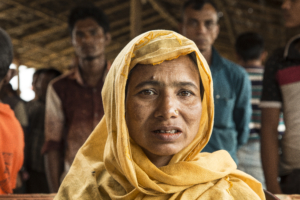
According to the U.N., the country bordering Laos to the east and Bangladesh to the west is called Myanmar, but to the U.S. and U.K., it is Burma. Its name is just one source of the conflict that has plagued the country for years; another is regarding relations between the government and the Rohingya, a Muslim minority group living in the Rakhine region. After Myanmar’s independence in 1948, the Rohingya people in the Rakhine region became stateless and the Myanmar government refused to give them citizenship. The animosity between the Rohingya and Myanmar’s government continued to grow until the group experienced exclusion altogether from the national census in 2014. In 2017, the Rohingya faced a crisis that forced them to seek help from other nations and become refugees.
Background Information on Rohingya Refugees
In August 2017, the perpetuated institutional discrimination against the Rohingya hit its limits when the Burmese military launched a campaign of targeted violence. In the first month after violence broke out, at least 6,700 Rohingya were killed and 300 Rohingya villages were burned. As a result, an estimated 740,000 Rohingya were displaced out of Myanmar’s Rakhine region and into Bangladesh. Today, more than 900,000 Rohingya still live in Bangladesh.
Upon arriving in Bangladesh, Rohingya refugees found shelter in refugee camps that are now some of the largest in the world. Due to the pace at which mass numbers of Rohingya became refugees. Camps did not have adequate resources including shelter, food, clean water and medical facilities. Many refugees have also become traumatized after witnessing the acts of violence in the Burmese military campaigns. The U.S. State Department now deems the actions as ethnic cleansing.
US Humanitarian Assistance
Since the outbreak of violence in 2017, the U.S. has contributed $669 million in humanitarian assistance to the Rohingya refugees. According to USAID, this funding goes toward addressing the needs of Rohingya refugees including emergency shelter, food, health services, psychological support, education, water and sanitation. Additionally, the U.S. funding aims to support programs that will improve disaster preparedness and education for Rohingya in Bangladesh.
With this assistance, the U.S. also aims to augment existing systems and programs that provide relief to refugees. For instance, the increased number of vouchers that are going to Rohingya refugees should allow them to buy food in local markets. Furthermore, the U.S.’s push for educational programs for refugees should yield more access to better economic opportunities in Bangladesh.
US Diplomatic Stance
The U.S. State Department has consistently and publicly condemned the actions of the Burmese military against the Rohingya. It also stated a commitment to justice and accountability on behalf of the Rohingya people. Furthermore, the State Department urges Myanmar to formally acknowledge the acts of injustice and violence. It calls on other nations to support this stance as well. In 2018, the U.S. imposed sanctions on four Myanmar military and police commanders and two army units for their human rights abuses against the Rohingya. The Myanmar government did not respond to this stance. As a result, the U.S. imposed more sanctions on a high-ranking general and three senior officers in 2019. The U.S. State Department is also working with international organizations to encourage Myanmar to adopt conditions that would eventually allow Rohingya refugees to return to their homes.
After the outbreak of violence in Myanmar, the U.N. Human Rights Council established the Independent International Fact-Finding Mission on Myanmar in March 2017 to investigate and make conclusions concerning the extent of human rights abuses committed. Its findings conclude that Myanmar committed crimes against humanity, war crimes and genocide against the Rohingya.
With Myanmar’s lack of indication that the country will acknowledge the violence the government committed against the Rohingya, almost 1 million Rohingya remain in refugee camps in Bangladesh. The international response has strongly condemned Myanmar’s government and offered humanitarian assistance. However, more permanent plans for the Rohingya refugees will likely need to occur soon. The U.S.’s push for more education in camps is one example of a positive step in the direction toward relief for the Rohingya. In addition, the U.S. along with other nations and international organizations should continue to develop these programs with further humanitarian assistance.
– Isabel Serrano
Photo: Flickr
