Posts

The Djibouti-Eritrea Conflict
The boundary between Djibouti and Eritrea has been under scrutiny for many decades. Both countries have debated where the border between the regions truly is and have sent militant forces across the perimeter. In 2008, the Djibouti-Eritrea conflict reached a boiling point, which left many dead and resulted in the United Nations embargoing Eritrea for years. Although the two countries have agreed to normalize relations and resume trade, the citizens in the Horn of Africa still face poverty from the dissension.

History of the Conflict

Tensions have been high between the two nations since 1996 when the Djibouti government accused Eritrea of making advancements past their border, which France and Italy originally set earlier in the century. Eritrea also had a border conflict with Ethiopia, an ally of Djibouti, in 1998. However, the conflict did not bubble over until 2008, when Djibouti again claimed Eritrea was once again making advances on the border. The clash of both sides started what many know today as the Djibouti-Eritrea conflict. The conflict almost caused an all-out war in the Horn of Africa. The battle resulted in the deaths of 40 Djiboutians and 100 Eritreans. Eritrea also took many prisoners of war from Djibouti, who the region held for years.

The United Nations Security Council implemented a sanction on Eritrea in 2009 for its actions in the conflict and its support of militants in Somalia. The act created an embargo on arms shipment and created a travel ban within Eritrea. Eritrea denied all involvement with Somalia and engaged violently with Djibouti as the sanctions stayed.

In 2010, Qatar agreed to be a mediator between the two countries after encouragement from the U.N. In response, Qatar installed peacekeeping troops on both sides of the boundary. During this deal, Qatar fostered a small peace agreement between Djibouti and Eritrea in 2016. Yet, after U.S. presence grew in Djibouti resulting in Chinese involvement with the Djibouti-Eritrean conflict and pressure from other Gulf nations, Qatar withdrew its troops.

In late 2018, Eritrea and Djibouti agreed to normalize their relationship and restore trade if Eritrea released all prisoners of war. After this, the U.N. also lifted its sanctions on Eritrea. Ethiopia and Eritrea also restored their ties and commenced trade soon after the countries made the agreement.

The Present

Although the two nations seem to have settled their quarrel, the European Union gave Eritrea another sanction in March 2021. According to Reuters, Eritrea has been responsible for many “atrocities” in the Tigray area of Ethiopia, the home of a large rebellion in North Africa. The European Union claimed Eritrea was responsible for “serious human rights violations in Eritrea, in particular, arbitrary arrests, extrajudicial killings, enforced disappearances of persons and torture” according to Reuters. More sanctions could possibly emerge as the conflict continues.

While Djibouti has not engaged in conflict with Eritrea since tensions reduced, the nation has still been “volatile” in the Horn of Africa. The African Report said that the Eritrea, Djibouti and Ethiopia area is “at war with itself” with many “historical injustices.” With the continued Tigray conflict and Eritrea and Djibouti on either side, expectations have determined that conflict could emerge again.

The Impact on Citizens

The impacts of the Djibouti-Eritrea conflict still linger years after the countries reached peace. The World Bank said that 53% of the Eritrean population lives in poverty. Meanwhile, the United Nations World Food Programme stated that 79% of Djibouti’s population lives in poverty and over 40% lives in “extreme poverty.” Malnutrition and infant mortality rates are high in both regions. One can attribute the poverty in the regions can be attributed to the current and past Djibouti-Eritrea conflicts which limited trade for both nations. Currently, over 90% of Djibouti’s food is from other nations. As sanctions continue to undergo implementation in the region, many expect that Eritrea will import most of its nutrients as well. The climate of the area has also caused widespread drought.

Solutions

Multiple organizations have joined together to help fight poverty in Djibouti and Eritrea. Action Against Hunger has aided both nations. This organization is helping the area improve its food security and water sanitization. Action Against Hunger has also created medical and nutrition programs for the region.

The United States Agency for International Development (USAID) has also spawned an effort to help Djibouti and Eritrea. The Water, Sanitization and Health Project is helping “vulnerable children and women by increasing access to potable water, sanitation and hygiene and by raising awareness on key basic hygiene practices” during COVID-19. USAID is currently looking for both monetary donations and volunteers to help this effort.

Despite the challenges of the Djibouti-Eritrea conflict, some organizations are providing aid. Through the efforts of USAID and Action Against Hunger, hopefully, life will improve for the citizens of Djibouti and Eritrea. 

– Laken Kincaid
Photo: Flickr
10 Facts About the Ethnic Violence in South Sudan
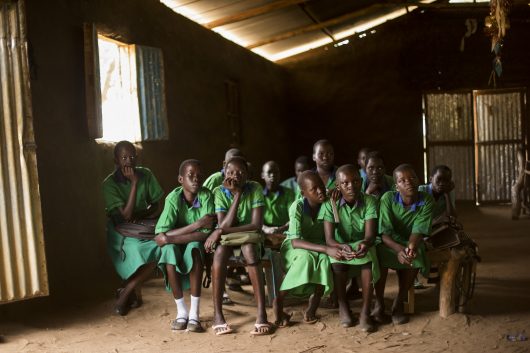
When South Sudan gained independence in July 2011, President Omar al-Bashir of Sudan looked at its future and hoped, “God willing, this state will be stable and develop.” This statement came in reflection after the South Sudanese people had experienced over 20 years of guerrilla warfare with the North, in which nearly 1.5 million people died.

But thus far, independence has only served as a band-aid.

On December 15, 2013, conflict broke out between the country’s two most prominent tribes when President Salva Kiir, of the Dinka tribe, removed Vice President Riek Machar, a Nuer, from office and accused him of attempting a failed coup. Violence would continue among Kiir and Machar’s respective tribes until August 2015, when international pressure resulted in a ceasefire peace deal between the factions. But over the past year, tensions have escalated into greater ethnic violence, leading the U.N. to warn the international community of another Rwandan-like genocide.

Here are 10 facts about the ethnic violence in South Sudan:

  1. Since the beginning of the 2013 civil war to present day, 1.05 million have been displaced in surrounding nations. This is the largest group of people to flee their country in central Africa since the Rwandan genocide in 1994.
  2. Ethnic violence has included hostile rhetoric, killings, and specified rapes on those of rival ethnic groups.
  3. According to the U.N., the majority of ethnic violence is instigated by the “Sudan People’s Liberation Army (SPLA), the SPLA in Opposition, militias, and unidentified armed groups.”
  4. About 1.73 million have been displaced internally since the conflict began in December 2013.
  5. The Bidi Bidi refugee camp in Uganda has now become the third largest refugee camp in the world as a result of the crisis in South Sudan. Today, nearly 530,000 refugees have sought safety here; 330,000 of this number fled to Bidi Bidi this year alone.
  6. Nearly 50,000 people have died directly or indirectly from the conflict.
  7. As a result of the ethnic violence, South Sudan is on the verge of famine. Projections estimate that roughly four million people to be in dire need of food and humanitarian assistance. This is over one-third of the population.
  8. The violence has not stayed within ethnic lines: relief operations and its workers have been included in the attacks. This consists of shootings, rapes, and, most grievously, the killings of at least 57 aid workers.
  9. In order to restore peace, the U.N. pressured Kiir to reinstate Machar as vice president. This occurred in April 2016, but he was once again ousted in July, heightening both tensions and conflict.
  10. Adam Dieng, who works for the UN to prevent genocide, recently visited and surveyed the state of South Sudan. In his assessment, he reported to the UN Security Council the likelihood of “an outright ethnic war” that could lead to a “potential for genocide”.

On November 19, 2016, the United Nations Security Council urgently called for proactive measures that would “promote reconciliation among the people” and prevent genocide. The United States has proposed an arms embargo on South Sudan, though this was opposed by Russia and China. While no response has yet been finalized, discussion for peace in South Sudan continues to grow—with the hope that a solution is soon to come.

Brenna Yowell

Photo: Flickr

War_Women_Rape
Dating as far back as the Japanese occupation of Nanking in 1937, rape as a weapon of war has been prevalent in conflicts throughout the 1990s and continues to be used today.

A common misconception is that rape is simply a by-product of war. Sexual violence is certainly occurring in every conflict around the world but its role has evolved from an unfortunate effect of war to a tactic used to humiliate and control entire populations.

The United Nations Security Council passed a resolution (UN Resolution 1820) in 2008 defining the use of sexual violence as a war tactic and calling for an end to impunity for those who perpetrate such acts. This resolution came too late for many, including the over 20,000 Muslim women and girls raped in Bosnia during the Bosnian War as well as the estimated 200,000 women and girls raped during the fight for Bangladeshi independence in 1971.

Sexual violence has become a common element of 21st century war. To be able to combat its prevalence, we must first understand the methods and reasoning behind its use.

Perpetrators utilize sexual violence in conflict situations for many different reasons. Rape can be used as a method of ethnic cleansing, as was seen in the Bosnian War. Serbian fighters raped Muslim women to produce Serbian offspring and thereby “cleanse” the population. During the Sudanese War, however, the Janjaweed militia typically used rape as a scare tactic to humiliate, intimidate, and punish the non-Muslim women and communities. Currently in Colombia rival groups are using rape and murder as part of a punitive code to strengthen control in specific regions.

Not only is rape considered the most invasive of war crimes, it has long-lasting consequences for entire communities and countries. Sexual violence during conflicts has contributed to the spread of HIV/AIDS and other sexually transmitted diseases in multiple regions. In addition, mass rape has produced a new generation of young adults that are growing up with only one parent or as orphans because their mother was killed during the conflict. This has long-lasting ramifications for countries that will only be seen in the coming decades as this generation reaches working and reproductive age.

It appears that the use of rape as a war strategy will continue to be employed in conflicts across the globe as long as the culture of impunity surrounding this crime persists. Although the United Nations made sexual violence an official war crime in 2008, the International Court of Justice has yet to find efficient means to indict and prosecute the many thousands of people guilty of this heinous crime.

– Sarah C. Morris 

Sources: BBC, UNICEF, United Nations
Photo: The Wip