• Link to X
  • Link to Facebook
  • Link to Instagram
  • Link to TikTok
  • Link to Youtube
  • About
    • About Us
      • President
      • Board of Directors
      • Board of Advisors
      • Financials
      • Our Methodology
      • Success Tracker
      • Contact
  • Act Now
    • 30 Ways to Help
      • Email Congress
      • Call Congress
      • Volunteer
      • Courses & Certificates
      • Be a Donor
    • Internships
      • In-Office Internships
      • Remote Internships
    • Legislation
      • Politics 101
  • The Blog
  • The Podcast
  • Magazine
  • Donate
  • Click to open the search input field Click to open the search input field Search
  • Menu Menu

Tag Archive for: Poverty in Kenya

Posts

Global Poverty

Kilimo Salama: Microfinance To Lift Kenyan Farmers Out of Poverty

Kilimo SalamaRural poverty accounts for 84% of all poverty. Smallholder farmers struggle to meet their basic monetary needs. This is due to the low yield and productivity that they can obtain with the methods that are affordable and accessible to them, often manual and obsolete. Due to the low margins these farmers make, a bad harvest season can mean plunging into deeper poverty and not being able to survive. In response to this pressing issue, Kilimo Salama, a microfinance insurance scheme, was introduced in Kenya in 2009. The primary objective of this initiative is to protect smallholder farmers from the adverse impact of extreme weather-induced crop loss. Notably, Kenya, where this scheme originated, has, as of 2022, 7.8 million people living on less than $1.90.

Insurance for Crop Loss Due To Extreme Weather

The soil in several African countries requires sustainable farming practices to prevent degradation. However, human activities, primarily mining, have resulted in significant nutrient depletion in African soils. This depletion, intensifying over the past decade, has further decreased the already low harvest output. Another key characteristic of smallholder farming in Africa is its heavy reliance on rainfed agriculture.

The combination of soil nutrient depletion and the unreliable weather patterns countries like Kenya have been experiencing in the past decades, ranging from drought to extreme rain, makes harvests unpredictable. This puts smallholder farmers at risk of falling into extreme poverty and not being able to afford to harvest next season.

Kilimo Salama

Kilimo Salama, which means safe farming in Swahili, was created based on the learning of a pilot in Kenya’s Laikipia district. The Laikipia district’s largest economic sector is agriculture at an estimated 35.5 billion Kenyan Shillings or $217.791.410. The region experiences dry and wet seasons, causing challenges such as droughts and excessive rainfall for small-scale farmers. In the first pilot in Kenya, hundreds of maize farmers were insured against drought in 2009. Following the drought that season, the initiative compensated all farmers between a 30% to 80% payout, depending on the extent of the drought.

Kilimo Salama holds significant importance for smallholder farmers, recognizing that the effects of a bad harvest season do not end in that season, affecting subsequent seasons. By providing insurance coverage, Kilimo Salama enables smallholder farmers to continue earning money, actively engage in the local and global economy and pursue cultivation in the following seasons despite setbacks caused by drought or excessive rain. This pivotal support prevents smallholder farmers in the eight countries where the program operates from plunging further into poverty. Instead, it empowers them to generate income that can be invested in adopting more efficient farming techniques or acquiring higher-yielding seeds.

Conclusion

Programs like Kilimo Salama can help tackle rural poverty. These microfinance insurance programs are highly tailored to the needs of the communities they serve, are more accessible and are designed to be affordable and easily understood.

– Sara del Carmen Navarro Galvan
Photo: Pexels

February 15, 2024
https://borgenproject.org/wp-content/uploads/borgen-project-logo.svg 0 0 Hemant Gupta https://borgenproject.org/wp-content/uploads/borgen-project-logo.svg Hemant Gupta2024-02-15 03:00:532024-06-07 05:08:20Kilimo Salama: Microfinance To Lift Kenyan Farmers Out of Poverty
Education, Global Poverty

Onesmus Okamar on Art and Education in Kenya

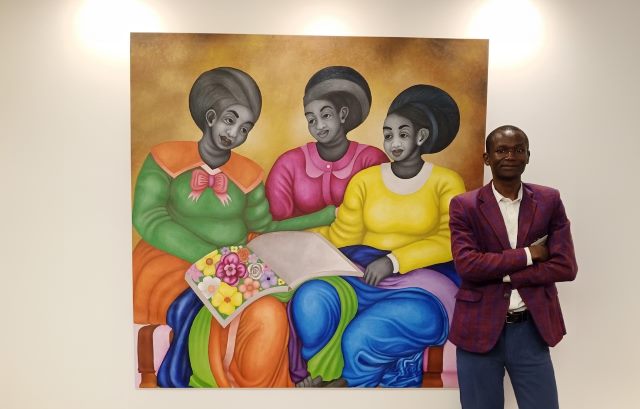
Onesmus Okamar“There are many people with great talents that only lack information. If you don’t know where to take your work to sell or how to approach galleries or individual clients – how to relate to them – that becomes the biggest challenge and an obstacle for many artists and people in all fields.” The Borgen Project interviewed Onesmus Okamar, a self-taught Kenyan artist, discussing his work with the Kobo Trust, art as a tool for alleviating poverty and education in Kenya.

About Onesmus Okamar

Born in Teso-North, Busia County, Kenya, Okamar is an award-winning visual artist based in the country’s capital city, Nairobi. With no formal training, Okamar began pursuing art at age 17. Two years later, in 2014, Okamar received a commendation for the Mask Prize, an award celebrating the creativity and innovation of African youth.

While discussing art and education in Kenya, Onesmus Okamar states that one of the biggest problems that Kenyans face is an insufficiency of information and access to resources, explaining that a particular struggle for creatives is to find “a physical space where they can work and where they can invite clients to get to know their art.”

The Kobo Trust

According to Onesmus Okamar, the Kobo Trust, a charitable foundation and nonprofit founded by Kobo Safaris Ltd. in 2011, works both with artists and children from disadvantaged backgrounds, seeking to create a solution to this problem. The Kobo Trust provides a creative space for artists to use while educating, rehabilitating and sheltering children from disadvantaged backgrounds.

Okamar describes that many “kids end up in the streets because they don’t have anything to do when they finish school.” However, the Kobo Trust sponsors children through their primary, secondary and tertiary levels and “empowers them by getting them involved in businesses of their own.”

Having worked as an artist for the Kobo Trust since 2017, Okamar explains that the foundation receives 20% of any sale from its exhibitions while the remainder profits the artist directly. Through a circular scheme, the 20% returned to the Kobo Trust funds further investment in the foundation’s children, projects and partnerships.

Art as a Tool 

The Kobo Trust is dedicated to sponsoring both children and artists. However, its primary goal is to use arts and culture as a tool for alleviating poverty. The foundation achieves this by using art as a tool for healing traumas while empowering, transforming and building resilience.

When asked how art can practically translate to alleviate poverty, Okamar says, “First and foremost, art must be used as a tool to find an individual’s inner voice, to help expand creativity and freedom of expression.”

The Kobo Trust encourages the freedom of expression as a means to address issues and traumas associated with poverty. It provides an outlet for children and young people to respond positively to their circumstances through art. In doing so, individuals learn that art can be used to overcome a wide variety of challenges and are edified about art as a tool to amplify wider discussions of social, economic and political concerns.

In a brief given by the United Nations Educational, Scientific and Cultural Organization (UNESCO) discussing the role of art in alleviating poverty, Dr. Kessous, UNESCO artist and ambassador for peace, described it as this: “The impact of art is underestimated today. We have a limited view of an artist as someone who produces beauty devoid of social conscience. In response, many artists decide to combine activism and art to become ‘artivists’ – offering their talents to alleviate suffering, promote peace and prevent war.”

Education in Kenya

Since 2005, Kenya’s economy has steadily grown, transcending from a low-income to a middle-income country. However, disparities in wealth distribution and access to education and health care have created a large divide between Kenya’s rich and poor. Okamar explains that “at times, even the people who may have finances around them lack the information that can help them in their careers.”

When discussing whether art is supported in the Kenyan education system, Okamar laughs, saying that “most parents in Kenya still want their children to become lawyers and doctors.” While this remains prevalent in many countries worldwide, a 2020 study showed that only 19% of Kenyans enrolled in tertiary education, indicating 23% less than the global average.

According to Onesmus Okamar, the latest curriculum does include art but doesn’t address it to be beneficial for development beyond the educational level. He states that “they [students] don’t know anything about the finance part of it. They’re not taught about marketing or using it as an income.” He likens the current system to “giving someone the equipment without giving them the manual on how to use it.”

Alleviating Poverty

Increasing education and access to resources has been proven as a way of reducing poverty. However, when combined with art, it creates a positive medium to address issues synonymous with poverty while increasing awareness and visibility of this suffering. By engaging people in the arts, disadvantaged individuals are encouraged to find their voices and positively contribute to the world around them. Art transforms mentalities, making it a powerful tool in the battle against poverty reduction.

– Zoe Winterfeldt
Photo: Courtesy of Onesmus Okamar

February 15, 2024
https://borgenproject.org/wp-content/uploads/borgen-project-logo.svg 0 0 Hemant Gupta https://borgenproject.org/wp-content/uploads/borgen-project-logo.svg Hemant Gupta2024-02-15 01:30:032026-04-16 10:06:14Onesmus Okamar on Art and Education in Kenya
Global Poverty

How Semiconductor Manufacturing in Kenya Reduces Poverty

Semiconductor Manufacturing in KenyaKenya struggles with high unemployment and poverty rates. In 2014, Kenya’s unemployment rate for citizens aged between 15 and 35 was 67%. Throughout the past decade, Kenya has seen significant developments due to Konza Technopolis, a government-sanctioned project to make Kenya an industrialized nation. By emphasizing the industrial aspect of Kenya’s economy, the nation can stimulate its economy and thereby improve the living conditions of impoverished Kenyans. Now, thanks to a three-year-old startup company, semiconductor manufacturing in Kenya has progressed even further and the nation is currently the premier semiconductor manufacturer across all of Africa.

Semiconductor Technologies Limited

Although most semiconductors are made in the United States, China and other heavily industrialized nations, Kenya is beginning to enter the semiconductor manufacturing sphere through the startup company Semiconductor Technologies Limited.

Semiconductor Technologies Limited, or STL, is succeeding in its mission to be the leading organization for semiconductor manufacturing in Kenya. The company was founded by Anthony Githinji, who started work on semiconductors in the United States in 1997 before bringing his knowledge back to Kenya. Githinji also strives to integrate technology into his local community. For instance, he helped to establish a computer lab in a village near Mount Kenya in hopes that it would educate children and help their families.

STL also strives to promote the female workforce in semiconductor manufacturing in Kenya. Of the roughly 100 engineers employed at STL, 70% are women. The company inspires women in the STEM field, thanks partly to the STL’s strong human resource development program. STL hopes to cultivate new talent by encouraging internships and by collaborating with other universities in Kenya, Uganda and Rwanda in the future.

What Are Semiconductors?

Semiconductors are small materials that conduct electricity and are often found on circuit boards in electronics. As the “brain” of the electronic system, they are a necessary component in most electronic devices and related products. Semiconductors can be found in many consumer products, such as refrigerators, microwaves, laptops, mobile phones and video game consoles. Manufacturing semiconductors is in high demand, as the products made with those chips are near-essential in everyday modern life. 

What Is Silicon Savannah?

Konza Technopolis, also known as “Africa’s Silicon Savannah,” is Kenya’s hub for technological innovation and development, located 60 miles southeast of Nairobi. Much like San Francisco’s Silicon Valley, the Kenyan government strives to use the Konza Technopolis project to make the country a technological powerhouse on the level of other industrialized nations. Semiconductor Technologies Limited is one of many successful projects in Silicon Savannah, but the company is especially unique in its potential role in fighting Kenyan poverty.

STL’s Impact on Poverty

Significant evidence is that semiconductor manufacturing in Kenya may impact the nation’s poverty level. Between 2011 and 2012, Kenyan Internet bandwidth per user increased from 4500 megabits per second to 24000 megabits per second. The African mobile phone boom of the 2010s resulted in more families having access to functioning mobile phones than clean water or electricity. This opportunity allowed development researchers such as the International Centre for Tax and Development to use mobile phone software for development in the country. In particular, several of Kenya’s impoverished communities benefited from convenient phone applications for texting, health care and banking. In 2014, 66% of non-cash-based transactions in Kenya were done through mobile money payment systems.

By manufacturing semiconductors in Africa, Semiconductor Technologies Limited has a golden opportunity to help develop Kenya and fight against poverty. Technology is proven to assist in developing impoverished communities in the country, and therefore, the investment in additional technological efforts can only lead to a brighter future for Kenya.

– Liam Kahan
Photo: Unsplash

November 15, 2023
https://borgenproject.org/wp-content/uploads/borgen-project-logo.svg 0 0 Yuki https://borgenproject.org/wp-content/uploads/borgen-project-logo.svg Yuki2023-11-15 01:30:322024-06-04 01:03:21How Semiconductor Manufacturing in Kenya Reduces Poverty
Global Poverty

Broadening Internet Connectivity in Kenya

Internet Connectivity in KenyaKenya’s government is set to begin constructing 100,000km of fiber-optic cable throughout the country as part of a nationwide project to broaden internet connectivity in Kenya. Their approach implements a unique blend of private- and public-sector construction that has caught the eye of many experts in the field.
Internet Access in Kenya

According to the World Bank, less than a third of Kenyans had internet access in 2021. The largest data service provider in Kenya, Safaricom, still remains largely inactive in most rural areas. Internet connectivity in Kenya is strongest in Nairobi.  
 

To address Kenya’s internet deficiency, the government has begun Phase 1 of the multi-phase Kenya Digital Economy Acceleration Project, a plan to broaden internet connectivity in Kenya. From this year to 2028, 100,000km of fiber-optic cable will be built across all 1450 wards in the country, targeting areas outside major cities. Furthermore, this cable network will be connected to 25,000 public “Digital Village Smart Hubs,” ensuring more citizens living in rural communities can access internet services. 

Rather than working alongside the private sector in a joint national venture The ITC, Kenya’s Ministry of Technology and Communication, has commissioned private-sector companies like Safaricom to construct about half of the cable network itself, while the government oversees construction of the remaining 50%. Though structurally complex, experts believe this approach could speed up construction, lower costs and create over 1.5 million jobs. Additionally, the fiber-optic cable uses quartz fiber, which is lightweight, resilient and loses 100 million times less transmit power than traditional cables. 

Safaricom has already completed 27% of its share of the construction. Moreover, the World Bank has committed nearly $400 million of the $600 million needed to complete the network. 

All Africa Digital Economy Moonshot (Bigger Plans for Africa)

A broader conduit for funding is the joint All Africa Digital Economy Moonshot of the World Bank and African Union. This is a broad goal of bringing Africa online, as well as a digital overhaul of African financial and public services by 2030. 

Phase 2 of the KDEAP will run from 2026–2030 and involve building the infrastructure and digital environments to digitize government services. By 2030, the Kenyan government should be able to offer e-services like 3-minute digital credit lines and digitized fingerprint/photo records of citizens, enabling secure, speedy access to thousands of planned public services. 

Economic Benefits

About a quarter of Kenya’s population currently lives in extreme poverty. Increasing internet connectivity in Kenya could reduce poverty by improving education and expanding job opportunities. Furthermore, many African leaders note that there is a strong desire amongst African countries to strengthen trade between each other, not just internationally. However, the lack of digital payment systems, credit lines, speedy internet connection and other information technologies has hampered efforts to build trade networks on the continent. Hopefully, as more countries are brought online this decade, they will be able to reap the economic benefits of improved trade and production.

The push for greater internet connectivity in Kenya looks to be going well. Hopefully, the government and its private-sector partners will continue to be successful in the future.

– Finneas Sensiba
Photo: Pixabay

November 7, 2023
https://borgenproject.org/wp-content/uploads/borgen-project-logo.svg 0 0 Yuki https://borgenproject.org/wp-content/uploads/borgen-project-logo.svg Yuki2023-11-07 15:00:272023-11-05 23:45:23Broadening Internet Connectivity in Kenya
Education, Global Poverty, Women and Female Empowerment

Shining Hope on Poverty in Kenya 

Poverty in KenyaKenya has been leading the way as one of the fastest-growing economies in East Africa for the past decade, with an average growth of 5.7% each year. Unfortunately, this has been benefiting the country unevenly; with millions of Kenyans still living in severe poverty. Hope was sparse until an NGO called Shining Hope on Communities emerged from the slums but it is making a difference regarding poverty in Kenya.

Africa’s Largest Slum

Kibera sits on the southern edge of Nairobi and is home to more than 250,000 Kenyans in a space no larger than 2.5 km2. Considered a landmark for sightseers, thousands of men, women and children are victims of starvation and disease.

The area is a slum with dire living conditions, posing safety and disease threats to all inhabitants. It lacks clean water, electricity and sufficient food access while containing no proper housing and holds the constant threat of eviction at any time as an informal settlement. Mostly though, it has robbed most inhabitants of opportunities to educate themselves and to escape to a better life.

The Birth of SHOFCO

The Kibera slum is where it all began when a young Kennedy Odede was born into the tough, unsafe and cruel reality of poverty in Kenya. Odede managed to escape at the age of 10 to a life of sleeping rough and teaching himself with big dreams for a better future for Kenyans.

In 2004, and with nothing but a 10p coin, a football and an idea, the doctor sought out and found a way to support those he had left behind. He created Shining Hope for Communities from the ground up.

Now, the globe recognizes him as a social entrepreneur and is commending him for his achievements. He was crowned one of Forbes’ ’30 under 30’, and has received an Echoing Green Fellowship, among others. Odede still advocates and sits on various foundation boards to give a voice to those still suffering in silence.  

SHOFCO Today

With offices in the U.S. and Kenya, Shining Hope For Communities has taken a grassroots approach to reducing poverty in Kenya by working directly with communities and informal settlements. They work closely with communities suffering the most to provide essential services, including water, safety and other basic survival needs.

SHOFCO then supports the further development of these areas, with education and development opportunities. It encourages and helps individuals access opportunities to improve their futures and through this, begin to develop healthy and self-sufficient communities.

So far, almost 20 years down the line, the organization has reached and achieved the following:

  • SHOFCO’s efforts have impacted 17 urban slums in Kenya.
  • The organization has helped 2.4 million Kenyans living in informal settlements.
  • It helped six health clinics open between the Kibera and Mathara slums.
  • The initiative granted 954 young people access to jobs and internships.
  • The youngest organization in history to receive the Conrad N. Hilton Humanitarian Prize.

SHOFCO & Female Empowerment

Historically, females in the urban slums of Kenya were disregarded when it came to education and opportunities. SHOFCO launched Girls Leadership Academies in Kenya’s two largest slums, Kibera & Mathare. The academies have managed to reach 656 of the slum’s inhabitants. 

The academies offer free education up to the eighth grade and opportunities far better than were previously accessible. Opportunities waiting outside the confines of the slum. 

The girls are also granted access to free health care, supplies, uniforms and food, to ensure that the opportunity for a better future can be fully seized.

Since the launch of the education programs, the amount of girls contracting and suffering from HIV within the slums has reduced significantly. Higher survival rates have also been seen among infants with fewer but healthier children born. The students have gone on to continue advocating for change themselves; to earn more than ever expected and invest more than 90% of earnings into their families, further improving the future of these communities.

Looking Ahead

There is still a long way to go in eradicating poverty in Kenya, but this is only the beginning. SHOFCO is an example of an organization that has provided hope and opened up a future for the residents of Kibera and Mathare that had never existed and it does not have to stop there.

– Lucy Blake
Photo: Flickr

November 5, 2023
https://borgenproject.org/wp-content/uploads/borgen-project-logo.svg 0 0 Jennifer Philipp https://borgenproject.org/wp-content/uploads/borgen-project-logo.svg Jennifer Philipp2023-11-05 15:00:342023-11-03 05:35:36Shining Hope on Poverty in Kenya 
Global Poverty

The Positive Impacts of Mobile Banking in Kenya

Mobile Banking in KenyaFor the past 18 years, mobile banking in Kenya has helped thousands of people gain control over their money while reducing the country’s poverty rates. The phone-based mobile money service named M-PESA, started by Vodafone in cooperation with Safaricom, has expanded financial inclusivity by allowing access to financial services for even the unbanked through the convenience of a mobile phone. According to the Vodafone website, “M-PESA offers a safe, fast and low-cost way to pay, receive, transfer and store money.” Through local M-PESA agents, individuals are able to withdraw, send or deposit cash, negating the need to visit a bank that may be located far away from a community.

More than Mobile Banking

One of the main benefits of M-PESA is that a bank account is not necessary for using its services. This is a significant advantage to impoverished people in rural, remote areas who cannot afford hefty bank fees, do not earn enough to warrant the opening of a bank account, do not have the formal documentation necessary to open a bank account or simply reside too far away from a bank, making bank services costly and inconvenient.

M-PESA transaction fees are low and M-PESA resolves the need for individuals to travel long distances with physical cash to give to another, which could also be potentially dangerous. With many M-PESA agents, typically local small businesses or vendors, situated across Kenya, individuals can easily transact whenever necessary.

M-PESA was officially launched in Kenya in 2005, and by 2016, Kenya had 40,000 M-PESA agents operating in the country and more than 20 million M-PESA users in a country of 47 million people at the time. A study published in 2016 by Georgetown economics professor Billy Jack, and a colleague at MIT, Tavneet Suri, highlights the impacts of M-PESA on poverty in Kenya. The researchers conclude that between 2008 and 2014, MPESA “increased per capita consumption levels and lifted 194,000 households, or 2% of Kenyan households, out of poverty.”

Statistics from the World Bank confirm the poverty reduction progress during this period. The percentage of Kenyans living under the poverty line dropped from 46.8% to 36.1% over a period of one decade ranging from 2005 to 2015. Kenya’s rural areas noted the most significant decrease as poverty declined from around 50% in 2006 to about 38.8% in 2016, marking a decrease greater than 10%.

Empowering Women

The study by Jack and Suri states, “The impacts, which are more pronounced for female-headed households, appear to be driven by changes in financial behavior — in particular, increased financial resilience and saving — and labor market outcomes, such as occupational choice, especially for women, who moved out of agriculture and into business.”

In the report, Suri mentions that the service helped about 185,000 female farmers move out of farming jobs and into business or retail, giving them a more secure income considering the volatility of the agricultural industry due to changing weather patterns.

Other Issues Impacting Kenya

Despite mobile banking in Kenya bringing poverty rates down, Kenya is currently grappling with the impact of severe droughts, and this is affecting the financial and food security of farming families.

A press release by the International Rescue Committee in February 2023 highlights that the current drought in Kenya has the potential to leave 5.3 million Kenyans facing acute food insecurity from March to June 2023. The report notes that 2.4 million livestock have died due to recent droughts, putting pastoralist families out of work and diminishing their food security.

A United States Agency for International Development (USAID) press release in February 2023 reports that the Horn of Africa has experienced a fifth failed rainy season and Kenya’s cumulative rainfall is now 70% lower than the country’s 30-year average. On top of previous aid measures, USAID intervened in February 2023 with a provision of more than $126 million in emergency food aid to cover the needs of about 1.3 million Kenyans in drought-affected areas.

People will receive food aid in the form of physical food items or cash-based assistance, depending on whether or not local markets are operational. Cash-based assistance will not only allow families to purchase food items according to their needs and preferences but will also help boost local economies as local vendors will see an increase in sales.

Looking Ahead

In spite of the challenges posed by drought and food insecurity, mobile banking in Kenya, particularly through the M-PESA service, has made significant strides in reducing poverty rates and empowering marginalized communities. By providing easy access to financial services and enabling secure transactions, M-PESA has helped lift thousands of households out of poverty and fostered financial resilience, particularly among women. As Kenya continues to tackle the impact of droughts, ongoing support from organizations like USAID will help alleviate food insecurity and further boost local economies through cash-based assistance programs.

– Samuel Kalantzis
Photo: Pixabay

June 15, 2023
https://borgenproject.org/wp-content/uploads/borgen-project-logo.svg 0 0 Kim Thelwell https://borgenproject.org/wp-content/uploads/borgen-project-logo.svg Kim Thelwell2023-06-15 07:30:182023-06-13 05:26:37The Positive Impacts of Mobile Banking in Kenya
COVID-19, Global Poverty, Poverty Reduction

The Impact of COVID-19 on Poverty in Kenya

Impact of COVID-19 on Poverty in KenyaDue to the global COVID-19 pandemic, Kenya has experienced socioeconomic challenges leading to delayed progress in reducing poverty, with an estimated two million additional Kenyans falling into poverty. The rapid spread of the virus in Kenya has severe repercussions for people. The consequences include reduced job opportunities, lower wages, less access to healthcare assistance, difficulties transitioning to remote learning and food insecurity. The impact of COVID-19 on poverty in Kenya has especially affected women, youth and refugees.

Limited Jobs and Lower Wages = Reduced Food Supply

The impact of COVID-19 on poverty in Kenya affects household welfare due to fewer work opportunities and lower earnings, which leads to decreased food security. Compared to pre-pandemic rates, unemployment has nearly doubled. The working hours and earnings of wage workers have been cut, especially impacting women. Most families relied solely on the income of their small businesses, but due to lockdown restrictions, many businesses closed or experienced significantly reduced revenue. During the first four months of the COVID-19 pandemic, more than 1.7 million Kenyans experienced job losses.

Food security is a major concern for many families. Some are unable to afford expensive foods like vegetables and others can only afford to consume one or two meals per day. Most families reported that food shortage is the biggest challenge in the household. With the loss of jobs and income, people in Kenya can barely afford basic necessities such as food, water and healthcare assistance.

Limited Access to Healthcare

COVID-19 has deeply compromised access to healthcare. Many people reported having trouble getting public health coverage for non-COVID-19 related health problems. This forced people to go to private health clinics that offer highly-priced examinations. When a person in Kenya is infected with COVID-19 or other deadly diseases, the person is usually hospitalized even though they cannot afford the medical expenses. This forces the person to seek support from relatives or friends. Access to healthcare for intricate cases such as COVID-19 is limited since more than 78% of the population live in rural areas and 52% of people live in poverty. Most community and primary care centers in Kenya are short on medication and lack access to some of the most needed respiratory equipment, such as ventilators, which are needed to treat COVID-19.

Education for Children

Kenya has a commendable literacy rate of almost 80%. Due to the global pandemic, schools closed to prevent any further spread of the virus. This led to education transitioning to remote learning. Roughly 70% of Kenya’s schoolchildren live in rural areas with a lack of properly financed schools, qualified teachers and educational resources. Schools were expected to transition to remote learning but many students could not due to a lack of internet access and the high cost of internet access, especially in remote areas. For most households, accessing the internet costs more than a day’s pay. Many low-income families, particularly in rural areas, also have limited access to electronic resources such as smartphones and computers.

Raising Futures Kenya

Raising Futures Kenya is an organization that has helped Kenyans since 2001. Its main focus is helping young Kenyans secure a better future. The organization’s vocational centers have provided more than 1,500 young Kenyans with the skills and knowledge needed to secure employment and rise out of poverty.

Due to the global pandemic, fewer children are able to receive an education and people have limited access to healthcare. Fewer jobs available for families means households struggle to secure their everyday meals. The organization has called for support in order to effectively carry out its COVID-19 response plan in Kenya. The response includes securing essential items for communities such as food, hygiene products and medicines. Raising Futures Kenya is also prioritizes imparting important public health information to Kenya. Furthermore, the organization is transitioning to telephonic counseling to support children and youth during COVID-19.

The impact of COVID-19 on poverty in Kenya has been harsh, pushing millions of families further into poverty and causing the population to face even more difficulties. Due to the outcomes of COVID-19, organizations will need continued funding and support to continue to address the effects of poverty in Kenya.

– Mary McLean
Photo: Flickr

June 25, 2021
https://borgenproject.org/wp-content/uploads/borgen-project-logo.svg 0 0 Kim Thelwell https://borgenproject.org/wp-content/uploads/borgen-project-logo.svg Kim Thelwell2021-06-25 01:31:252021-06-24 03:14:52The Impact of COVID-19 on Poverty in Kenya
Global Poverty

Mobile Money Reduces Poverty in Kenya

Kenyan mobile money system M-Pesa Reduces Poverty in Kenya
Experts argue that expanding access to financial systems and services are an indispensable component of reducing poverty. However, Kenya offers only limited access to banking services outside of central cities. Fixed-line telephones are largely unavailable, and minimum fees for banking services pose an impediment to the rural poor and can deter use. Due to these facts, many rural and poor Kenyan households traditionally lacked access to proper finance-management resources. However, mobile money transfer service, M-Pesa, now provides Kenyans with an alternative to traditional banking. Mobile money reduces poverty in Kenya by creating a simple and accessible resource for individuals and families to manage their finances. In under a decade, the expansion of M-Pesa’s simple SMS-based system changed household finance so drastically that nearly 200,000 Kenyans—around 2% of the population—were able to break out of poverty.

Establishing Financial Resilience

M-Pesa allows individuals to send and receive payments via text, as well as deposit and withdraw cash from M-Pesa agents stationed in villages. With 110,000 agents located throughout the country, M-Pesa helps Keynan households overcome the country’s lack of accessible financial services. Now, there are 40 times more M-Pesa agents stationed throughout Kenya than ATMs. Users can easily and inexpensively store savings by depositing cash into their mobile phones via M-Pesa agents. Increased access to savings helps Kenyan households weather unexpected economic hurdles. One study found that following a financial shock, the per-capita spending of households using M-Pesa was 12% higher than households that didn’t use M-Pesa. The discrepancy is likely due to the increased saving capabilities of M-Pesa users.

Long-Term Implications for Poverty in Kenya

An MIT study in 2016 examined the long-term effects of using M-Pesa’s service. They found that between the years 2008-2016, per capita consumption of goods increased by approximately 18.5%. The mean of the households in the study spent $2.50 per day, which is well above the $1.25 or even the $2.00 per day that constitutes extreme and general poverty. According to the study, M-Pesa directly helped as many as 194,000 Kenyan households escape poverty between 2008 and 2016.

Financial Independence for Women

Additionally, the MIT study found that M-Pesa helps Kenyan households run by women in particular. Between 2008 and 2016, the savings of women-headed households using M-Pesa grew by 22% compared to those who did not. Furthermore, nearly 185,000 Kenyan women using M-Pesa could switch from subsistence farming to more economically productive activities, such as sales or business. This economic freedom came regardless of whether their home had a female or male head. For households with two incomes, M-Pesa gives women the ability to store savings, allowing Kenyan women to gain newfound financial independence and opportunity for their own economic pursuits.

More Resources from M-Pesa

Since MIT’s 2016 study, M-Pesa has increased the number of Kenyans with access to formal financial services from 75% to 83% in 2019. Along with personal banking, M-Pesa helps Kenyan households with a wide array of financial services. These include taking out loans, actively managing savings and collaborating with local banks. With the introduction of M-Pesa, the number of bank accounts held by Kenyans grew from 14% in 2007 to 41% by 2019. Largely due to this mobile money service, Kenya is now ranked third in the continent in citizen access to financial service, behind only South Africa and Seychelles. Researchers hope that M-Pesa’s success in Kenya will encourage further study of how mobile money reduces poverty in other countries.

 – Alexandra Black
Photo: Flickr

July 25, 2020
https://borgenproject.org/wp-content/uploads/borgen-project-logo.svg 0 0 Lynsey Alexander https://borgenproject.org/wp-content/uploads/borgen-project-logo.svg Lynsey Alexander2020-07-25 10:30:292020-07-25 13:37:27Mobile Money Reduces Poverty in Kenya
Global Poverty

3 Organizations Fighting Poverty in Kenya

Poverty in Kenya
Poverty in Kenya is on the decline. Between 2005-06 and 2015-16, the percentage of Kenyans living under the international poverty line (characterized in 2011 as US$1.90 per day) decreased from 46.8% to 36.1%. Kenyan poverty is currently decreasing by 1% yearly, a rate which is ahead of some countries in Sub-Saharan Africa (SSA). Still, the rate of poverty reduction in Kenya falls short of most nations in the lower-middle-income range.

The majority of impoverished Kenyans are in the rural, northeastern regions of the country. In Kenya, only 72% of homes possess viable drinking water. This is 4% above the average in the Sub-Sahara, but below countries like Ghana and Rwanda. In 2015 records showed 84% of Kenya’s population over 14 years of age were literate. This constitutes an 11% increase from Kenya’s 2005 literacy statistics.

While overall poverty in Kenya is decreasing, there is still much that people can do. Here are three of the many organizations creating change in Kenya and SSA more broadly:

The Boma Project

In its mission statement, The Boma Project states that it “empowers women in the drylands of Africa to establish sustainable livelihoods, build resilient families, graduate from extreme poverty and catalyze change in their rural communities.” The Boma Project creates triads of women and provides them with financial support in order to begin and grow their businesses. It also provides these women with two years of mentorship. Currently, 159,684 women and children have received support from The Boma Project.

Daate Inyakh of northern Kenya lives in an area with little access to water and often fought to feed herself and her six girls. In 2014, Inyakh began receiving help from The Boma Project. This gave her the opportunity through training and financial aid to start her own business. Inyakh’s triad is now in charge of their own shop and she is in the process of learning to read.

The Makuyu Education Initiative (MEI)

MEI is a very small nonprofit founded in 2011 that operates in Makuyu, Kenya. The organization provides children of the ultra-poor in this region with the opportunity to “escape the vicious cycle of poverty by fighting malnutrition and other obstacles that can deter them from reaching their full potential.” MEI provides a home for any children in the program, many of whom are orphans. It gives these children holistic support in education, health care and consistent meals. MEI relies on volunteers and donations in order to accomplish its important work.

African Childrens Haven

African Childrens Haven protects some of Kenya’s, Ethiopia’s and Tanzania’s most impoverished children and their families. Primarily, the organization takes care of orphaned children who lost their parents to HIV/AIDS. This organization’s work focuses on girls. African Childrens Haven supports these children by providing scholarships, regular meals and sexual education. It also works to prevent child marriage and sex trafficking. The organization provides its services to more than 700 children.

These three organizations are a few among many addressing the multifaceted reality of poverty in Kenya. Engagement and donation to causes like these provide anyone with a tangible avenue to help make a difference.

– Clara Collins
Photo: Flickr

July 20, 2020
https://borgenproject.org/wp-content/uploads/borgen-project-logo.svg 0 0 Kim Thelwell https://borgenproject.org/wp-content/uploads/borgen-project-logo.svg Kim Thelwell2020-07-20 13:00:442024-05-29 23:17:483 Organizations Fighting Poverty in Kenya
Children

7 Facts About Child Labor in Kenya

Facts About Child Labor in Kenya
According to UNICEF, a child laborer is a child who is too young to work or one who is involved in hazardous activities that could compromise their physical, mental, social and educational development. In Kenya, the Employment Act 2007 and the Children Act define a child as any person below the age of 18 years. Section 56 of the Employment Act makes it illegal to employ children under the age of 13. Children between the ages of 13 to 16 can be employed in “light work” while those between 16 and 18 are considered employable. Keep reading to learn the top seven facts about child labor in Kenya.

7 Facts About Child Labor in Kenya

  1. Farming, sand harvesting, drug peddling, street hawking, domestic work and sex work are the most common industries where child labor is present in Kenya. The commercial sexual exploitation of children tends to be more prevalent in tourism-heavy areas which include the capital city — Nairobi — and the coast.

  2. According to the U.S. Department of Labor, most child laborers in Kenya (including those who are victims of commercial sexual exploitation) are girls. However, boys are also involved. Overall, 35.6 percent of children between the ages of 5 and 14 engage are considered child laborers.

  3. Lack of education is one of the causes of child labor in Kenya. Primary education is free and mandatory but some parents are often unable to afford books, uniforms and other learning materials. Furthermore, 40 percent of those who complete primary school do not transition to secondary school, leaving many children at risk of exploitation. In 2018, the government began rolling out free secondary education for all Kenyans which will hopefully help curb this obstacle.

  4. Several laws protect children from child labor in Kenya including the Employment Act 2007. The Children’s Act says that children should be protected from economic exploitation, any work that interferes with their education, and work that is harmful to a child’s health or social, mental, physical and spiritual development. Additionally, the law mandates that no child shall be recruited in armed conflicts.

  5. Kenya has ratified several international conventions that are aimed at protecting children from exploitation. These include Minimum Age, Worst Forms of Child Labour, Optional Protocol on Armed Conflict, and the Palermo Protocol on Trafficking in Persons. However, Kenya is yet to ratify the United Nations Convention on the Rights of the Child Optional Protocol on the Sale of Children, Child Prostitution and Child Pornography which leaves children vulnerable to sex work.

  6. While some people may argue that child labor is beneficial to the economy because it raises a family’s income, this is hardly true. It harms the country’s economy in the long run as children are denied the opportunity to an education which could give them skills useful for getting a better job in the future.

  7. The government is doing its part in trying to end child labor in Kenya. In 2018, they increased the number of labor inspectors as well as the number of inspections conducted. The government also operates an emergency, toll-free child hotline to report instances of child abuse, including child labor. Organizations such as Save the Children and the African Network for the Prevention and Protection Against Child Abuse and Neglect are also helping out.

The government can help speed up the eradication of child labor in Kenya by subsidizing the cost of books, uniforms and other fees to ensure that all children can attend school. Additionally, there is a need to ensure that laws explicitly define and set parameters for what children can and cannot do. Finally, the government can ensure that the Ministry of Labour, Social Security and Services have sufficient financial and human resources to address child labor violations.

– Sophia Wanyonyi
Photo: Flickr

December 26, 2019
https://borgenproject.org/wp-content/uploads/borgen-project-logo.svg 0 0 Kim Thelwell https://borgenproject.org/wp-content/uploads/borgen-project-logo.svg Kim Thelwell2019-12-26 05:39:102024-05-29 23:14:237 Facts About Child Labor in Kenya
Page 11 of 12«‹9101112›

Get Smarter

  • Global Poverty 101
  • Global Poverty… The Good News
  • Global Poverty & U.S. Jobs
  • Global Poverty and National Security
  • Innovative Solutions to Poverty
  • Global Poverty & Aid FAQ’s
Search Search

Take Action

  • Call Congress
  • Email Congress
  • Donate
  • 30 Ways to Help
  • Volunteer Ops
  • Internships
  • Courses & Certificates
  • The Podcast
Borgen Project

“The Borgen Project is an incredible nonprofit organization that is addressing poverty and hunger and working towards ending them.”

-The Huffington Post

Inside The Borgen Project

  • Contact
  • About
  • Financials
  • President
  • Board of Directors
  • Board of Advisors

International Links

  • UK Email Parliament
  • UK Donate
  • Canada Email Parliament

Get Smarter

  • Global Poverty 101
  • Global Poverty… The Good News
  • Global Poverty & U.S. Jobs
  • Global Poverty and National Security
  • Innovative Solutions to Poverty
  • Global Poverty & Aid FAQ’s

Ways to Help

  • Call Congress
  • Email Congress
  • Donate
  • 30 Ways to Help
  • Volunteer Ops
  • Internships
  • Courses & Certificates
  • The Podcast
Scroll to top Scroll to top Scroll to top