• Link to X
  • Link to Facebook
  • Link to Instagram
  • Link to TikTok
  • Link to Youtube
  • About
    • About Us
      • President
      • Board of Directors
      • Board of Advisors
      • Financials
      • Our Methodology
      • Success Tracker
      • Contact
  • Act Now
    • 30 Ways to Help
      • Email Congress
      • Call Congress
      • Volunteer
      • Courses & Certificates
      • Be a Donor
    • Internships
      • In-Office Internships
      • Remote Internships
    • Legislation
      • Politics 101
  • The Blog
  • The Podcast
  • Magazine
  • Donate
  • Click to open the search input field Click to open the search input field Search
  • Menu Menu

Tag Archive for: Poverty in Antigua and Barbuda

Posts

Employment, Gender Wage Inequality, Global Poverty

Efforts To Close the Gender Wage Gap in Antigua and Barbuda

Gender Wage Gap in Antigua and BarbudaThe gender wage gap in Antigua and Barbuda affects economic opportunity for many women and families. Although the country has made significant progress in education and women’s participation in the workforce, challenges remain in ensuring equal access to higher-paying jobs and leadership positions. At the same time, government agencies and international organizations continue to invest in programs that strengthen women’s economic empowerment. These efforts help reduce poverty and create new pathways to financial independence across Antigua and Barbuda.

Limited data makes it difficult to measure the full extent of the gender wage gap in Antigua and Barbuda. According to UN Women, many gender-related labor indicators remain unavailable, highlighting the need for stronger data collection and analysis. As a result, researchers cannot calculate a comprehensive national gender wage gap figure. However, existing research suggests that women continue to face barriers in employment and income generation.

Unemployment and Poverty

A country gender assessment that the Caribbean Development Bank (CDB) conducted found that women often experience higher unemployment rates and remain unemployed for longer periods than men. The assessment also noted that women remain concentrated in certain sectors of the economy, which can limit earning potential and career advancement. These challenges can affect household income and increase financial vulnerability, particularly for women who serve as primary caregivers or heads of household. 

Economic inequality can contribute to poverty by reducing access to stable income, savings and business opportunities. When women earn less or face barriers to employment, families may have fewer resources for education and health care. Addressing these challenges can strengthen economic growth while improving living standards for communities throughout the country.

Promoting Gender Equality

The government addresses gender inequality through the Directorate of Gender Affairs. The agency promotes gender equality and the integration of gender considerations into national policies and programs.

The Directorate of Gender Affairs supports initiatives that encourage economic participation and leadership opportunities for women. Its work includes advocacy and partnerships with local and international organizations. By incorporating gender-responsive planning into development strategies, policymakers can help ensure that economic growth benefits women as well as men.

The government has strengthened institutional support for gender equality through collaboration with regional and international partners. These efforts create more inclusive opportunities in employment and entrepreneurship.

The Expansion of Entrepreneurship and Vocational Training

One promising solution to the gender wage gap in Antigua and Barbuda involves expanding entrepreneurship and vocational training opportunities for women. The Gilbert Agricultural and Rural Development Center (GARD Center) has played an important role in this effort through its Young Women’s Empowerment Project.

The European Union provided approximately $1.3 million to support the project, which targeted more than 200 vulnerable women ages 35 and younger. The initiative provided vocational training and business development support designed to increase participants’ earning potential.

The program produced measurable results. According to the GARD Center, 132 women completed vocational training while 88 women completed entrepreneurship training. Participants gained skills in information technology and other fields that can provide higher earning opportunities than traditional employment sectors for women.

The project also established a Business Development Unit (BDU) that helped participants develop business plans and connect with financing opportunities. By supporting entrepreneurship and workforce development, the initiative helped women build sustainable sources of income while strengthening local economic resilience.

Looking Ahead

The gender wage gap in Antigua and Barbuda remains an important development issue, but continued investment in women’s economic empowerment offers reasons for optimism. Government agencies and nonprofit organizations have expanded opportunities for education, workforce training and entrepreneurship. These initiatives help women strengthen their earning potential and contribute to economic growth.

As Antigua and Barbuda continues to improve gender data collection and strengthen economic inclusion programs, more women may gain access to higher-paying careers and business opportunities. These efforts can help reduce poverty and support long-term economic growth. By investing in women’s success, Antigua and Barbuda continues to build a more inclusive and prosperous future for all.

– Archie Monton-Black

Archie is based in Bedford, UK and focuses on Politics for The Borgen Project.

Photo: Flickr
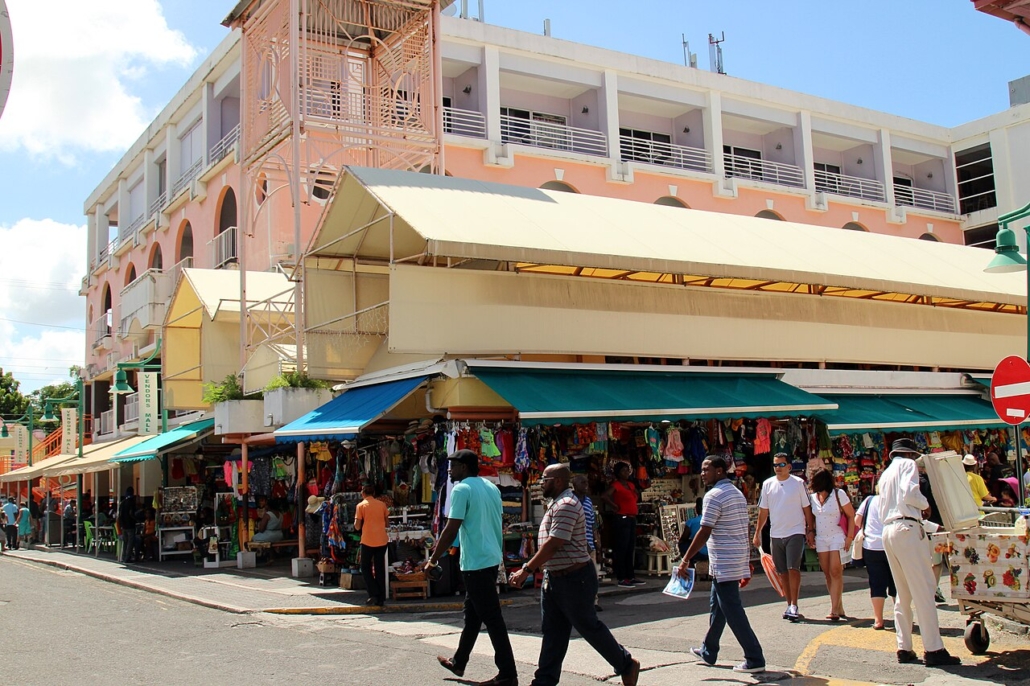
June 30, 2026
https://borgenproject.org/wp-content/uploads/borgen-project-logo.svg 0 0 Jennifer Philipp https://borgenproject.org/wp-content/uploads/borgen-project-logo.svg Jennifer Philipp2026-06-30 07:30:312026-07-02 11:14:02Efforts To Close the Gender Wage Gap in Antigua and Barbuda
Electricity and Power, Global Poverty, Natural Disaster

Renewable Energy in Antigua and Barbuda

Renewable Energy in Antigua and BarbudaEnergy and climate crises are pushing insular countries, such as Antigua and Barbuda, to the frontlines. Rising fuel costs, combined with hurricanes and a tourism-dependent economy are exposing how fragile a state’s fossil-fueled energy system can become. For years, imported fossil fuels generated electricity entirely, leaving communities vulnerable to fluctuations of the global oil markets.

Now, a different future is being sketched across these islands. It is common for government plans and regional forums to center on renewable energies projects. Rather than being treated as a distant ideal, green energy is increasingly being framed as a matter of survival — economically, environmentally and socially. 

Antigua and Barbuda, as many small island developing states, is seeing the transition away from fossil fuels as the pathway to keeping the coasts protected and the economy afloat. Here is more information about the promotion of renewable energy in Antigua and Barbuda.

Antigua and Barbuda

Nestled in the eastern Caribbean’s Leeward chain, Antigua and Barbuda is a twin-islands nation that squeezes a population of nearly 95,000 onto 440 square kilometers of low coral atolls and limestone ridges — Antigua’s volcanic hills peak at just 405 meters, while Barbuda’s pancake-flat expanse is waterless and boasts pink sands.

When it comes to demography, a peculiar distribution characterizes Antigua and Barbuda: nearly all residents — 98% — crowd onto Antigua, with 60% living in St. John Parish and another 26% crammed into the capital and port city of St. John’s.

Having been a check point for the slave trade routes in the 17th century, most islanders (87% of the total) are of African descent navigate a youthful, female-skewed demographic with life expectancy hovering near 79 years.

Green Energy Targets

Antigua and Barbuda is aiming at one of the most ambitious targets in renewable energy among Small Island Developing States (SIDS), targeting 86% of electricity from local renewables by 2030 and 100% for water management essentials like desalination. This vaults it into the ninth spot among the best SIDS for expected MW capacity by 2030 — eyeing 483 MW — despite a population of less than 100,000, far outpacing per capita efforts by giants like Fiji or Cuba, home to millions of inhabitants. This green energy strategy crosses three main sectors: geothermal, wind and solar power, not all equally viable and the current share of renewable energy is only at 7%.

Although a country of very small size, geothermal power could leverage the nation’s perch on the Caribbean Plate. A 2018 pact with Polaris Energy scouts baseload potential on the territory and the government has recently expressed the intention of entering the geothermal market of St. Kitts and Nevis, a neighbor small island country, to strengthen regional energy cooperation.

At an initial look wind may seem like a source perfectly suiting an oceanic nation. However, this power proved to be a double-edged sword: trade winds whip reliably, but 2017’s Hurricane Irma — obliterating 95% of Barbuda — canceled the efforts of erecting resilient turbines, stalling ambitious sites.

It is solar power that steals the spotlight as the most reliable source of green energy, dominating almost 100% of current renewables. Bathing in year-round Caribbean sun, Antigua and Barbuda benefits from more than 4,300 hours of sunlight, making it the perfect spot for accumulating solar energy. A key feature of the sector is the shift from rooftop systems to off-grid systems. Projects like the hurricane‑resistant solar and battery plant on Barbuda are designed not just to generate clean power, but to keep the lights on after storms and also attract foreign capitals.

Changing Weather Patterns

Poverty remains a persistent challenge in Antigua and Barbuda, worsening under the strain of changing weather patterns. Those already on the margins face increasing threats from extreme weather, disrupted livelihoods and limited access to essential services such as health, transport and communications. The combined effects of hurricanes and the lingering fallout from COVID‑19 continue to erode social and economic stability.

Women are disproportionately affected, forming the majority in tourism and public sectors while shouldering household leadership. A UN Women and IISD survey urged retraining of public employees and stronger integration of gender concerns into climate policies. Many women rely on microfinance after disasters, while health risks — from waterborne diseases to mental stress — intensify vulnerabilities.

Expanding renewable energy in Antigua and Barbuda is vital to reversing these trends. Clean energy projects can lower costs, create stable jobs and strengthen climate resilience, ensuring that development benefits vulnerable groups more equitably. For instance, the International Renewable Energy Agency estimated that in a scenario where Antigua and Barbuda make it to 100% renewable energy, including the use of hydrogen and the proliferation of electric vehicles as variables, the cost of energy would decrease from USD 0.15 kWh to USD 0.09.

Why Are SIDS Obsessed With the Green Transition?

SIDS like Antigua and Barbuda, Mauritius, Nauru and others champion the green transition despite contributing a minuscule slice of global GHG emissions — less than 1% collectively, for 39 countries falling into this category.

Changing weather patterns hit them first before any other country in the world: sea-level rise erodes shorelines, hurricanes wreck homes and economies, coral die-offs cripple tourism and fish stocks.

Climate-resilient infrastructure and innovation are advancing at the national level among all SIDS. For instance, the Maldives and Tuvalu are experimenting with adaptive urban designs such as floating cities and artificial islands, adapting to rising sea levels. Collectively, SIDS are speaking out through the Alliance of Small Island States, urging stricter emissions targets and fair financial mechanisms for climate impact mitigation at the international level.

– Riccardo Chiaraluce

Riccardo is based in London, UK and focuses on Technology and Politics for The Borgen Project.

Photo: Flickr

April 4, 2026
https://borgenproject.org/wp-content/uploads/borgen-project-logo.svg 0 0 Jennifer Philipp https://borgenproject.org/wp-content/uploads/borgen-project-logo.svg Jennifer Philipp2026-04-04 03:00:502026-04-03 13:20:36Renewable Energy in Antigua and Barbuda

Get Smarter

  • Global Poverty 101
  • Global Poverty… The Good News
  • Global Poverty & U.S. Jobs
  • Global Poverty and National Security
  • Innovative Solutions to Poverty
  • Global Poverty & Aid FAQ’s
Search Search

Take Action

  • Call Congress
  • Email Congress
  • Donate
  • 30 Ways to Help
  • Volunteer Ops
  • Internships
  • Courses & Certificates
  • The Podcast
Borgen Project

“The Borgen Project is an incredible nonprofit organization that is addressing poverty and hunger and working towards ending them.”

-The Huffington Post

Inside The Borgen Project

  • Contact
  • About
  • Financials
  • President
  • Board of Directors
  • Board of Advisors

International Links

  • UK Email Parliament
  • UK Donate
  • Canada Email Parliament

Get Smarter

  • Global Poverty 101
  • Global Poverty… The Good News
  • Global Poverty & U.S. Jobs
  • Global Poverty and National Security
  • Innovative Solutions to Poverty
  • Global Poverty & Aid FAQ’s

Ways to Help

  • Call Congress
  • Email Congress
  • Donate
  • 30 Ways to Help
  • Volunteer Ops
  • Internships
  • Courses & Certificates
  • The Podcast
Scroll to top Scroll to top Scroll to top