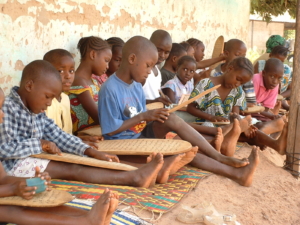
 A former Portuguese colony, Guinea-Bissau, has been affected by chronic instability since achieving independence in 1974. As of September 2023, Disability and poverty is chronic and 64.4% of the population in Guinea-Bissau live below the poverty line. A surprising 68% cannot afford a healthy and nutritious diet. Children and adults with disabilities, in particular, face major barriers, given prejudice and negative social norms with disability and poverty in Guinea-Bissau.
According to a mapping process that the Federation of Associations for the Defense and Promotion of the Rights of Persons with Disabilities in Guinea-Bissau developed, as of 2021, there are 11,548 people with disabilities in all regions of the country. However, Oio has the highest number of people living with disabilities. Specifically, around 16% of children between the ages of 5 and 17 have been found to live with some form of disability.
In light of this, international organizations like the World Food Programme (WFP), the United Nations Children’s Fund (UNICEF) and Humanity & Inclusion (HI) are partnering up with government officials and local organizations to combat the looming poverty and stigma among Guinea-Bissau youth living with disabilities.
Guinea-Bissau’s Barriers to a Fulfilling Life
Disability and poverty in Guinea-Bissau are intricately linked phenomena, reinforcing each other. In Guinea-Bissau, people living with disabilities experience higher levels of poverty, malnutrition and social marginalization. This is because low- and middle-income countries, in particular, tend to have inadequate access to essential resources and services such as health care, clean water, sanitation and nutritious food. Consequently, this leads to exclusion from work, education and social services, thus widening inequalities and exacerbating poverty.
In fact, it is estimated that at least 59% of youth with disabilities do not attend school. Education and social inclusion have become profound realities for many people living with disabilities in Guinea-Bissau. However, like numerous countries in the region, the nation still grapples with cultural discrimination against people with disabilities.
Throughout West Africa, there persist prevailing beliefs that children with disabilities are “bizarre” or “demonic,” resulting in countless stories of neglect, discrimination and ostracization. These cultural beliefs are often deeply influenced by religious backgrounds. In the rural areas of Guinea-Bissau, children with disabilities usually endure heightened levels of social marginalization. It hinders their access to education and, in some cases, leads to their confinement within their homes.
Disability Inclusive School Feeding
Inclusive approaches to children’s rights remain vital in combating high illiteracy rates. They are also beneficial for extreme inequalities between urban and rural areas. Children with disabilities are at much greater risk of malnutrition and food insecurity. As a result, organizations have shifted focus toward education and food security as a way to promote disability rights and inclusive education. According to WFP’s 2023 Practice Guide on “Disability Inclusive School Feeding,” “countries with high levels of malnutrition and nutrient deficiency often report higher rates of disability and developmental delays.”
School feeding has emerged as an innovative solution to addressing disability and poverty in Guinea-Bissau. Providing access to education and free nutritious meals has empowered children living with disabilities and their families, instilling hope for a brighter future.
In collaboration with the government and various nonprofit organizations, the WFP has spearheaded initiatives to support the integration and well-being of children with disabilities into the public school system. One initiative is Bengala Branca, Guinea-Bissau’s inaugural inclusive school catering to both children with and without disabilities.
Additionally, Mariposa is a school located in Guinea-Bissau’s capital that offers specialized education for hearing and speech-impaired learners. The school now integrates the WFP’s take-home rations program for students. Since May 2023, a pilot program has been actively establishing vegetable gardens in schools, including Mariposa, for children with disabilities. This initiative involves providing training for youth, enabling them to procure locally produced food and learn more about self-sufficiency and food diversity.
WFP provides nutritious and hot meals to nearly 179,000 primary school children in Guinea-Bissau, including those with disabilities. In a concerted attempt to tackle disability and poverty in Guinea-Bissau, along with entrenched prejudice and discrimination, the WFP’s project Education Without Borders, launched in 2020, has now successfully reached all 852 schools in the country.
Other Efforts
Other efforts have also been witnessed across Guinea-Bissau. Between 2020 and 2022, HI actively worked to increase access to education among children with disabilities by improving the accessibility of school canteens. Additionally, it conducted campaigns to raise awareness of disability issues in the regions of Bissau, Oio, Bafata, Biombo and Cacheu.
Despite having feeding programs, schools in the country frequently lack training on inclusive education and equality. They also lack accessible-friendly school infrastructure, including sanitation facilities, which makes it difficult for students with disabilities to attend.
To address this issue, UNICEF, in collaboration with HI, has directly supported the construction of WASH infrastructure in 27 schools. Under the sanitation and hygiene program, UNICEF has also trained approximately 3,000 teachers in disability accessibility. This is in addition to creating initiatives that include inclusive hygiene clubs. These steps help to reduce some of the sanitation-related barriers that prevent children with disabilities from enrolling and attending school.
– Irene Suvillaga
Photo: Flickr
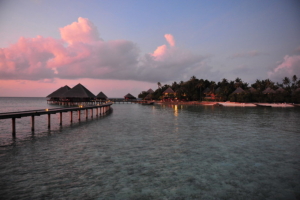 The Maldives, a South Asian country, has managed to elevate itself from a middle-income status despite facing significant geographical challenges. In the past five years, the economy has experienced an average growth rate of 4.5% per year, which is a considerable improvement mainly due to the booming tourism industry. The transport, communication and construction sectors have also contributed to this growth. The Maldives heavily relies on tourism to grow its per capita income. However, this industry is quite risky. Therefore, to maintain its growth and overcome the challenges of poverty, the country needs to have a more balanced economy. As of 2019, about 20,000 people or 5.4% of the population in Maldives, lived below the national poverty line, according to the Asian Development Bank (ADB).