Sustainability in the Wake of the Colombian Armed Conflict
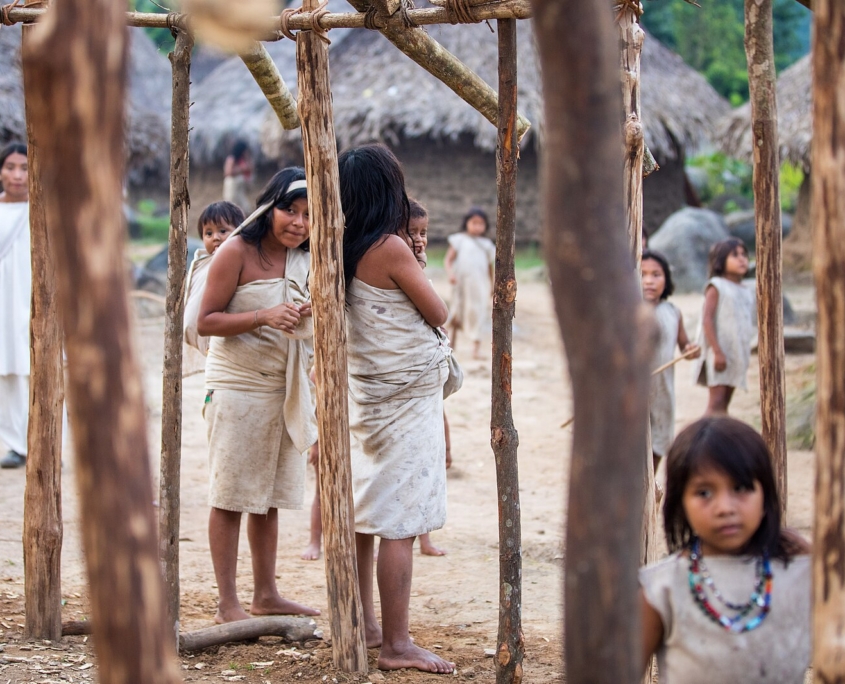 In the Colombian armed conflict, land ownership and agricultural strongholds for rebel forces were a form of political power. The peace owed to the 2016 disarmament of the Revolutionary Armed Forces of Colombia (FARC) has since raised questions over state policies of sustainability. The Borgen Project spoke with Dr Camilo Uribe Botta and assessed the role of the United Nations Development Programme (UNDP) to find out.
In the last decade, Bogota was the site of a critical period in contemporary Colombian history – the 2016 peace settlement where the revolutionary FARC guerrilla group agreed terms with the government to demobilize. The FARC’s long history of violent struggle revolved around agrarian reform. Aligning with a communist ideology, land rights and agricultural communes were central to FARC policy in the Colombian hinterlands. Their strategic aim was to ensure that Colombia’s poor had access to land rights. In the aftermath of 2016, a fiercely contested debate surrounding the environmental impact of deforestation and greenhouse gas emissions has been topical. Some argue that the FARC were environmentally conscious in ways the Colombian government has not been. On the other hand, the role of peaceful humanitarian organizations, such as the UNDP, have been successful in their efforts to improve Colombian sustainability.
2016 as a Turning Point or a Step Backwards?
The FARC-EP disarmament in 2016 provoked a debate over whether the signed peace agreement was really a turning point in the wider narrative surrounding the Colombian armed conflict. Teaching Fellow Dr Camilo Uribe Botta, an environmental history specialist at the University of Warwick, reveals the issues that have plagued ongoing land dispute debates in spite of political tensions.
“This isolation of rural areas in Colombia does not mean they are pristine lands. On the contrary, they remain at the center of disputes over land ownership and exploitation between big companies, large landowners, rural inhabitants, Indigenous communities and armed groups. Illegal mining, logging and deforestation are significant challenges.” — Dr. Camilo Uribe Botta, Oct. 28, 2025.
Rural land ownership and legal property rights have long been geographical sites of contestation between a variety of actors. However, in 2021, the government recorded “174,000 hectares deforested in 2021” heavily concentrated in the Amazon region of Colombia – a region of beauty renowned for biodiversity and identified by climate activists as an area which needs legislative protection. This statistic appears to lend weight to those who believe that FARC occupied the Colombian hinterland and limited deforestation levels comparable to the post-peace period. In reality, these claims have been found to be false.
Legacy
The enduring legacy of the revolutionary group continues to prove detrimental to the environment through an offshoot of dissident factions that have emerged as a result of the 2016 peace agreement. Hostility and violence toward farmers has continued in rural regions of Colombia, with these groups using forces of intimidation and extortion to coerce local communities into the practice of deforestation. Dr. Uribe Botta mentioned that more than “350 ecological leaders” had been assassinated in the country since 2018, making it clear that state solutions to the Colombian armed conflict have proved dangerous. The role of the UNDP in preserving peace across the region has continued to accentuate with the coinciding fatalities and discontented sentiment as a result of government action. Sustainability and peace are therefore interlinked entities that separate the politics of FARC disarmament from any correlation with an improvement in sustainability.
The UNDP: Protecting the People, the Andes and the Amazon
Dr. Uribe Botta fears the violence toward state-appointed environmental leaders is an enduring legacy of the Colombian armed conflict. The preservation of the natural world and Colombia’s beauty also has hugely positive implications for the diverse population that lives amongst it. This is greatly realized in the priorities driven by the UNDP, which have resulted in the World Bank branding Colombia as the nation “leading the path toward sustainability in Latin America.”
The year 2022 marked a stellar period in environmental progress within Colombia because a green taxonomy system was implemented nationwide. This initiative champions economic activity through a system of green bonds granted to local businesses. The money must align with the sustainability targets set by the government and whilst these measures may appear restrictive to a free market economy, Colombia’s GDP actually rose by 8.5% in the first quarter of 2022. Unlike during the Colombian armed conflict, national policy, which has consulted with international organizations, has sought to depoliticize environmental issues effectively.
The UNDP has liaised with local stakeholders to ensure the aforementioned green taxonomy system continues to prevail. Within the indigenous communities of Colombia, the forests have a sacred dimension and adopt a position of integral cultural importance. The Indigenous Communities for the Forests was set up alongside UNDP representatives, designed to preserve the cultural heritage of the Andes. In the highlands of Nukanchipa, “80 hectares” of the iraca plant were planted by the local community, which boosts biodiversity and the survival of the forest. From a historical perspective, the iraca ruler led the Muisca peoples through the brutalities of Spanish colonialism – the legacy of the indigenous communities lives on through the symbolic nature of the iraca plant.
Awareness in Academia
Difficult memories of the Colombian armed conflict for Dr. Uribe Botta remain vivid. He speaks of “the news about attacks, explosions and mass kidnappings” and a childhood which involved seeing a large military presence in Bogota.
“Our movement was minimal; people preferred not to travel by land in many parts of the country due to the risk of abduction. I remember that, for many school years, there was no school trip because the recommendation was not even to leave the city of Bogotá” — Dr. Camilo Uribe Botta, Oct. 28, 2025.
His academic journey has culminated in an impressive PhD funded by a scholarship obtained at the University of Warwick in the United Kingdom. Writing on the “commerce of orchids” in 19th-century Colombia, Uribe Botta has sought to trace the environmental impact of orchid extraction. His thesis presents the orchid as a marker of state success; if orchids are flourishing in a region, then sustainability practices are being implemented to effect.
Unfortunately, the orchid was at risk of extinction in the 19th Century, but important work like Uribe Botta’s has contributed greatly to the discipline of environmental history. The historiographical turn toward tracing environmental progress over time has not gone unnoticed by contemporary policymakers and activist groups. Orchids for Peace is an initiative that has targeted the conservation practices of the flower in the aftermath of the Colombian armed conflict. Exactly 1,000 planned orchid sanctuaries reflect the initiatives’ stress on “orchids as symbols of peace.”
Sustainable Goals without Political Undertones
The debate over the sustainability practices of the FARC-EP has a strong political edge. Placing the Colombian armed conflict at the heart of climate-related issues has resulted in a violent competition for land and resources post-2016. These disputes have resulted in an alarming rate of deforestation in deliberate opposition to the national state policy. Despite the unstable political climate in the aftermath of the Colombian armed conflict, the nation has made significant progress toward preserving its natural beauty, diverse communities and unique biodiversity. Importantly, these changes were sparked by nongovernmental actors.
The UNDP continues to work alongside local communities to protect their social and environmental interests. This has yielded fantastic results in relation to the nation’s GDP, as hailed by the World Bank. In addition to these measures, the intellectual field of environmental history continues to promote the positives of Colombian sustainability by highlighting important lessons learnt from the past. The cohesion between nonprofit workers, international organizations and environmental scholars has formed the basis of successful progress toward a greener, peaceful Colombia.
– Ash Fowkes-Gajan
Ash is based in London, UK and focuses on Good News and Politics for The Borgen Project.
Photo: Wikimedia Commons
