Ethiopian Highland Malaria Exposure
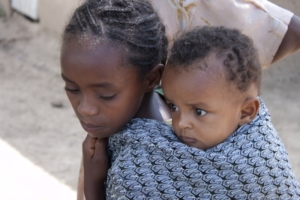 Rising temperatures are changing where malaria is transmitted in Ethiopia. Multiple studies show that as the climate warms, thermal thresholds suitable for malaria shift upward in elevation, increasing risk in places that were previously considered lower risk. This trend is directly relevant to Ethiopian highland malaria exposure.
A landmark analysis of long-term data from the highlands of Ethiopia (and Colombia) found that interannual temperature variability drives upslope movement in malaria incidence, providing clear evidence of altitudinal change. Complementary climate work using Ethiopia’s enhanced national climate dataset (ENACTS) identified statistically significant increases in the elevation of key temperature thresholds linked to transmission suitability, reinforcing concerns about such risks. Ethiopia’s malaria risk has traditionally been determined by altitude and temperature.
Program profiles identify “malaria-free” areas above roughly 2,500 meters—or above 2,000 meters where average annual temperatures stay below about 16 °C, highlighting how climate historically restricted transmission at higher elevations. As those conditions change, the boundary of receptivity can move, with implications for surveillance and response in fringe highland districts.
National Strategy and Health System Planning
Ethiopia’s National Malaria Elimination Program (NMEP) operates under a five-year strategic plan (2021–2025). It aims to consolidate gains, further reduce malaria burden and interrupt transmission in selected areas. The plan emphasizes evidence-based stratification, vector control (long-lasting insecticidal nets [LLIN]/Indoor Residual Spraying [IRS]), case management and surveillance, pillars that can be calibrated as malaria exposure changes.
Ethiopia’s recent malaria situation highlights the stakes. The World Health Organization (WHO) reported more than 7.3 million malaria cases and more than 1,100 deaths between January 1 and October 20, 2024, a reminder that national systems must plan for surges and geographic shifts. While these figures are national (not highland specific), they frame the operational urgency for climate-informed malaria control.
Climate-sensitive planning is already embedded in Ethiopian research and practice. Recent analyses link El Niño and other climatic drivers to epidemic risk in Ethiopia and programmatic efforts have piloted integration of climate information with disease surveillance to strengthen early warning and response.
Donor Financing and Policy Frameworks
The Global Fund and Ethiopia have launched three new grants totaling more than $441 million for 2024–2027 to sustain progress against HIV, TB and malaria while strengthening health and community systems. This funding can also support climate-aware targeting, improved surveillance and vector control, aligned with national health priorities. Globally, the Global Fund’s 2023–2028 Strategy and subsequent guidance explicitly encourage integrating climate considerations into malaria programming, including grant reprogramming to address climate-related shifts in risk.
These frameworks offer a pathway for aligning budgets and activities with evolving transmission zones. Partner inputs extend beyond financing. Program profiles from the U.S. President’s Malaria Initiative (PMI) detail Ethiopia’s stratification and intervention mix, a baseline that can be recalibrated if Ethiopian highland malaria risk zones expand.
Compounding Factors: New Vectors and Urbanization
In addition to climate-driven altitudinal shifts, the emergence of Anopheles stephensi, an invasive urban malaria vector, has complicated control in the Horn of Africa. WHO has issued an alert on its spread and peer-reviewed studies from Ethiopia have implicated the vector in outbreaks, underscoring the need for expanded entomological surveillance and tailored control in urban and peri-urban settings.
Actionable Recommendations
- Continuously update high-elevation risk maps by adopting climate-informed micro-stratification that uses high-resolution temperature data and surveillance information to identify newly receptive highland areas. Reassess historical altitude thresholds (for example, the 1,750–2,000 m guidelines) where warming has increased thermal suitability for malaria transmission.
- Strengthen climate-informed early warning systems by integrating meteorological drivers (rainfall, temperature anomalies, El Niño) with routine case data for predictive action; deploy tools and workflows documented in Ethiopian pilots and international reviews.
- Target vector control to shifting zones. Prioritize LLINs/IRS and larval source management in highland districts where suitability has increased; expand entomological surveillance along elevation gradients, including monitoring for Anopheles stephensi in at-risk urban corridors.
- Use flexible financing to adapt grants by leveraging Global Fund climate and malaria reprogramming guidance. Adjust budgets and activities mid-cycle as risk maps evolve, for example, by increasing procurement of nets and IRS supplies, adding surveillance sites or deploying rapid response teams.
- Protect equity in access. As highland communities confront new exposure, ensure case management, outreach and supply chains reach newly affected areas to prevent delays in diagnosis and treatment.
Conclusion: Health, Equity and Stability
The evidence is clear that warming can shift malaria suitability to higher elevations, challenging historical assumptions about Ethiopian highland malaria. By aligning national strategy, donor financing and climate-informed surveillance, Ethiopia and its partners could anticipate and respond to highland malaria risk before outbreaks take hold. Doing so is not only a public health imperative but a matter of equity and system resilience in a changing climate.
– Clara Garza
Clara is based in Los Angeles, CA, USA and focuses on Global Health and Politics for The Borgen Project.
Photo: Flickr
