Sickle Cell Disease in Tanzania
 Sickle cell disease has been a part of life in sub-Saharan Africa for more than 8,000 years, accounting for approximately 6.4% of under-five mortality, according to the World Health Organization (WHO). Sickle cell disease affects between 8,000 and 11,000 infants in Tanzania each year, with six out of every 1,000 children born carrying this genetic “time bomb”.
Without early diagnosis and consistent treatment, up to 90% of these children may not survive past their fifth birthday. To address this, Texas Children’s Global Hematology-Oncology Pediatric Excellence (HOPE) and Baylor College of Medicine Global Health have launched a low-cost program to combat sickle cell disease in Tanzania.
What Is Sickle Cell Disease?
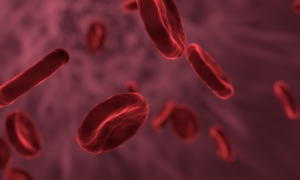
According to the National Institutes of Health (NIH), sickle cell disease is a genetically inherited blood disorder that affects hemoglobin. Hemoglobin is the protein that binds with oxygen in red blood cells as they travel throughout the body. Generally, red blood cells resemble crimson frisbees, gliding through the blood vessels to various organs and tissues. Upon arrival, they distribute oxygen and carry carbon dioxide from the tissues to the lungs for exhalation.
When a person has sickle cell disease, their red blood cells morph into a crescent shape, resembling a traditional farming tool called a sickle. As they become crescent-shaped, the hemoglobin often hardens, causing the blood cells to turn rigid. The sickled cells can then get caught in the vessels, blocking blood flow and causing severe pain.
Causes and Symptoms
These malformed cells are caused by a gene mutation inherited from parents who are both carriers of the recessive gene. According to the NIH, symptoms can develop as early as five or six months. These symptoms usually include yellowing of the skin or the whites of the eyes, often called jaundice and icterus, respectively, extreme tiredness or fussiness and painful swelling of the hands and feet.
As the affected children age, the symptoms begin to intensify exponentially. The NIH states that common symptoms found in sickle cell patients are severe pain events often referred to as “pain crises” or “vaso-occlusive crises,” fatigue, shortness of breath, irregular heartbeat and chest pain, among other abnormalities. Many of these occur when the sickled cells block the blood flow and restrict oxygen delivery to the rest of the body. Most commonly, this is the catalyst for the pain crises, which occur sporadically and can continue for multiple hours or even days.
Global HOPE and Baylor College of Medicine
Texas Children’s developed the Global HOPE program in 2017 to improve the survival of children with cancer and blood diseases in Africa. Its mission is to accomplish this by leading patient care, education and research to equate survival rates to those of the United States (U.S.). Through its Global Health collaboration with Baylor College of Medicine, the organization has become one of the largest distributors of pediatric HIV care on the planet. Its global programs aim to decrease health disparities and provide creative, forward-thinking solutions for improved care and survival rates.
In January of 2025, with the support of Bristol Myers Squibb, a global biopharmaceutical charitable organization, Texas Children’s and Baylor College of Medicine announced that they would be tackling the devastating threat of sickle cell disease in sub-Saharan Africa. The program will begin by rolling out interventions and treatments for sickle cell disease in Tanzania and Uganda. According to the Texas Children’s website, the interventions it has planned are economically advisable and have proven histories of success. They have been implemented in Western countries, often known for leading medical innovation, since the 1980s, with initial pilot trials also returning impressively positive results in Africa. The interventions are just as simple and effective in controlling sickle cell disease in Tanzania.
Prevention and Treatment
For infants, screening and immunizations will be administered. Screening is often done in newborns by pricking the infant’s heel and recovering a blood sample on a lab card. A lab then uses tests such as high-performance liquid chromatography, capillary electrophoresis and isoelectric focusing to separate and identify the components of the sample and attempt to detect the presence of abnormal hemoglobin proteins. Once a sickle cell has been identified in a child, Texas Children’s and Baylor College of Medicine plan to provide a daily penicillin pill for five years due to the increased susceptibility to bacterial infections such as pneumococcus. This will be administered orally until the child is five years old and should prevent the development of bloodstream bacterial infections.
Finally, they also plan to administer a daily dose of hydroxyurea, an oral medicine approved in 1998 by the U.S. Food and Drug Administration for treating sickle cell disease. Hydroxyurea has been found to prevent pain crises and hospitalizations for children. It does so by maintaining the circular flexibility of the red blood cells, allowing easier flow and oxygen delivery throughout the body. This will come as a big win in a country such as Tanzania, where access to health care, especially for children, is extremely limited due to high rates of multidimensional poverty, an unequipped infrastructure and a lack of access for rural populations.
Conclusion
The work of Texas Children’s Global HOPE and Baylor College of Medicine’s alliance has already proven to be successful in the work they have done in HIV and AIDS prevention and treatment. Their work to detect, educate, treat and research has lofty goals of emulating their success in the U.S. With the determination they have brought to the medical world thus far, their initiative provides a hopeful future for all children struggling with sickle cell disease in Tanzania.
– Jacob Christopher
Jacob is based in Granite Falls, NC, USA and focuses on Good News and Global Health for The Borgen Project.
Photo: Pixabay
