Challenges and Progress regarding rule of law in South Sudan
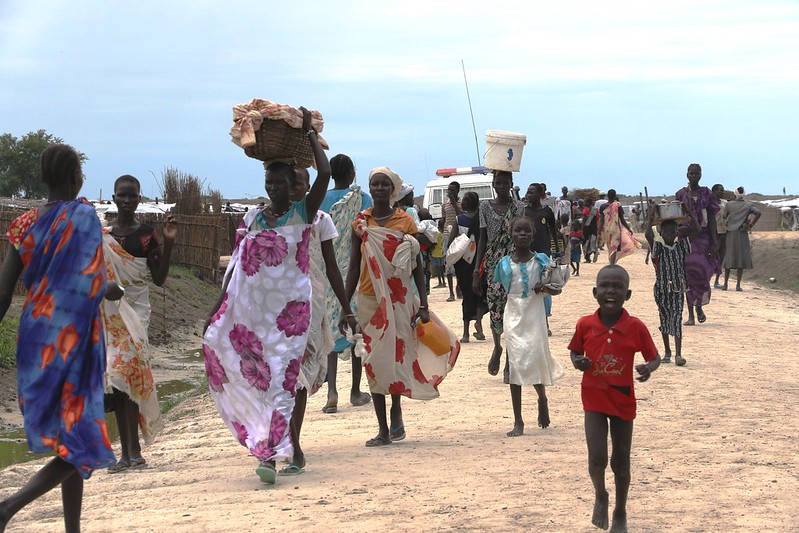 With decades of civil war and the blurred lines between military and political power, corruption has been widespread in South Sudan. This has weakened the rule of law, which has left civilians without protection and led to cycles of violence.
Rule of Law in South Sudan: The Constitution
South Sudan’s Constitution does outline the principle of separation of powers (Article 48) and equality before the law (Article 14). It also calls for an independent judiciary (Article 122) and establishes the Anti-Corruption Commission and Human Rights Commission to help uphold these democratic principles.
However, in practice, these mechanisms are often ineffective. Political and military officials are rarely held accountable as they evade prosecution. The independence of the judiciary is also at risk as officials have the power to influence courts and legal outcomes.
Moreover, the Constitution itself provides immunity to political and military officials. Military officers, for instance, cannot be tried in civil courts. Some provisions also grant excessive power to the president, further contradicting the rule of law and the separation of powers, according to BTI. The enactment of the Local Government Act, which redefined chiefs at courts as national actors, added to the problem since this limited their ability to represent the people’s voice independently.
Implementing the Revitalized Peace Agreement
To strengthen the rule of law, President Salva Kiir Mayardit and former First Vice President Riek Macha signed the Revitalized Peace Agreement in 2018. This included the obligation to establish the Hybrid Court for South Sudan (HCSS) in cooperation with the African Union, according to BTI. With this international involvement and the application of international legal standards, the HCSS was envisioned to be more independent to ensure justice for serious crimes.
Nevertheless, there has been little progress, as the South Sudanese authorities have delayed the establishment of the court. The foreign assistance budget from other countries decreasing in recent years, has also contributed to stalled progress.
Other obligations set out in the Revitalized Peace Agreement include the establishment of the Commission on Truth, Reconciliation and Healing (CTRH) and the Compensation and Reparations Authority (CRA). On a more promising note, the South Sudanese government passed legislation in November 2024 to establish these two bodies. Their main roles are to investigate and report on human rights violations, promote peace and reconciliation, and ensure compensation for victims.
The UN’s assistance
Another notable progress when it comes to the rule of law in South Sudan is the operation of a general court martial with the support of the U.N. In 14 cases, the court was able to prosecute military officials for crimes such as murder and sexual violence. The court sentenced them to prison and ordered them to compensate the victims.
The U.N. Mission in South Sudan (UNMISS) also extended support to victims by providing funding for free legal advice, mental health support, food, and accommodation. Although there are still limitations in this mission, such as the lack of victim protection during trials and a focus mainly on low-ranking officials, it still marks a meaningful step toward holding officials accountable under law.
Moving forward
Given their fragile political environment, there are still challenges to achieving rule of law in South Sudan. Hence, it is crucial for the government to continue its efforts toward transitional justice to break the cycle of conflict and address the root causes of violence. Only with commitment and long-term investment can South Sudan build a future where rule of law is not just a principle on paper, but a reality for its people.
– Lucy Cho
Lucy is based in Edinburgh, Scotland and focuses on Good News and Politics for The Borgen Project.
Photo: Flickr
