Economic Conditions in Syria After International Sanction Relief
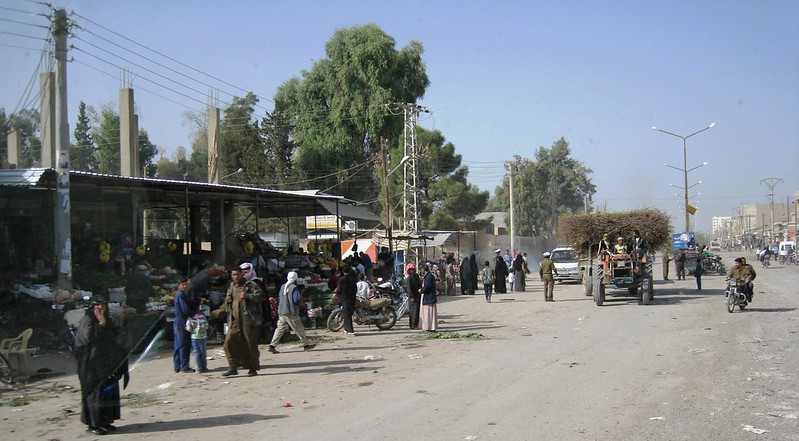 Despite continued instability, reinvestment initiatives increased in Syria after international sanction relief. The Syrian civil war has entangled the country since 2011, causing significant loss of life, mass emigration and destruction of the nation’s security and development. Before the conflict, poverty in Syria was 33%. However, it has almost tripled to 90% in 2025. Furthermore, extreme poverty is six times higher than before the conflict, going from 11% to 60%.
On May 21, 2025, the European Union (EU) announced its decision to lift its economic sanctions on Syria. On May 23, 2025, the U.S. Office of Foreign Assets Control (OFAC) issued the Syria General License (GL) 25, authorising transactions previously prohibited by the Syrian Sanctions Regulations.
Alongside this, the U.S. State Department issued a 180-day waiver of the Caesar Act, effectively lifting sanctions until a bipartisan bill is passed through Congress repealing the act completely. The sanctions existed as a result of human rights violations from the Syrian Assad regime, which was removed from power six months prior. Since the U.S. and EU lifted sanctions on Syria, the country has experienced increased reinvestment in infrastructure and businesses.
Background: Syria’s Long Conflict and Economic Toll
The Syrian Civil War began in 2011, when Arab Spring protests erupted across the nation against the Assad regime. By September that year, it had developed into a militarised conflict. The Civil War consisted of multiple campaigns, including both violence between the government and opposition forces, in addition to coalition efforts against Islamic state forces. Moreover, Turkish operations against Syrian Kurds introduced further conflict. On 8 Dec. 2024, Hay’at Tahrir al-Sham (HTS) forces, supported by the Turkish-backed Syrian National Army, deposed Bashar al-Assad during a major offensive in Damascus.
The Assad family had been in power for 54 years, with Bashar al-Assad succeeding after his father’s death in 2000. Human rights violations, mass atrocities and war crimes characterised the family’s authoritarian rule. Despite his ousting, war continues to flog the country. In a report from the United Nations Development Programme (UNDP), an estimated that $800 billion in GDP has been lost over 14 years of conflict.
Finance Sector Shows Signs of Recovery
In spite of current conflicts in the country, Syria continues to show small signs of economic rejuvenation. After a six-month closure, the Damascus Securities Exchange reopened on June 2, 2025, as the transitional government attempted to bolster the economy in Syria after international sanction relief. On June 17, 2025, Syria announced that the country had completed its first electronic transfer in 14 years with a European bank. The SWIFT system is a global network for electronic transfers between banks, showing that in the wake of recent sanction reliefs, Syria is taking steps back into the international market and community.
The governor of Syria’s Central Bank, Abdulkader Husrieh, said in a statement: “This step represents gradual progress toward reintegrating the Syrian financial system into global financial channels.”
New Energy Deal Aims to Revive Power Infrastructure
Syria’s 14-year civil war utterly ravaged its power grid, leaving people in daily bouts of blackouts, which can last upwards of 20 hours. Furthermore, the fighting has damaged 70% of power plants and transmission lines, causing a fall in energy production by 80%. On May 29, 2025, the Syrian transitional government signed a $7 billion energy deal with a consortium of Qatari, Turkish and U.S. companies to reinvest and revive Syria’s war-decimated power sector. The consortium, led by Qatar’s UCC Concession Investments, aims to generate 5,000 megawatts of energy as well as create more than 50,000 direct and 250,000 indirect jobs.
Using U.S. and European technology, developments include four gas-powered plants in central and eastern Syria and a 1,000-megawatt solar farm in the south. The U.S. Special Envoy for Syria, Tom Barrack, said: “This agreement represents a landmark step in Syria’s path to reconstruction and energy security. “This consortium will promote stability, infrastructure development and economic recovery and deliver tangible results for the Syrian people.”
Oil Exports Resume After Years of Sanctions
Syria’s crude oil is typically ‘heavy’ and has a high sulphur content, requiring alternative refinery methods. This made the Syrian economy more dependent on crude oil and gas exports to foreign markets, typically EU markets, accounting for 25% of government income. According to the European Commission, European countries imported more than $3 billion worth of oil from Syria in 2011. Overall, Syria produced 383,000 barrels of oil and 316 million cubic feet of natural gas every day.
Sanctions placed on Syria by the EU, as well as other countries, limited the number of markets available to export to and process Syrian oil. This resulted in a shrinkage of government revenue and worsening of impoverished conditions. On June 18, 2025, Syria resumed exports of refined petroleum products from its main refinery located in Banias after months of closure.
The restarting of oil exports follows the deposition of Bashar al-Assad, as well as interruptions of crude oil supplies from Iran. The state-owned Syria Trading Oil Company (Sytrol) announced that an initial cargo of 30,000 metric tonnes of petroleum products departed from the Banias refinery for foreign markets. It marks an important development in restoring the petroleum industry in Syria after international sanction reliefs.
World Bank Project to Rebuild Regional Power Links
On June 24, 2025, the World Bank approved the Syria Electricity Emergency Project (SEEP), which will restore Syria’s regional connectivity to Jordan and Türkiye through the revival of high-voltage transmission lines, including two vital high-voltage interconnector transmission lines. Likewise, it will repair damaged high-voltage transformer substations near demand centres in the most impacted areas and provide technical assistance and investment plans to inform policy and regulatory reforms for long-term sustainability.
In a statement about SEEP, H.E. Yisr Barnieh, the Minister of Finance at the World Bank, said. “Electricity is a foundational investment for economic progress, service delivery and livelihoods. “This is the first World Bank project in Syria in almost four decades. We hope it will lay the ground for a comprehensive and structured support program to help Syria on its path to recovery and long-term development.”
Looking Ahead
Overall, recent events in Syria suggest that the country is heading down the right path in certain regards. While the country continues to contend with instability from both its transitional government and forces who are still in combat, it has shown resolve and strides of change in Syria after international sanction relief.
Abdallah Al Dardari, the UNDP Assistant Administrator and Director of the UNDP Regional Bureau for Arab States, said: “Syria’s future hinges on a robust development recovery approach. This demands a comprehensive strategy addressing governance reform, economic stabilisation, sector revitalisation, infrastructure rebuilding and strengthened social services. By implementing these interconnected reforms, we can help Syria regain control over its future, reduce reliance on external aid and pave the way for a resilient and prosperous future for all in Syria.”
– Samuel Devine
Samuel is based in Cardiff, Wales and focuses on Business and Politics for The Borgen Project.
Photo: Flickr
