How EU Accession Reduced Poverty in Croatia
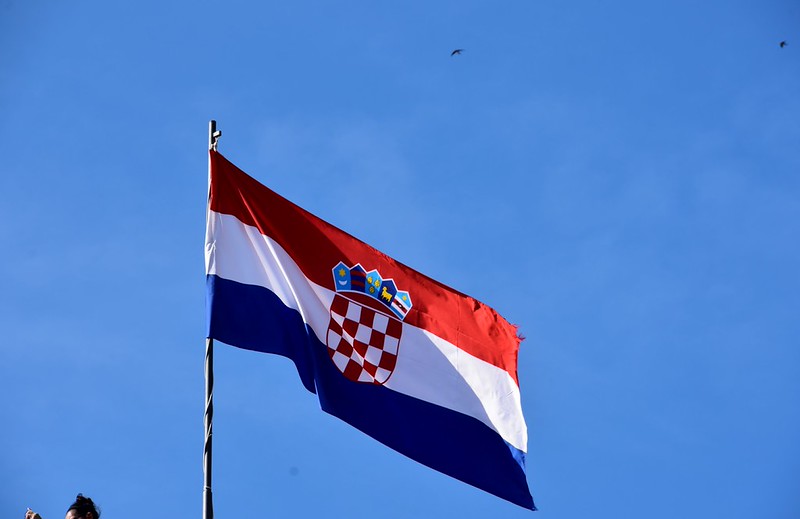 As one of the European Union’s recent success stories, Croatia has followed a remarkable path toward economic recovery and integration, only three decades after the devastation of the Yugoslav wars. Like many countries in the Balkans, Croatia emerged from the 1990s conflict with a shattered economy: the war of independence from 1990 to 1995 claimed around 20,000 lives and caused damage equivalent to 160% of its GDP.
In 1991 alone, GDP contracted by 21.1%, and between 1991 and 1993, real output fell cumulatively by nearly 30%.
Despite gradual stabilization in the mid-1990s, Croatia faced another major setback during the global financial crisis. Between 2009 and 2015, the country endured a prolonged recession that stalled growth and deepened social hardship. Against this backdrop, Croatia undertook significant political and economic reforms to meet EU standards, ultimately joining the European Union in 2013, less than two decades after the war. Since then, it has deepened its integration by entering the Eurozone and the Schengen Area, positioning itself ahead of many of its regional neighbors.
In many ways, EU accession reduced poverty in Croatia by providing financial resources, institutional frameworks and market access that played a decisive role in fostering economic growth.
Rebuilding Croatia’s Economy After the War
In the aftermath of the war, Croatia transitioned from a socialist economy to a market-based system under difficult conditions. Inflation surged, infrastructure lay in ruins and regional instability discouraged investment. Although tourism and trade helped spark a modest recovery in the mid-1990s, structural weaknesses persisted for years.
Croatia’s path to EU membership began with the Stabilisation and Association Process in 1999. It gained candidate status in 2004 and spent years aligning its legislation with EU law across 35 negotiation chapters. This process required reforms in governance, judiciary independence, market regulation and regional cooperation. While politically demanding, these reforms laid the groundwork for a more stable and transparent economic environment, an essential precondition for poverty reduction.
EU Membership as a Driver for Growth
Since joining the EU in 2013, Croatia has significantly improved its key socioeconomic indicators, showing how EU accession reduced poverty in the country. Unemployment dropped sharply from 17.25% in 2013 to 6.1% in 2023.
This drop reflects not only favorable economic conditions but also structural transformations supported by EU integration. Croatia received approximately 8 billion euros in structural and investment funds between 2014 and 2020, targeting competitiveness, employment and regional development.
These funds supported infrastructure projects, education and training programs and initiatives aimed at improving labor market participation. Large-scale investments such as the Pelješac Bridge, railway modernization and rural development programs stimulated economic activity and created jobs across multiple sectors.
Expanding industries such as manufacturing, retail and tourism employed many lower-income workers. Economic growth increased wages and improved living standards for vulnerable populations. Croatia also strengthened its social policies by expanding family benefits, child support and welfare programs, many co-financed by the EU. Rising labor income and better employment outcomes drove more than half of the reduction in poverty between 2013 and 2016. Overall employment grew by 17% between 2013 and 2024.
Currently, Croatia’s GDP per capita exceeds 70% of the EU average, up from around 59% a decade ago. The country has also received more than it contributed to the EU budget, with a net benefit exceeding 10 billion euros in its first 10 years of membership.
Sustaining Growth Beyond EU Support
Despite these achievements, Croatia now faces the challenge of sustaining this momentum beyond EU-driven support. Structural problems such as low productivity, bureaucratic inefficiencies and a challenging business environment continue to limit the full impact of EU-driven reforms. Small and medium-sized enterprises struggle to access financing, while public administration inefficiencies reduce the effective use of EU funds.
EU integration has also accelerated emigration. Since 2013, more than 300,000 Croatians have left the country in search of better opportunities elsewhere in the EU, shrinking the domestic workforce and deepening demographic decline, particularly in less developed regions. These trends highlight that, although EU accession reduced poverty in Croatia, it has not resolved all underlying structural challenges.
To sustain its progress, Croatia must strengthen its economic fundamentals, improve governance and enhance its domestic attractiveness. By addressing these structural barriers, the country can maintain growth, retain its population and remain competitive for future EU investment.
Looking Ahead
Croatia’s experience demonstrates how EU accession can serve as an engine for poverty reduction and economic recovery, especially in post-conflict contexts. Through financial support, institutional reforms and access to a larger market, EU membership has transformed the country’s economy, reduced unemployment and improved living standards. At the same time, Croatia’s trajectory highlights the importance of sustained domestic reforms to fully unlock the benefits of integration.
The reduction of poverty in Croatia offers a model for other Western Balkan states. With strong political commitment to reform and effective use of EU support, these countries could work toward replicating similar gains and building more resilient economies.
– Inès Maudire
Inès is based in Paris, France and focuses on Good News and Technology for The Borgen Project.
Photo: Flickr
