Vaccinating Animals for Neglected Zoonotic Diseases
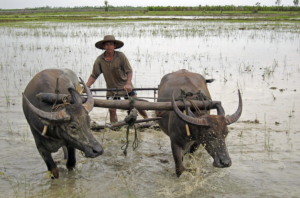
Zoonotic diseases disproportionally affect the poorest communities around the world. These diseases and infections, known as zoonoses, are transmitted between humans and animals. Except for large scale zoonoses like SARS and H5N1 (avian influenza), the majority of these diseases are not prioritized by national and international health systems and are considered neglected. Neglected Zoonotic Diseases (NZD) have the greatest negative impact on the economies and health services in developing countries where rural communities are dependent on livestock for transportation, food and farm labor. Tackling NZDs with education and vaccination is one way to alleviate poverty in developing countries.
Human and Animal Relationships
In the developing world, not only do animals and humans live close together, but humans are reliant on animals for everything from clothing and food to fertilizer and power. These animals represent financial security for smallholder farmers (SHFs) and marginalized populations (MPs). Globally, there are 191 million people categorized as rural poor. Of those, 411 million are livestock keepers. With animals directly contributing to the livelihoods of over 70 percent of rural poor communities, it’s crucial to keep livestock healthy for a sustainable existence. Healthy animals can be used for both base income or sold to supplement household income, therefore keeping livestock is recognized as one of the leading routes to alleviating poverty.
NZDs keep animals from achieving their full economic potential—either by dying from disease or transmitting the disease to humans. Despite existing vaccines that could be effective in the prevention and control of these diseases, many SHFs and MPs reside in low resource settings without access to health care services. Other reasons for a lack of knowledge and solutions include the irregular lifestyles of mobile pastoralists, religious and cultural beliefs, and small community numbers. One of the largest problems to consider when tackling NZDs is the fact that there is little incentive for the vaccination of livestock because the animals show no signs of the disease and their economic value does not increase after vaccination.
Sustainable Solutions
NZDs are neglected because the global demand for these vaccines is low. So, one of the first steps to creating sustainable solutions is to support regional manufacturers in developing countries. This would forge a path for stockpiles or antigen banks to be created in these small communities. Aside from the manufacturing aspect, community and social engagement are needed to incentivize SHFs to vaccinate their animals. If human health care initiatives can be integrated with animal health care initiatives, pastoral farming areas could simultaneously vaccinate both their human and animal populations. In order to improve the prevention and control of NZDs, there needs to be a multidisciplinary effort by agriculture, health and environment sectors at a national level.
Conclusion
Because these diseases are not considered major public health burdens like tuberculosis, malaria or HIV/AIDS, neglected zoonotic diseases do not garner the same media attention or monetary contributions from the public or private sectors. But, it’s important to look at the numbers—at least 61 percent of all human pathogens are zoonotic, representing 75 percent of all emerging pathogens in the last decade. These neglected zoonotic diseases that disproportionally affect the poorest communities globally have some of the largest impacts. One vaccine shot could be the difference in a life of poverty or a life of prosperity.
– Trey Ross
Photo: Flickr
