Security or Sustainability? Deconstructing Military Expenditure
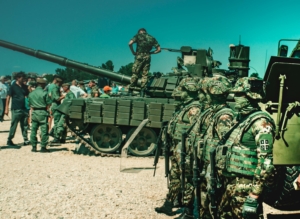 In 2024, global military spending rose for the 10th year in a row. It reached a record high of $2.7 trillion, which accounted for 2.5% of the world’s gross domestic product (GDP). The 9% rise from 2023 represented the sharpest annual increase since the end of the Cold War. While military expenditure surged, developmental funding faced massive shortfalls.
In the same year (2024), humanitarian aid totaled $24.2 billion, representing a decrease of nearly 10% from the previous year. At its current rate, the projected military spending for 2035 is between $4.7 to $6.6 trillion. An annual military expenditure of $6.6 trillion would be almost five times the spending at the end of the Cold War.
In 2024, governments invested 750 times more in defence infrastructure than the regular budget of the United Nations (U.N.). The figures prompt a deeper question: What would the world accomplish by investing this vast budget in achieving the SDGs? Channeling it toward development instead of defense? The following section explores these questions by drawing on data from the U.N. Secretary-General’s report.
Reorienting the Military Budget Toward Sustainable Development
Spending on militarization takes money away from achieving the SDGs and ending poverty. As of 2024, nearly 700 million people globally live in extreme poverty, while more than 3.5 billion people live in poverty based on a standard that is more appropriate for upper-middle-income countries. According to the U.N., it would cost $93 billion to end global hunger, less than 4% of the money spent on the military in just one year.
Every 1% increase in military spending is equivalent to a 1% decrease in publicly financed health services in low and middle-income countries. It would cost $370 million annually, a fraction of the current military budget, to provide basic health care to every person in low and lower-middle-income countries. Using 10% of the $2.7 trillion could ensure full vaccination for every child in the world.
More than 250 million children and young adults lack access to education. However, less than a quarter of this decade’s military spending could have provided 12 years of quality education for every child in low- and lower-middle-income countries. With $114 billion annually, 140 low- and middle-income countries could gain access to safe drinking water and sanitation.
In terms of employment, $1 billion could create more than 25,000 jobs in education, 17,200 in health care, 16,800 in clean energy and 11,200 jobs in the military. Therefore, the rise in global military spending, as opposed to humanitarian aid and development aid, is undermining the progress made toward achieving the SDGs. The report highlights how investing in development through health care, education and poverty alleviation rather than the military can help build a future that is sustainable and peaceful.
Voices for Disarmament and Demilitarization
Numerous international and civil society organizations are challenging militarization and actively advocating for disarmament. Amnesty International, Human Rights Watch and Action on Armed Violence are among the organizations working to shift existing global priorities toward a focus on peace. The Women’s International League for Peace and Freedom is also among the leading voices.
Through its Reaching Critical Will program, the organization actively promotes permanent peace through disarmament and demilitarization. It rejects militarism in all its forms, believing that it is an oppressive system which fuels inequality and conflict. Through its campaigns and initiatives, the organization advocates for disarmament, demilitarization and denuclearization with governments.
Final Remarks
The rising global expenditure on arms and military has led to the reallocation of development funds and a scaling down of humanitarian aid, which could have a positive impact on billions. Over the decade, while the answer to conflict has been investment in defense infrastructure, it has not helped create a world that is truly secure or sustainable. The call for demilitarization and disarmament is urgent to reclaim resources for restoring humanitarian aid and addressing pressing global challenges, creating a safer, more equitable world.
– Priya Doshi
Priya is based in Edinburgh, UK and focuses on Good News and Politics for The Borgen Project.
Photo: Pexels
