Migration to Taiwan: Improving Rights for Migrant Workers
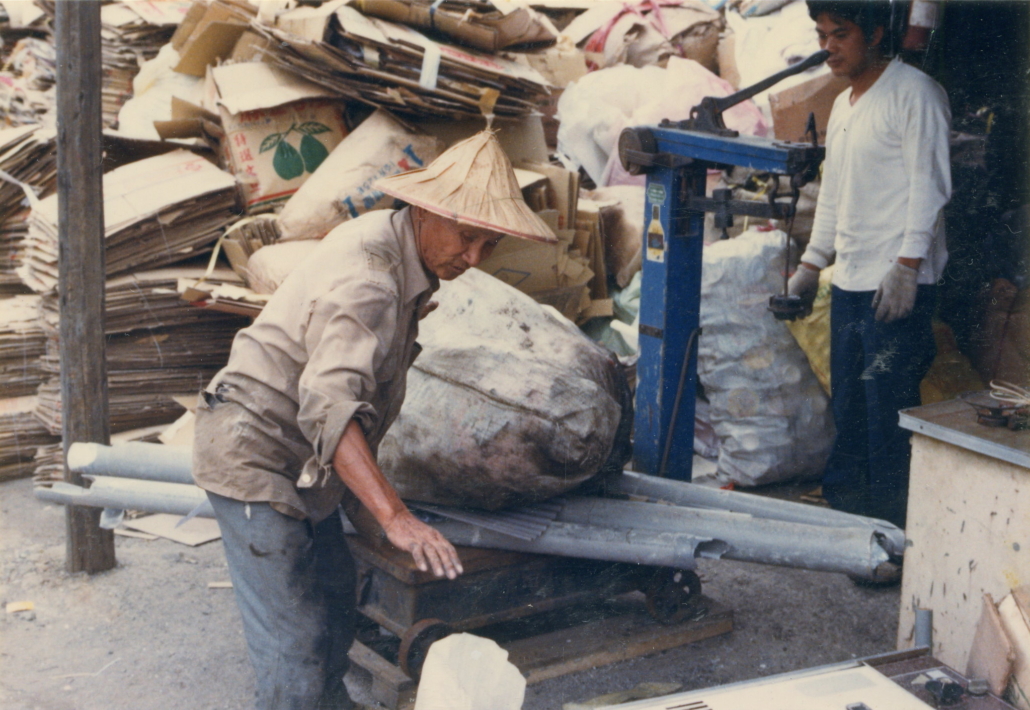 Taiwan has become a key destination for migrant workers across Asia, with many supporting its industries and aging population. Migration to Taiwan has increased over recent decades, prompting the government and local organizations to introduce reforms and advocacy efforts to improve labor rights, strengthen protections and promote social inclusion. These policies show how the authorities and NGOs can manage migration to Taiwan in a fairer and more sustainable way.
In 1992, the Taiwanese government enacted the Employment Service Act (ESA) to regulate the recruitment and employment of migrant workers, known in Chinese as wàijí láogōng. As of September 2025, Taiwan hosted 858,939 migrant workers, most of whom came from Indonesia, Vietnam, the Philippines and Thailand.
Types of Migrant Workers in Taiwan
Taiwan generally classifies migrant workers into two main categories: social welfare workers and industrial workers. Social welfare workers include domestic helpers and caregivers. Domestic helpers are primarily responsible for household chores, while Taiwan further divided caregivers into institutional and domestic caregivers. The Labor Standards Act (LSA), which sets a national minimum wage, protects institutional caregivers, but it does not protect domestic caregivers.
Industrial migrant workers, on the other hand, make up the majority of Taiwan’s migrant labor force. They mainly work in manufacturing, construction and fishing. The LSA protects both construction and manufacturing workers. Domestic or offshore fishermen also fall under this protection. However, the LSA excludes those working in distant-water fishing, leaving them vulnerable.
There are three major challenges migrant workers face in Taiwan: limited freedom to transfer between employers, lack of protections for minimum wage and the risk of deportation.
Freedom To Transfer
Taiwan tightly restricts migrant workers’ ability to change employers. Under current regulations, employers still control most decisions about transferring, though policymakers have introduced gradual reforms over time.
The Taiwanese government first introduced a transfer system in 2002, but workers could only change employers under exceptional circumstances such as factory closures, harassment or violence in the workplace. By 2008, factory workers gained the right to switch employers during their contracts under limited conditions or with employer consent. Similarly, starting in 2013, authorities granted domestic caregivers the ability to transfer with employer approval.
However, the COVID-19 pandemic reversed some of this progress. In 2021, Taiwan’s Ministry of Labor temporarily banned cross-industry transfers for migrant workers. The decision came after the Association of the Employers of Caretakers accused caregivers of fabricating complaints to move into factory jobs, which typically offer higher pay and better conditions.
Minimum Wage and Long-Term Care
Migrant workers in domestic caregiving and distant-water fishing are among the most vulnerable groups in Taiwan’s labor market. Because the LSA does not cover them, they do not receive a guaranteed minimum wage or access to social protections. This gap has left many workers underpaid and without the same legal rights afforded to other sectors.
To address these disparities, the Taiwanese government introduced the “Long-Term Retention of Skilled Foreign Workers Program” in 2022. The initiative aims to reclassify experienced migrant workers as “intermediate-skilled foreign workers,” granting them eligibility for higher wages and potential permanent residency. However, the proportion of reclassified migrant workers remains low, with only 4.15% in manufacturing and construction and 14.88% among caregivers.
Risk of Deportation
As of September 2025, around 94,000 undocumented migrant workers, mainly Vietnamese and Indonesians, face risk of deportation and lack access to social services. While some reforms have aimed to improve the situation, progress remains uneven. In 2016, the government abolished the “one-day exit rule,” which previously required migrant workers to leave Taiwan immediately after their contracts ended. However, many workers continued to face illegal referral fees charged by brokers when renewing their contracts. Since 2024, authorities have also increased fines for migrants who overstay their visas. Director of the public migrant shelter Serve the People Association, Lennon Ying-Da Wang, argues that this may further discourage undocumented workers from seeking help or reporting abuse.
Local Initiatives Supporting Migrant Workers
Since Taiwan began welcoming migrant workers, numerous civil society initiatives have emerged to promote their rights and improve their working and living conditions. In 1999, the country’s first local NGO dedicated to advocating for migrant labor rights, the Taiwan International Workers’ Association (TIWA), was established. Since 2003, TIWA has campaigned for greater freedom for workers to transfer between employers. The organization also produced two documentary films, “Lesbian Factory” (2010) and “Rainbow Popcorn” (2012), highlighting the experiences of migrant workers at the Taiwanese electronics company Fast Fame after its closure. In the same year, TIWA, along with several church groups, launched the Promoting Alliance for Household Service Act (PAHSA). PAHSA called for legislation ensuring minimum wages and regulated working hours for domestic caregivers. In 2007, PAHSA renamed itself the Migrants Empowerment Network in Taiwan (MENT) and continued its advocacy efforts.
Beyond TIWA and MENT, Harmony Home, another Taiwan-based NGO, has played a vital role in supporting undocumented migrant workers, particularly young mothers and their children. The organization has already sheltered more than 1,600 children, providing safety and care to those most at risk.
Looking Ahead
Through reforms and advocacy, Taiwan actively strengthens protections for migrant workers. Groups such as TIWA, MENT and Harmony Home have shaped positive change in migration to Taiwan. By working together, the government, employers and civil society can make migration to Taiwan more just and create better opportunities for all migrant workers.
– Sammi Li
Sammi is based in London, UK and focuses on Good News for The Borgen Project.
Photo: Flickr
