How Aid Groups Support Migrant Domestic Workers in Lebanon
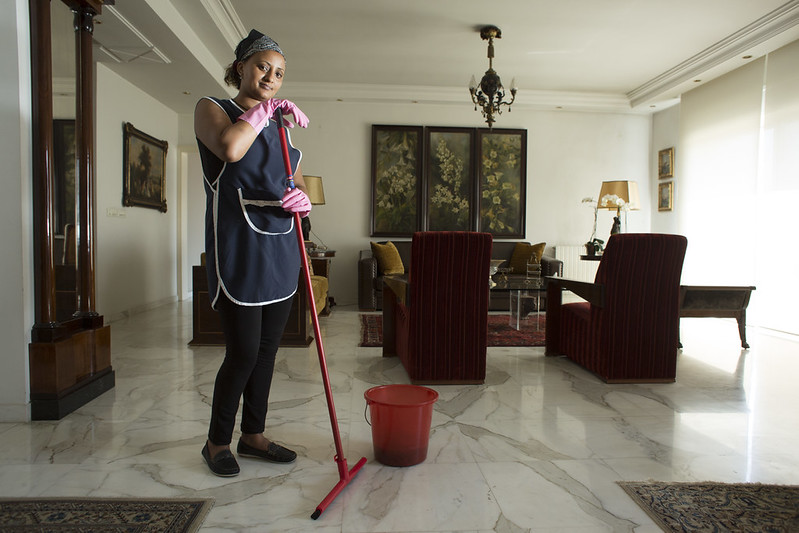 In Lebanon, migrant domestic workers (MDW) experience multidimensional poverty on an exacerbated level. More than 250,000 migrant domestic workers in Lebanon predominantly come from “African and Asian countries” under the kafala system, a sponsorship system that is described as “modern-day slavery.” Women are most affected by this system. According to U.N. Women, women make up 76% of all migrant workers and 99% of MDW who come to Lebanon.
The Kafala System
The Lebanese state excludes MDW from the Labor Law, leaving them without basic legal protections. Instead, they are in a contractual relationship with their employer, who is responsible for their “legal status and visa.” Employers frequently confiscate passports and restrict movement, shaping their daily lived reality.
U.N. Women reports that “94% of employers withheld the worker’s passport and 61% of employers did not allow the worker to engage in social or learning activities with NGOs.” Working conditions for MDWs under the kafala system are extremely difficult. They are subject to long hours with little to no time off.
MDWs report “verbal and psychological abuse and physical violence” inflicted on them by their employer. U.N. Women has documented that 22.5% of Lebanese employers “always or sometimes lock their domestic worker inside the house.”
Racialized Labor and Social Discrimination Against MDWs
Racism underpins the treatment of MDWs in Lebanon. Migration patterns document that the majority of MDWs in Lebanon are from Ethiopia. As a result, the term “El-Ethiopiyye,” meaning “The Ethiopian,” is a derogatory label used to refer to all MDWs, regardless of what their actual nationality is.
Furthermore, health care access remains severely restricted for them. Hospitals and doctors turn MDWs away for “not having legal documents, or simply because they’re not Lebanese.” Many MDWs avoid seeking health care because they fear deportation and lack the financial means to pay for the treatment.
The combination of poor working conditions and inability to access health care is prevalent in the increasing number of cases in psychiatric consultations. Doctors Without Borders reports that from 2023 to 2024, “psychiatric consultations in the Bourj Hammoud clinic doubled.”
Economic Collapse, COVID-19 and Armed Conflict
Economic collapse, the COVID-19 pandemic and armed conflict have intensified the vulnerability of MDWs in Lebanon. Following COVID-19, the Lebanese lira depreciated, leading to wage cuts for MDWs. A worker who was able to send their family $200 is now only able to send $120, subject to fluctuating exchange rates.
The 2024 Israel bombing of Lebanon left MDWs extremely vulnerable. Many employers fled Beirut, leaving their workers behind. Doctors Without Borders reports that employers abandoned MDWs on the streets or locked them inside their homes as they fled for safety.
Doctors Without Borders
Doctors Without Borders is an international medical humanitarian organization that delivers lifesaving aid to people in crisis worldwide. The organization operates in more than 75 countries, including Lebanon. Since its founding in 1971, it has been working to deliver care, including surgery, vaccination, nutrition support and mental health support.
The charity has a clinic in the northern Beirut suburb of Bourj Hammoud. Here, the organization responds to medical needs through consultations, sexual and reproductive health services and mental health services. Its clinic also covers any life-threatening referral costs from hospitalization.
To break down barriers for migrant workers accessing health care in Lebanon, it offers translators for medical appointments. This decreases the risk of migrant workers being unable to access appropriate health care due to language barriers. The organization expands its medical care to encompass meeting migrant workers’ basic needs. To support this, it has social workers who refer patients to services that provide basic needs such as food and shelter.
Following the Israeli bombing of Lebanon, the initiative set up a mobile clinic from which it donated essential relief items and delivered medical care. During this aid effort, the organization delivered 400 kits of basic relief items to shelters, which included hygiene materials and mattresses. The organization further provided mental health outreach for those affected by the bombing.
Beatrice’s Story
Doctors Without Borders has helped hundreds of migrant workers, including Beatrice. It documented that on October 6, 2024, Lebanon was under bombardment by Israel and Beatrice had been left locked inside the house alone. To flee her employer’s home, Beatrice jumped from the balcony and broke her ankles.
The organization interviewed Beatrice, who stated: “My friends called an organization to see if they could support me with the treatment. That organization, along with Doctors Without Borders, covered my surgery, medication and the two-month recovery period.” Without the aid of the charity, Beatrice would have suffered her injuries without hope of medical attention.
Hope Beyond Kafala
While the kafala system continues to exploit migrant domestic workers in Lebanon, the work of humanitarian organizations offers a powerful counter-narrative of hope and resilience. Groups such as Doctors Without Borders demonstrate that access to health care, dignity and protection is possible even within deeply unequal structures.
– Lucy Kerr
Lucy is based in Coventry, UK and focuses on Good News and Politics for The Borgen Project.
Photo: Flickr
