Telehealth: An Initiative To End Maternal Mortality in Honduras
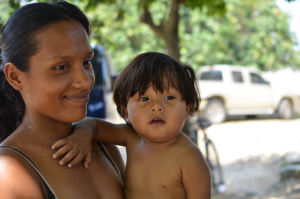 The historic site of Cópan, located in the western highlands of Honduras, is world-renowned for its magnificent ancient Mayan ruins, but behind the famous carved stone monuments and hieroglyphic stairs, the region suffers from extremely high maternal mortality rates and a lack of access to health care services. This development reflects a greater trend of inequality and misinformation, which presents a life-threatening problem for Honduran mothers and their infants.
Maternal Mortality in Honduras: A Grave Problem
As of 2024, the maternal mortality rate in Honduras clocked in at 58 per 100,000 live births. One significant contributing factor to these alarmingly high rates is a widespread lack of access to health care, especially in rural areas. Honduras ranks among the nations with the lowest physician density in Latin America. However, approximately 57% of live births occur in rural regions. Consequently, a dangerous shortage of medical assistance and knowledge exists in highland regions like Cópan, which is a five-hour drive away from Guatemala City, the nearest metropolitan area.
Even though Honduras has taken strides in reducing maternal deaths in the past few years, its rates still surpass those of comparable countries such as Mexico, Nicaragua and El Salvador. The statistics are grim. Approximately 4.2% of all deaths in women ages 15-49 are due to maternal complications, more than double that in the United States. The majority of these deaths are the result of severe bleeding and infections, which could be prevented if not for the lack of quality health care in rural areas.
Misconceptions Impacting Infant Health
The neonatal mortality rate in Honduras is correspondingly high, at an average of nine deaths for every 1,000 live births. Without their mothers, many infants are subject to neglect and other potentially harmful practices, which include feeding the infant with a damp, honeyed cloth and wrapping a band around its umbilical cord. In villages where the nearest medical facility is hundreds of miles away, it’s easy for dangerous misconceptions like these to spread.
However, researchers theorized that educating community members could bridge the knowledge gap and increase awareness of healthy postpartum practices. A health care intervention system was implemented in more than 5,000 households in the Cópan region to test this notion. During this period, families were regularly visited by community health care workers who instructed them on birth-related topics such as infant care, illness prevention and reproductive health.
Along with increasing parents’ likelihood to visit a health facility and breastfeed the infant shortly after birth, the intervention also decreased potentially dangerous practices. The study showed that providing health care services can significantly increase maternal and infant health, demonstrating an urgent need to implement medical services in rural areas.
The Pan American Health Organization
The Pan American Health Organization (PAHO) is an international public health agency comprising 35 member countries in North, Central and South America. Since its founding in 1902, it has collaborated with governments and other organizations to address key problems in Latin American health care. Its achievements are lengthy and include extending the hemisphere’s life expectancy, eliminating numerous fatal diseases and spearheading the world’s first global immunization week. However, the organization’s work is far from over.
An interview with PAHO director Jarbas Barbosa illustrates exactly how the organization’s innovative solutions propel it into a new era of health and connection. Barbosa is no stranger to hard work; soon after obtaining his master’s degree and PhD from the University of Campinas in São Paulo, he embarked on a decades-long journey in public health.
Upon interviewing him about the PAHO’s vision for the future, his passion for improving the lives of others is clear in his promise that, “as director, I am committed to expanding our engagement to improve the health and well-being of all people in the Americas.” He believes that by investing in solutions that address common health problems, PAHO can address the root causes of other prevalent issues affecting Latin America, from political corruption to climate instability.
However, he emphasizes that the PAHO can’t expect to do this independently; instead, “Successfully meeting all these challenges requires effective coordination across sectors.” To do this, PAHO collaborates with influential groups like the World Bank and invests in new research and technology to best address the needs of the Latin American population.
PAHO’s Maternal Telehealth Initiative
So, what do scientific studies on rural health care intervention and the PAHO’s goal of technological collaboration mean for maternal health in Honduras? The answer is a groundbreaking telehealth initiative that enables essential medical assistance for pregnant women living in rural areas.
In collaboration with the Latin American Center for Perinatology, the PAHO has established a teleconsultation pilot, in which women are provided with routine blood-pressure testing and virtual check-ins throughout their pregnancy. As a result, potential maternal complications can be addressed before they become life-threatening.
The program also utilizes the help of community volunteers, who are trained to take vital readings and spread information about immunizations and healthy habits to their community. Bremen de Mucio, a Regional Maternal Health Advisor at PAHO, calls the initiative “a standout example of collaborating to address health care challenges and improve health equality.” While it is too early to observe its long-term effects, telehealth is undoubtedly a significant step in identifying warning signs and reducing pregnancy-related deaths.
– Grace Gonzalez
Grace is based in Oakton, VA, USA and focuses on Business and Global Health for The Borgen Project.
Photo: Flickr
