How Kashmiri Women Stand up for Their Rights in a Conflict Zone
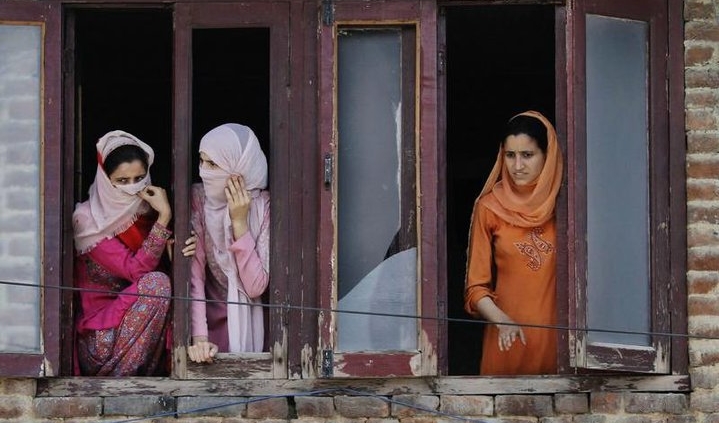 In a world filled with constant fear of militarization and disregard for women’s rights in conflict zones, Kashmiri women have resisted in pursuit of their moral, political, legal and economic rights. Their constant fight and struggle are a testament to the power of standing up for yourself and showing up every day.
According to a study published in Contemporary South Asia, the Association of Parents of Disappeared Persons (APDP) is one of the most powerful symbols of standing up for women’s rights in conflict zones. Parveena Ahangar, a mother searching for her son who was abducted and mistaken for a militant, started this initiative with the hope of bringing wives, mothers and daughters together to create a political movement.
Their Form of Resistance
There is a Kashmiri concept called thakawath, which refers to being exhausted from waiting. The APDP reversed this idea by adopting a tactic called “active waiting.” For decades, these women have refused to give up, consistently showing up in society through sit-ins and by holding photographs of their loved ones who went missing.
What makes this brave is how such a simple act of appearing in society challenges the status quo. They prevent society from forgetting their loved ones while also raising international awareness of the human rights violations occurring in their community.
Half-Widows
Half-widows are women whose husbands have disappeared but have not been declared dead. These women face constant uncertainty and economic and social vulnerability. According to Diaspora in Action for Human Rights and Democracy (DAHD), while widows can receive compensation, half-widows cannot. Their in-laws do not support them, do not grant them property rights and do not provide aid to support their children.
Bravery
In response to this issue, Kashmiri women refused to give in to societal expectations. They bravely entered military sites and courts to fight against the government in search of their husbands. They also began relying on their talents, such as agriculture and artistic crafts, to become breadwinners for their families.
Other women, such as Zamruda Habib, founded another organization called Muslim Khawateen, which advocates for women’s voices. According to a report, “[Ahangar] and Zamruda founded activist platforms and organized public resistance because of their own suffering at the hands of the State and their determination to highlight the injustices that they and women like them had suffered. They inspired a generation of young Kashmiri women to highlight social issues and build networks of women to address them.”
Despite mainstream media often overlooking women’s rights in conflict zones, the stories and resistance of Kashmiri women have reached the world in powerful ways. Whether it is a mother holding a photograph in a public space or another woman fighting the legal system, Kashmiri women continue to stand up bravely for their rights. They strive every day to be heard and seen.
– Hasini Muddapu
Hasini is based in Princeton, NJ, USA and focuses on Good News for The Borgen Project.
Photo: Flickr
