Indonesian Female Migrant Domestic Workers Left Behind
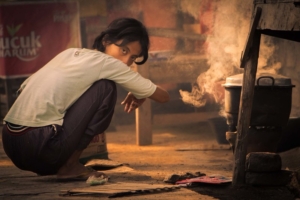 According to the International Labor Organization (ILO), there are an estimated 2.6 million domestic workers in Indonesia, including more than 110,000 children younger than 18. Yet domestic workers are not recognized as “workers” under Indonesia’s labor laws. This means they remain invisible in the eyes of the state and excluded from basic protections like minimum wage or working-hour limits.
The issue stretches far beyond Indonesia’s borders. More than 9 million Indonesians currently work overseas, most of whom are women. Of these, 32% are employed in the domestic sector, largely in private households in countries such as Malaysia, Saudi Arabia and Hong Kong. This hidden and unregulated environment often leaves workers exposed to exploitation, wage theft and abuse.
Struggles of Indonesian Female Migrant Domestic Workers
For many women, becoming a domestic worker is not a choice but a necessity. Coming from rural or economically disadvantaged backgrounds, they migrate in search of income to support their families. However, because their labor is not formally recognized, many end up trapped in cycles of exploitation.
One major struggle lies in the working conditions. Without standardized contracts, workers may face excessive hours, a lack of rest days and arbitrary wage deductions. Their isolation in employers’ homes makes it difficult to seek help when abuses occur. Gender norms further worsen the situation: domestic labor is frequently dismissed as “women’s work,” devalued as unskilled and undeserving of fair compensation.
The absence of legal recognition also allows abuse and violence to persist unchecked. Human Rights Watch has documented cases of psychological, physical and sexual abuse against domestic workers. Former Indonesian migrant worker Win Faidah described her ordeal: “No day passed without torture. My eyes were blindfolded, my back and chest were burnt with an iron… I thought I was going to die and I was ready to die.” Her story is tragically not an isolated one.
NGOs Driving Change
Despite the obstacles, grassroots organizations and international partners are carving out space for reform.
Migrant CARE has emerged as one of the most prominent advocacy groups. Its approach, built on counseling, advocacy, research and education, extends from national-level lobbying to village initiatives. Through programs like Villages that Care for Migrant Workers (DESBUMI), Migrant CARE provides communities with the tools to offer legal aid, information and empowerment at the local level.
The Indonesian Migrant Worker Union (SBMI) plays a key role in organizing workers and addressing cases of exploitation. From 2014 to 2024, SBMI reports supporting more than 1.1 million individuals with social and legal services. It assisted more than 7,600 legal cases and helped keep more than 236,000 at-risk children in school. SBMI campaigns also target predatory recruitment agencies that charge illegal fees to vulnerable workers.
ILO complements these efforts by partnering with the Indonesian government to develop protections for domestic workers. Its campaigns focus on fair wages, safe working conditions and recognition of domestic labor as essential work. By building research and policy frameworks, the ILO strengthens advocacy efforts already underway by local NGOs.
Conclusion
Indonesian female migrant domestic workers are essential to the households they sustain and the national economy through the remittances they send home. Yet they remain some of the least protected workers in society, facing systemic neglect, social stigma and widespread abuse. The combined efforts of organizations like Migrant CARE, SBMI and the ILO demonstrate that progress is possible, from community-level empowerment to international advocacy.
Closing the wage gap and securing legal recognition will require sustained political will. However, these NGOs have shown that meaningful change can begin from the ground up.
– Kai Xian, Lim
Kai Xian is based in Lille, France and focuses on Global Health and Politics for The Borgen Project.
Photo: Flickr
