Higher Education in Greece Addresses Local and Refugee Poverty
 In the wake of one of the worst economic crises in European history, Greece suffers the fourth worst national poverty rate in the continent, ahead of only Turkey, Bulgaria and Romania. With 26.9% of the Greek population at risk of poverty or social exclusion in 2024, these economic setbacks have also begun to bleed into the education system. Greece shares one of the worst literacy rates in Europe, at only 94% among its adult and youth population in 2026, despite boasting one of the continent’s highest secondary-education completion rates.
Regardless of these challenges, however, higher education in Greece remains key in battling poverty and unemployment rates, with a degree or post-secondary qualification halving the unemployment rate from 24% to 12%, which in turn reduces the poverty rate from nearly 27% to 10.7%. Higher education in Greece traditionally takes the form of university education, however, since joining the European Economic Community in 1981, the country has taken steps to provide free adult education and training, in order to improve the skills of the general workforce beyond formal education. It is therefore of paramount importance to ensure as many students as possible in Greece remain within the education system, ensuring higher wages, increased literacy rates and a better quality of life.
Education and the Greek Economy
While Greece falls to the bottom of all Organization for Economic Co-operation and Development (OECD) countries in education spending per post-secondary student, at around $5,620 USD compared to the median spend of $20,234, public funding still accounts for more than 78% of higher education spending in the country.
This means that while the state contributes the appropriate proportion of funds to tertiary education, it simply can’t provide the necessary financial support for universities and educational facilities to fund necessary reforms for higher education. As a result, the higher education system suffers from complexities such as delays in qualification completions and students being pushed into studying abroad.
NGOs such as American Councils Greece and the Elix Programs are supporting these issues, promoting exchange programs and volunteering in education, environmental protection and social exclusion, in order to provide opportunities for education and qualifications outside of financial constraints.
Importantly, Greece remains in significant debt to fellow European nations, the European Central Bank and the International Monetary Fund, which offered bailouts throughout the economic crisis in order to stabilize the Greek economy. While Greece is making remarkable bounds in recovering these debts, the work of foundations and NGOs in providing accessible education is crucial in these debts being repaid. As citizens gain qualifications to enter well-paying jobs, the economy is rebuilt and vital public spending can go towards helping those at risk of poverty and social exclusion.
Refugee Education
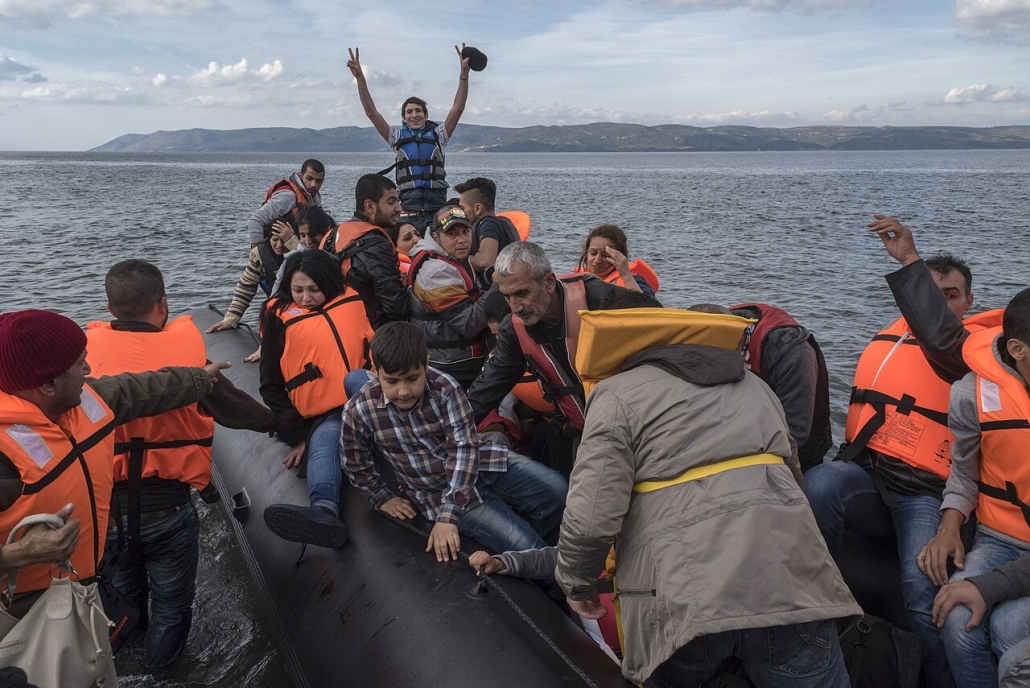
Greece houses approximately 50,000 refugees, the vast majority of whom live below the poverty line, with its geographical location making it the primary entry point for those fleeing conflict and poor living conditions in the Middle East and Northeast Africa. With current laws in neighboring countries no longer allowing these refugees to travel further into Europe, most remain in and integrate into the country and its cultures. This includes the education system, where all children, including refugees, are required to enter compulsory education until they are 15.
However, these statistics don’t account for the approximately 15,000 refugees held on small islands as a result of the EU-Turkey migration deal, with very limited opportunities for formal education. In these circumstances, organizations such as Action for Education and the All Children in Education programme, which has reached more than 25,000 migrant children since 2021, are paramount to providing centers for education up to 23 years old, teaching local languages, relevant skills and trades, as well as providing important safeguarding measures for vulnerable people.
Once refugees have graduated Lyceum (lower secondary), they are able to sit the same examinations as locals in order to enter universities or higher technological institutions. However, for those who have completed secondary education in other countries, there are no special provisions granted for refugees to enter higher education in Greece. This is where the work of private agencies and NGOs, who provide educational services for adults, becomes so important. RefugeeEd provides English and Greek language courses for both children and adults, breaking down barriers of communication and integration and providing key opportunities for refugees to enter higher education or formal jobs. Since 2021, RefugeeEd has trained 46 community teachers and reached more than 200 students across six locations in mainland Greece and its surrounding islands.
How Higher Education Is Battling Poverty
Public and private organizations are working to improve access to higher education for both Greek nationals and refugees. This is battling poverty by addressing the country’s income inequality, providing higher returns in lower-paying, non-skilled jobs, as well as increasing the rate of citizens returning to education after initially graduating from compulsory schooling.
The role that higher education in Greece has played in addressing income redistribution is incredibly important and has become far more accessible through the valuable work that the NGOs named in this article are doing, as well as many more who continue to do invaluable work. Statistics suggest Greece’s poverty rates are gradually coming down, as their debts decrease and surpluses rise. As time goes on, Greece will transition into a far more sustainable model of public investment, allowing them to tackle poverty, immigration and education as efficiently as possible.
– Jake Crapper
Jake is based in Leeds, UK and focuses on Business and Politics for The Borgen Project.
Photo: Wikimedia Commons
