How Nutrition Policy Shapes Health Equity in South Africa
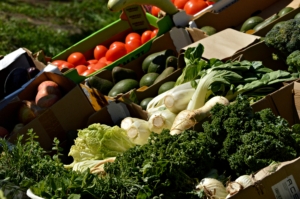 In South Africa, gaps in nutrition and food environment policies drive the double burden of malnutrition, including hunger, micronutrient deficiencies and rising obesity, despite sufficient food production. These policy gaps highlight the central role nutrition systems play in shaping health equity in South Africa.
How Economic Pressure Fuels Food Insecurity in South Africa
Economic pressures, rather than food availability, drive food insecurity in South Africa, pushing many families to struggle to access nutritious diets. Low-income individuals and households often choose cheaper, energy-dense alternatives that provide calories but few essential nutrients. High unemployment, structural poverty and rising living costs have made food increasingly inaccessible across South Africa.
The national energy crisis, particularly in Johannesburg and Cape Town, has further driven widespread hunger. In 2021, roughly 80% of South African households had adequate access to food, 15% had inadequate access and 6% had severe food insecurity. Food insecurity was more prevalent in urban areas, with the highest concentrations in Cape Town (241,000 households) and Johannesburg (239,000 households).
Households with young children are disproportionately affected. An estimated 683,221 households with children under age 5 experienced hunger and malnutrition. This has contributed to higher rates of stunting and impaired physical and cognitive development.
The highest prevalence is found in KwaZulu-Natal (20.1%), Johannesburg (13.6%) and Cape Town (12.4%). Since April 2021, 323 child deaths linked to malnutrition and hunger have been reported in the Eastern Cape.
Unequal Cities, Unequal Health: The Cost of Urban Planning Failures
As South Africa rapidly urbanizes, with more than 72% of the population projected to live in cities by 2030, food security policies remain inadequate. Low-income households in informal settlements and townships often lack access to affordable supermarkets. This forces them to rely on higher-priced spaza shops with limited access to fresh produce, directly deepening nutrition-related health inequities.
These failures in the urban food environment directly undermine health equity in South Africa. Energy and infrastructure instability disrupt cooking, refrigeration and food storage. This reduces households’ ability to consume fresh foods, increasing reliance on processed and street foods.
Despite social grants such as the Child Support Grant and the Social Relief of Distress (SRD), many households earn too much to qualify for assistance yet too little to afford adequate food. Even among households that do qualify, grant amounts are insufficient to cover the cost of a nutritious diet, particularly amid rising food inflation in South Africa. The criminalization of street vendors and restrictions on trading spaces undermine the informal food system.
In turn, this reduces access to affordable food for low-income households and pushes many into more severe food insecurity.
National and International Initiative To Improve Health Equity in South Africa
To address persistent nutrition-related health inequalities, the South African government uses initiatives such as the National Food and Nutrition Security Plan (NFNSP). It also implements the National School Nutrition Program (NSNP) to improve food security and child nutrition among disadvantaged populations. In 2018, South Africa introduced the NFNSP (2018–2023) to address nutrition-related health inequities by strengthening food security for low-income and vulnerable populations.
The plan aims to reduce childhood obesity and cut adult obesity by 15% by 2023. Similarly, in October 2023, the Department of Basic Education reaffirmed its commitment to the NSNP. The program feeds more than nine million learners annually and reduces child hunger.
Beyond national initiatives, the United Nations (U.N.) Sustainable Development Goal 1 (No Poverty) underscores the urgency of addressing child poverty, as many children continue to experience deprivation despite broader social assistance programs. The United Nations Children’s Fund (UNICEF) also supports South Africa by strengthening child poverty measurement. It also helps guide policies that direct government spending toward services benefiting the most impoverished children.
Additionally, in 2025, World Health Organization Member States extended the Global Nutrition Targets to 2030 and aligned them with the Sustainable Development Goals. The updated framework maintains targets to reduce stunting, anemia, low birth weight and wasting, while strengthening goals to reduce childhood overweight and increase exclusive breastfeeding. This extension reinforces global commitment to accelerating action on maternal and child nutrition and reducing nutrition-related health inequities.
Final Thoughts
Addressing health equity in South Africa requires coordinated action on the social and structural drivers of health, including poverty, inequality, limited access to primary health care and food insecurity. Strengthening primary health care, expanding universal health coverage and sustaining programs such as NSNP and NFNSP are essential to protecting vulnerable populations and reducing nutrition-related health disparities.
– Yuhan Rong
Yuhan is based in San Diego, CA, USA and focuses on Global Health and Politics for The Borgen Project.
Photo: Unsplash
