How OCHA Plans To Tackle the Humanitarian Crisis in Myanmar
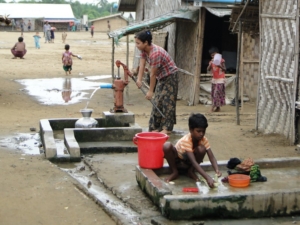 Myanmar is facing one of the world’s most complex humanitarian crisis. Prolonged internal armed conflict, widespread displacement and economic decline have been compounded by new shocks, including the devastating earthquake that struck the country in March 2025. In response, the United Nations Office for the Coordination of Humanitarian Affairs (OCHA) has published the “Myanmar: Humanitarian Needs and Response Plan 2026 (HNRP),” a 70-page document outlining the scale of need and the international support required.
Setting Out the Humanitarian Crisis in Myanmar
Myanmar has endured escalating internal armed conflict since 2021, with hostilities between the Myanmar Armed Forces and nonstate armed groups driving unprecedented humanitarian need. As of November 2025, 3.6 million people are internally displaced, the highest figure ever recorded in the country, including 1.7 million living in the most severely affected regions of the Northeast, Rakhine and the Southeast. In the first half of 2025, Myanmar ranked second globally for conflict intensity.
It was the fourth most dangerous country for civilians, with more than half the population exposed to violence. This protracted crisis was further intensified by a 7.7-magnitude earthquake on 28 March 2025, the world’s largest since 2023. The disaster claimed 5,400 lives, injured thousands and caused an estimated $11 billion in economic losses.
Ten months on, recovery efforts continue amid severe economic decline, with inflation reaching 31% in the 2025–26 financial year. Economic disruption and insecurity have sharply reduced access to food. By late 2025, more than 12 million people faced acute food insecurity, including one million at emergency levels, placing Myanmar among the world’s most severe hunger hotspots and underscoring the urgent need for international humanitarian support.
OCHA’s Humanitarian Needs and Response Plan for Myanmar
The Myanmar 2026 HNRP asserts that 16.2 million people (including 8.4 million women and five million children) need humanitarian assistance. While the HNRP for the previous year included the entire population, funding shortfalls and operational constraints have led the 2026 plan to adopt a tier-based approach to humanitarian assistance. Myanmar’s population is divided into people in need, people targeted and people prioritized.
Within this system, humanitarian needs are organized across nine clusters of concern, including access to shelter, health care and protection. An individual’s classification is determined by the cumulative severity of their situation across these clusters. This approach identifies 2.6 million people requiring prioritized humanitarian assistance and 4.9 million people to be targeted.
As specified by OCHA, this system was designed to guide the HNRP’s priorities while ensuring that targeted assistance “remains realistic and feasible.” In strategic terms, the HNRP operates around two primary objectives: saving lives and alleviating suffering and protecting safety and rights. The former seeks to reduce crisis-related morbidity and mortality, while the latter aims to restore safety and reinstate lost rights.
Central to achieving these goals is a locally led response strategy, described as the “backbone” of the operation. By placing local actors at the center of decision-making and implementation, OCHA aims to strengthen local leadership, foster equitable partnerships and promote direct access to resources at the community level. Particular emphasis is placed on reaching populations in hard-to-access, conflict-affected areas, requiring innovative and adaptable operational approaches.
To manage these challenges safely, the HNRP places strong emphasis on risk-informed planning, including the use of the U.N.’s INFORM Risk Index to assess operational hazards.
Funding and Resource Allocation
The Myanmar HNRP 2026 uses an activity-based costing model to ensure donor funds are allocated as efficiently as possible. Each humanitarian cluster calculates an average cost per person based on specific activities, resulting in a combined cost of approximately $182 per person assisted. This approach allows funding to be directly linked to measurable outcomes.
However, OCHA highlights that soaring inflation, rising fuel and food prices and the continued devaluation of the Myanmar kyat have significantly increased the cost of delivering aid. To account for this, clusters have applied inflation projections to their budgets, ensuring funding levels reflect on-the-ground realities. Overall, the plan appeals for $890 million, with $521 million prioritized for the most urgent life-saving assistance.
This underscores the critical role of international donors in sustaining humanitarian operations and preventing further deterioration in conditions for millions of vulnerable people.
Conclusion
The convergence of armed conflict, economic collapse and the aftermath of a major natural disaster defines the humanitarian crisis in Myanmar in 2026. OCHA’s HNRP outlines a targeted, locally led and cost-conscious strategy to address these challenges. However, its success ultimately depends on sustained international funding and political commitment.
Without adequate support, the gap between humanitarian needs and available assistance will continue to widen, placing millions of lives at further risk.
– Andrew Geddes
Andrew is based in Edinburgh, Scotland and focuses on Global Health and Politics for The Borgen Project.
Photo: Flickr
