Child Marriage Restraint Act, 2025: End Child Marriage in Pakistan
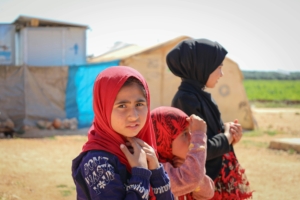 In a leap toward ending child marriage in Pakistan, the Islamabad Capital Territory government passed the Child Marriage Restraint Act of 2025. This new legislation is the first legal precedent in Pakistan to illegalize child marriage and set the legal minimum for marriage to at least 18 years of age for girls. Under the previous Child Marriage Restraint Act of 1929, the legal minimum age for marriage was 14 for girls, later amended to 16.
The new act also entails harsher punitive measures than the outdated law. For example, a man who marries an underage girl will now be looking at up to three years in prison. Anyone who facilitates or forces marriage onto a child can face up to seven years in prison, including marriage registrars, religious clerics or family members.
Child Marriage and Poverty
In Pakistan, 20.5 million or 18% of girls are married before they reach the age of 18. Approximately 5 million girls or 4%, are married before the age of 15. Poverty is the driving factor behind child marriage, along with gender inequality and cultural customs.
Child brides usually come from impoverished families who sell them to older men for a price as high as 2.5 million Pakistani rupees, which is more than $8,000. Child marriage tends to spike in regions prone to natural disasters, which displace families, destroy homes and overall increase poverty in the area. The lack of education and access to health facilities in some parts of Pakistan further reinforces the tradition of child marriage.
Although the updated Child Marriage Restraint Act of 2025 is a significant step toward ending child marriage, the law does not address the other factors contributing to the issue. However, below are three organizations raising awareness of the dangers of child marriage in Pakistan by educating the public.
UN Women
In 2024, U.N. Women partnered with the Food and Agriculture Organization (FAO) to organize informational sessions across rural villages in Pakistan. These sessions showed parents the negative consequences of marriage for an underage girl, including health risks and limited access to education. They also sparked dialogue on women’s rights, inclusion in the agricultural industry and involvement in decision-making.
The awareness-raising program reached 1,732 people living in rural villages, as more families allowed their daughters to attend their local schools rather than keep them at home. One woman, Yasmin Gul and her husband attended an information session on child marriage in Pakistan’s Mohmand. Gul married young herself and married off two of her daughters when they were 14 and 15.
After the session, Gul and her husband decided against marrying off their youngest daughter until she is at least 18 years old. Until then, she would be allowed to grow and pursue an education — opportunities her older sisters never had. U.N. Women also launched a campaign where it hand-delivered wedding cards for a fictitious child marriage to Pakistani lawmakers and leaders, each card designed entirely by children.
The invitations displayed colourful artwork illustrated with crayons and markers. Some even included time for “games” in the itinerary. The children in the campaign were between 5 and 15 years old and one was an actual child bride. The invitations caught nationwide media coverage and inspired discussion across Pakistan.
The campaign also had a significant legislative impact, as lawmakers brought the wedding cards to parliamentary meetings to underscore the severity of the issue.
Pathfinder International
With a slightly similar approach, Pathfinder International launched the “End Early Child Marriage” campaign in partnership with the BPG advertising agency. The organization published an invitation to a fictitious wedding between a 13-year-old girl and a 56-year-old man across several media outlets in Pakistan, in English, Sindhi and Urdu. The goal was to reach a diverse audience covering varying demographics.
At the bottom of the card, it says, “This is not an actual event, but a metaphorical stand against the injustice of child marriage. Child marriage is synonymous with the premature ending of a child’s future.” The wedding invitation was published in two newspapers: The Express Tribune, with more than 25,000 readers and the Daily Express, with more than 350,000 readers.
The Express Tribune also shared the campaign on its YouTube podcast, which gained more than 100,000 views. The campaign circulated across popular radio stations, such as CityFM89 and FM100 Karachi, which garnered more than 1.5 million listeners. Express News TV also broadcast the campaign on-air, reaching more than 10 million viewers.
UNICEF Pakistan
UNICEF Pakistan launched its National Gender Strategy for 2024 to 2027. This involves a strategy to address gender inequalities and overall improve girls’ lives, especially when it comes to child marriage in Pakistan. The strategy entails investing in girls’ leadership, voice and agency.
It addresses traditional cultural attitudes perpetuating gender inequality as well as plans to work with leaders, religious figures, boys and men to change harmful beliefs. The strategy also outlines providing girls with greater accountability, social protection and reliable services in education, health care and nutrition.
In Pakistan, 54% of girls become pregnant before turning 18, 88% of girls between 10 and 17 live in poverty and 46% of girls have no education, employment or training. Pregnancy in underage girls poses a range of life-threatening health risks for both the mother and the baby. When paired with poverty and a lack of education or training, this also becomes detrimental to Pakistan’s progress as a country, highlighting the need for UNICEF’s strategy in Pakistan.
Ending Child Marriage For Good
Lawmakers and leaders establishing new legislation to restrict child marriage is a powerful stride. However, child marriage in Pakistan will not end for good until the government addresses the push behind it: poverty, inadequate facilities and a lack of education. Organizations must continue to focus on empowering girls and enabling a brighter future for Pakistan.
– Umaymah Suhail
Umaymah is based in Karachi, Pakistan and focuses on Good News and Global Health for The Borgen Project.
Photo: Pexels
