Nonprofits Fighting Poverty in Rwanda and the Congo
 On June 27, Rwanda and the Democratic People’s Republic of the Congo (the Congo) signed a peace deal in Washington, D.C. Under the agreement, both countries agreed to “immediately and unconditionally cease any state support to nonstate armed groups.” The agreement hopes to make mineral wealth in the Congo more available and secure regional peace.
Rwanda–Congo Conflict
Conflict between Rwanda and the Congo dates back to the 1994 Rwandan genocide, where nearly 800,000, mostly Tutsi, people were killed by Hutu extremists. Lately, the Democratic Forces for the Liberation of Rwanda, allegedly supported by the Congolese and the M23 rebels, whom Rwanda supports, according to United Nations (U.N.) investigators, have plagued the region with violence.
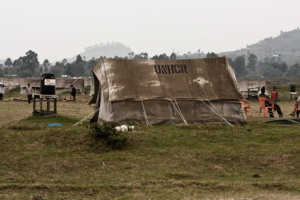
The violence has killed thousands of people in recent years and displaced millions of others to refugee camps that have little food, water or basic services. These camps leave displaced women and girls at risk of mass rape and in the hands of armed gangs; additionally, men and young boys fear being forcibly recruited by militant groups. In response to the devastation, nonprofit organizations provide relief for those in poverty in Rwanda.
The Congo: The Panzi Foundation
Founded in 1999 by Dr. Denis Mukwege, the Panzi Foundation provides healing and life-saving care to survivors of sexual violence in the Congo. After witnessing women suffering from inadequate maternal care at Lemera Hospital, he decided to specialize in gynecology and obstetrics. Later, when a woman came to him after being raped, he and his staff became specialists in sexual-violence treatment and gynecological trauma.
His foundation’s services include medical treatment for gynecological injuries, sexually transmitted infections and pregnancies that survivors suffer from. Additionally, since survivors also have post-traumatic stress disorder, depression and anxiety, the foundation also provides psychological support such as psychotherapy, follow-up care and community awareness.
Armed groups in the Congo use sexual violence to instill terror in villages and impose economic and political control in the area. In 2023, the U.N. reported nearly 123,000 cases of gender-based violence in the Congo. As part of the Panzi Model, the foundation also provides holistic healing, socioeconomic support and legal services for survivors. This includes vocational training, loan programs, legal assistance and civil registration support. According to the foundation, it treated more than 87,000 survivors and performed above 25,000 gynecological surgeries in the past 25 years.
Poverty in Rwanda: CARE
Helping in Rwanda is CARE, an organization that directly combats poverty. CARE operates in 24 of Rwanda’s 30 districts, providing food, health care and emergency relief. While the organization supports many other countries, it has been active in Rwanda since 1984. During the genocide against the Tutsi people, CARE provided relief to hundreds of thousands of refugees from Uganda.
Afterwards, it provided immediate aid to millions through food, shelter, HIV prevention, improved water systems and more. CARE also claims to be one of the few NGOs leading efforts to advance justice for girls and women in Rwanda. In 2017, for instance, it launched a strategic program that identified impoverished women and girls as a central focus.
One way CARE has supported women in Rwanda is through education. In 2016, under CARE Rwanda’s Gender Equality and Women’s Empowerment program, nearly 45,000 women and girls received literacy and numeracy training. Through initiatives like Safe School for Girls and Better Environment for Education, CARE has also worked to break down the barriers that limit women’s access to secondary and higher education.
Final Remarks
Though the results of the recent peace agreement are yet to be seen, many hope it can lead to more peace and prosperity in the region. Regardless, several nonprofit organizations, such as these, have worked for years to give survivors of the region’s conflict a chance at a better life.
– Seth Pintar
Seth is based in San Diego, CA, USA and focuses on Business and New Markets for The Borgen Project.
Photo: Flickr
