Private Foundations Expanding Global Aid Amid USAID Cuts
 In early 2025, the new White House administration initiated sweeping changes to the United States (U.S.) foreign aid policy, placing a 90-day pause on all new obligations and disbursements from the U.S. Agency for International Development (USAID). This move, part of a broader effort to “reevaluate and realign” foreign assistance with American interests, has significantly reduced the federal government’s role in global development and has significantly decreased foreign assistance to countries across the world.
Concerns Over USAID Cuts
The administration’s budget proposal includes an $8.3 billion cut to foreign assistance, effectively dismantling large portions of USAID. These cuts have raised concerns among international development experts. Humanitarian organizations warn that the withdrawal of U.S. support could destabilize fragile economies and undo decades of progress in global health, education and poverty reduction. In the wake of these reductions, experts have noted that the following foundations are expanding global aid amid USAID cuts.
Private Foundations Expanding Global Aid
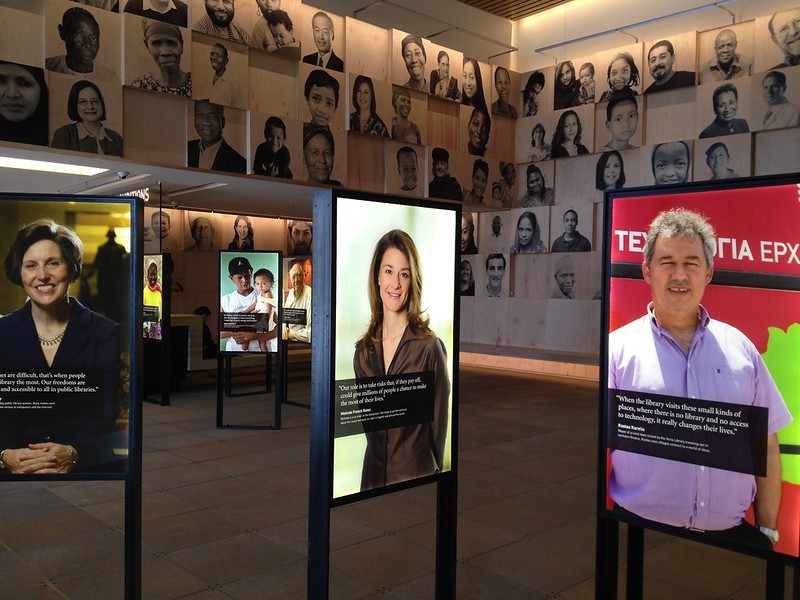
- The Bill & Melinda Gates Foundation. The Gates Foundation, already one of the largest private funders of global health initiatives, has increased its investments in vaccine distribution, agricultural development and maternal health. The foundation is increasing its notoriety, as Microsoft Co-founder and philanthropist Bill Gates has set forth the largest philanthropic commitment in history, planning to raise $200 billion by 2045. The organization’s goals in global health and development aim to reduce health inequities by developing innovative tools and strategies to combat infectious diseases and leading causes of child mortality in developing countries. The organization, so far, has gained upwards of $8 billion in charitable support, with partners of the organization spanning 130 countries.
- The Rockefeller Foundation. Created by John D. Rockefeller in 1913, the Rockefeller Foundation has grown to be one of the largest philanthropic organizations in the U.S., investing more than $26 billion in philanthropic capital in the last century. The organization’s three main areas of work globally are health, food and power. The organization mostly aims to help people in the U.S., but also in areas such as Africa and Asia. By addressing health globally, the organization aims to increase health equity by centering on vulnerable communities, scaling cross-sector innovations, securing sustainable financing and aligning global partnerships and policies for lasting impact. For food prosperity, the Rockefeller Foundation supports innovative tools, smart policies and public procurement strategies that build a sustainable food system—one that values the environment, local economies and racial equity. The main sector the organization deals with is renewable energy and power. While working with the Global Energy Alliance for People and Planet (GEAPP), the Rockefeller Foundation introduced renewable energy in more than 80 nations, mostly in Africa and Asia, where access to electricity remains limited.
- Open Society Foundations. Founded by George Soros, the Open Society Foundations (OSF) is one of the world’s largest philanthropic organizations, which has donated more than $32 billion to support its mission. In 2023 alone, it donated $1.7 billion in funding. OSF works worldwide to promote justice, human rights and democratic governance through various initiatives. Its philanthropic efforts extend across continents—including Africa, Asia, Europe, Latin America and the U.S. The foundation grants thousands of dollars each year to individuals and organizations that share its values, emphasizing long-term partnerships, quick-response funding during government crises and strategic litigation.
- The William and Flora Hewlett Foundation. The William and Flora Hewlett Foundation is a major philanthropic organization dedicated to advancing global foundations through grants and long-term partnerships. Founded in 1966 by Bill and Flora Hewlett, the foundation supports initiatives that promote education, environmental sustainability, gender equity and democratic governance across the world. Globally, it funds efforts to combat climate change, expand access to reproductive health and empower women economically, particularly in East and West Africa and Mexico. Indeed, in 2024 alone, the organization awarded $148.6 million in grants to promote gender equity and governance in these regions. Evidence-informed policymaking through governance is one of its strategies for increasing gender equity and this empowers policymakers to effectively use data and evidence in meeting the needs of citizens through organizations that work with the foundation. The foundation invests in strengthening civil society and inclusive governance, aiming to build effective communities and institutions.
Looking Ahead
These foundations expanding global aid continue to play a crucial role in supporting foreign assistance, especially during periods of uncertainty in public funding. Indeed, their growing influence highlights the increasing role of private foundations in driving global aid efforts. As current funding evaluations wrap up, the trajectory of foreign assistance remains unclear. In the meantime, global development initiatives look set to increasingly rely on the strength and commitment of the philanthropic sector.
– Dylan Fly
Dylan is based in Detroit, MI, USA and focuses on Business and Technology for The Borgen Project.
Photo: Flickr
