Education Reform in India
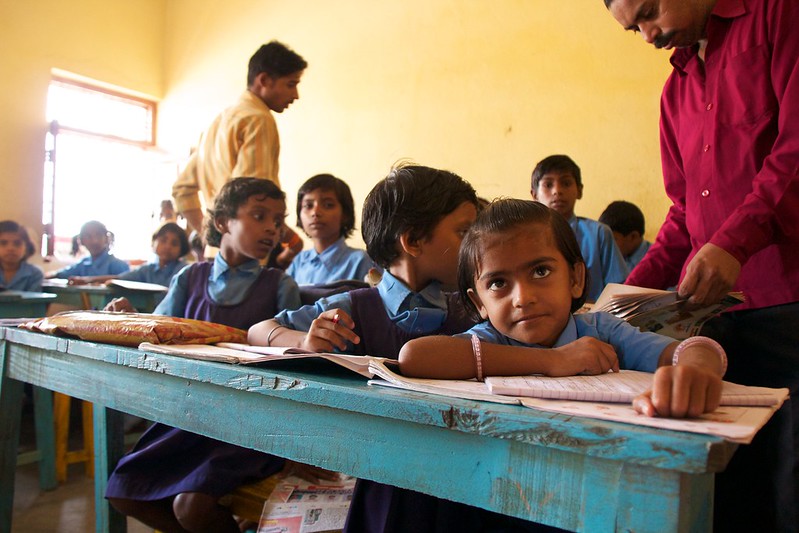 In 2020, the government of India introduced the National Education Policy (NEP), a policy framework that focuses on making improvements to the education system. The NEP is an education reform in India that aims to increase equity of education for students all around the nation and better prepare students to enter the workforce. Since its implementation, many changes have been made.
Successful Implementations
As of 2025, the NEP has successfully implemented its 5+3+3+4 structure. Before the NEP, India’s education system followed a 10+2 system, in which students completed 10 years of schooling and then two years of higher secondary education.
The current format requires students to complete five years of foundational school, three years of preparatory school, three years of middle school and four years of secondary school. Not only does this system focus on Early Childhood Care and Education, officially including the teaching of 3-6 year olds in the system, but the shift also emphasizes core literacy and numerical skills (FLN). From the implementation of the new system in 2020 to 2023, the percentage of students with core FLN skills increased from 58% to 70%.
Drastic Improvements
The NEP has made drastic improvements to the topic of curriculum. Of India’s 28 states and eight territories, 23 have adopted the NEP’s framework for education, according to India times. Overall, the new curriculum eliminates separations between arts and sciences, curricular and extracurricular activities and others to eliminate the formation of hierarchies.
Additionally, the NEP curriculum emphasizes a multidisciplinary approach and true understanding rather than rote memorization to create unity and integrity of knowledge; on particularly notable addition to the multidisciplinary angle is the introduction of bilingual teaching, which allows students to enhance their understanding of concepts with increased exposure to languages like English or Hindi.
Further, the NEP promised an influx of high-quality resources to its Digital Infrastructure for Knowledge Sharing (DIKSHA) and has achieved its goal; as of 2024, the platform had more than 3.5 billion views, with more than 50 million users, according to India Times. Digital resources like DIKSHA equal the playing field for students in deprived urban areas in India.
Ongoing Reforms
Looking forward, the Indian government still has much progress to make on education reform in India. Though resources like DIKSHA can be a useful tool, the digital divide makes it difficult for them to create real impact. With irregular internet access and a lack of devices, the government must work to fill this gap. One way the Indian government has worked to lessen the divide is through BharatNet, a rural telecom project which provides access to connectivity to service providers and has made more than 74,000 Service Ready GPs for 36 of India’s states.
Additionally, the NEP’s new curriculum has required the adoption of new teaching methods. Because of inexperience and lack of resources, it is hard for educators to undergo the necessary training. As a result, the government and the Department of School Education and Literacy have launched the National Initiative for School Heads’ and Teachers’ Holistic Advancement (NISHTHA).
This program is divided into three training programs specific to the elementary level, the secondary level and the National Initiative for Proficiency in Reading with Understanding in Numeracy (a program created by the Ministry of Education in India). As a result of NISHTHA, many smaller states have achieved 100% of their training goals and/or trained more educators than expected.
Although the NEP has thus far made good, measurable progress, it has much room for improvements. With current education reforms in India, however, the country gets closer and closer to its education goals every day.
– Ariana Wang
Ariana is based in Dallas, TX, USA and focuses on Technology and Solutions for The Borgen Project.
Photo: Flickr
