Hunger as a Political Tool: Food Insecurity in the DRC
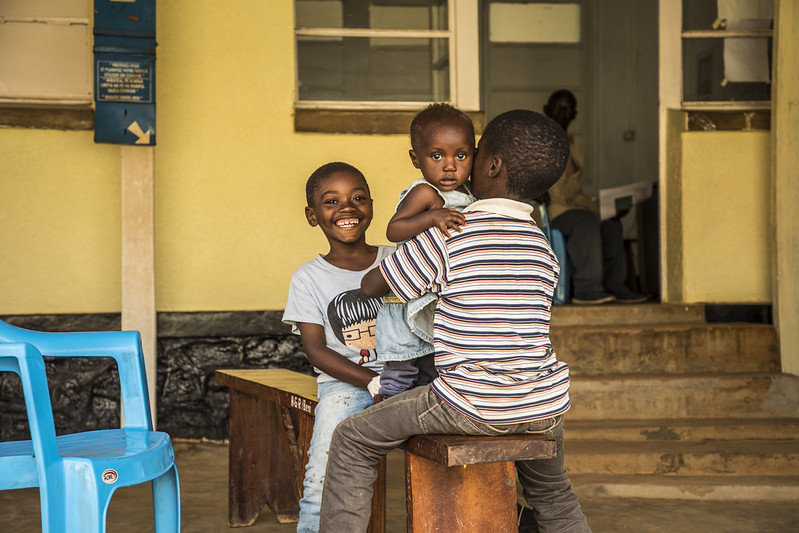 In provinces of North Kivu, South Kivu, Tanganyika and Ituri, food insecurity in the Democratic Republic of Congo (DRC) has become a chronic crisis tied to displacement, conflict and governance breakdown with millions of citizens living on the edge of survival. Instead of it being an outcome of war, food insecurity in DRC is increasingly a political occurrence that is determined by armed conflict, restricted access to land and markets and a dysfunctional governing mechanism that is unable to meet basic needs.
The World Food Program (WFP) states that approximately 26.6 million people in the DRC will deal with acute food insecurity in early 2026, with about 4 million reaching IPC phase 4, which is the second-highest severity level before famine. This is not only a humanitarian crisis but a political and governance crisis. Violence interferes with farming and trade, displacement dismantles entire communities and minimal state protection means the civil population are left to fend for themselves.
Conflict, Displacement and Hunger
Ongoing conflict with the resurgence of the M23 armed group has accelerated this crisis. The renewed hostilities have created waves of displacement. The U.N. reports that about 500,000 people had to flee their homes in South Kivu since the resurgence, many of them now facing utter desperation without having reliable access to food.
Displaced households are typically dependent on unstable markets or humanitarian assistance, both of which are decreasing as insecurity and lack of sufficient funding constrain aid delivery.
Violence also hinders agriculture alone. Fields are untended when farmers flee and local food production stalls under the weight of insecurity. The Food and Agriculture Organization (FAO) as well as WFP show that conflict and increasing food prices have forced millions into acute food insecurity, even as access to markets deteriorates and essential goods are now unaffordable. Conflict has cut trade routes, transport is unsafe and families find themselves without food stocks and no income.
Shortages in Funding and Humanitarian Access
Clashes and insecurity also hinder humanitarian access. Airports in Goma and Bukavu have not been operating for several months, delaying aid deliveries to areas hit hardest. However, funding has not kept up with needs. The WFP states it faces a standstill of emergency food assistance in eastern regions without a substantial increase in funds as major donors scale back on budgets and redirect resources elsewhere. This blocks life-saving food distribution to millions who otherwise are unable to feed themselves.
Political Dimensions of Hunger
In this context, food insecurity in DRC begins to function as a political tool. Armed groups exert control over territory as well as resources, determining who has access to food and who goes hungry. Without effective state governance, civilians are at the mercy of whoever controls the territory. This dynamic not only increases suffering but also weakens trust in the Congolese administration’s ability to protect and provide for its citizens.
In addition, hunger fuels further displacement and instability. As rural households no longer have access to farmlands and markets, they have to move to urban settings or across borders, which are typically camps struggling with overdcrowding in dire conditions and resources are scarce. Data from the WFP shows that conflict-induced displacement continues to grow, exacerbating food needs and creating continuous cycles of vulnerability that are difficult to break.
Responses that Work and Their Limits
In spite of the gravity of the crisis, responses rooted in both humanitarian relief and long-term resilience are promising if properly supported and scaled.
Humanitarian agencies like the WFP are applying delivery mechanisms in order to get to isolated areas through food assistance, cash transfers and nutrition programs for children and pregnant women. In 2025, WFP provided millions with food and cash assistance. Although gaps in funding would also mean that the aid is insufficient
The FAO has highlighted the significance of investing in agriculture even in the midst of ongoing conflict. By supporting seed distribution and livestock, FAO will assist households to regain productive capacity once security permits. Resilience programs focus on sustainable livelihoods, which focus on the root causes of food insecurity and not just its symptoms.
Negotiating passage for aid delivery with M23 and other local armed groups can provide access for food to reach civilians in compromised areas where neither the government nor humanitarian personnel can freely enter. Though politically sensitive these negotiation mechanisms have allowed for life-saving assistance in other prolonged conflicts.
Conclusions
Aid operations will continue to struggle without political progress towards peace and improved security. Also, gaps in funding significantly hamper both emergency response and longer-term resilience building. Without new international support, eastern DRC could face a full breakdown of food assistance by early 2026.
However targeted, adaptive interventions can alleviate the worst impacts of hunger, particularly when paired with efforts to restore mobility, production in agriculture and civilian governance. In a conflict where hunger is intertwined with power and displacement, solutions must be humanitarian and political, aiming to safeguard lives now while working towards a more food-secure future.
– Gloria Bwenge
Gloria is based in New York, NY and focuses on Global Health and Politics for The Borgen Project.
Photo: Flickr
