Child Poverty in Slovenia: Child Guarantee National Action Plan
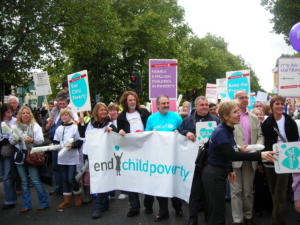 Child poverty in Slovenia, while less severe than in many European Union (EU) countries, remains a persistent issue affecting thousands of children’s access to basic needs, education, health care and stable housing. In response, the Slovenian government has launched the Child Guarantee National Action Plan, a strategic framework to eliminate child poverty by 2030.
This ambitious plan focuses on reaching the most vulnerable children, including those from low-income, Roma, migrant and institutionalized backgrounds, through targeted interventions in education, nutrition, health care and social inclusion.
The Child Guarantee National Action Plan
Slovenia’s Child Guarantee National Action Plan was first introduced on April 26, 2023, as part of the broader European plan to secure equal opportunities for all children. The plan focuses on tackling poverty and exclusion among the country’s most vulnerable children.
Since its launch, the plan has shown measurable progress. The percentage of Slovenian children at risk of poverty and social exclusion dropped from 11% to 10.3%. This improvement is largely due to targeted funding from both the EU and the Slovenian government, directed toward early childhood education and care, health care, nutrition, housing and related services.
Each of these services has helped reduce the cycle of generational poverty and made social inclusion more accessible to the country’s youth.
Leading by Example
Slovenia’s approach stands out, not only for its results, but for the value that drives it. The country treats child poverty as a human rights issue rather than a simple economic challenge. This is evident due to Slovenia’s integration of public policy and country involvement.
Nonprofit organizations such as ZPM Ljubijana Moste-Polje have played a crucial role, partnering with government agencies to deliver aid directly to needy families. Supports include emergency housing, tutoring programs and family counseling, particularly for children affected by domestic instability and economic hardship.
Slovenia offers a reputable model for other countries to follow by combining state policy with local community involvement. It shows that real change is possible when children are seen not as statistics but as people.
Learning From Slovenia
Slovenia’s success shows that ending child poverty is not a dream. It’s a combination of policy decisions and wise investments. The country has built a support system that uplifts its youngest citizens through targeted acquisitions, cross-sector partnerships and long-term political planning.
Other countries, especially those still struggling with child poverty, can draw from Slovenia’s blueprint. For those countries to succeed, they need a long-term vision, community collaboration and policies that place the well-being of their children at the center of national development.
Slovenia reminds the world that progress is possible for the millions of children facing child poverty across the globe. The country shows that it all begins with the desire for other countries worldwide to protect their most vulnerable, the children.
– Jaden Hartfield
Jaden is based in Charlotte, NC, USA and focuses on Good News for The Borgen Project.
Photo: Flickr
