Progress in Fighting Poverty in Balochistan
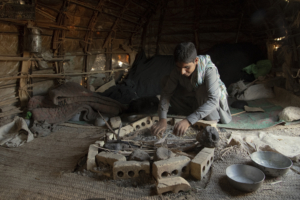 Balochistan is Pakistan’s largest province. While it is nearly half of Pakistan’s territory, it is home to roughly 6% of the Pakistani population, 14.8 million. Poverty and a lack of economic development have exacerbated systemic issues of insecurity and nationalist tensions. Thanks to the international community and local government initiatives, there has been major progress in fighting poverty in Balochistan.
The World Bank has helped the Pakistani government to address the two main sources of poverty: water insecurity and a lack of education, both of which contribute to violence and the ongoing Baloch insurgency. These solutions help address much of the core issue and have integrated local communities in the implementation, which has been critical to sustainable success.
Poverty in Balochistan
Fighting poverty in Balochistan is a critical security issue in the region. Yunas Samad, professor at the University of Bradford and research fellow of Political Science at the Lahore University of Management Sciences, points out that Balochistan is neglected and instead is mostly treated as a place to extract resources, in particular minerals and natural gas. Despite its critical location for mining and the important Gwadar Port, the region remains impoverished.
The province has been subjected to resource extraction. Yet, locals and the provincial government receive minimal benefits or returns, even though mining and energy extraction are constitutionally designated as provincial and not federal subjects. The region has been earmarked as crucial to the new China-Pakistan Economic Corridor (CPEC). However, its Human Development Index (HDI) is 0.421 below the national average of 0.562.
This has resulted in a poverty rate of more than 71% in 2015, well above the national average of 38%. This is despite the region being home to the Suri Gas Field, one of Pakistan’s largest reserves. This systemic poverty and neglect have created the conditions for a new phase in the Balochistan conflict. Imtiaz Baloch, a journalist and researcher focusing on Balochistan, notes that the region’s marginalization has always been the fuel for the conflict.
The Baloch Insurgency
The Baloch insurgency began when the region joined Pakistan in 1948, with major outbreaks throughout the 20th century as the Islamabad government centralized control over provinces like Balochistan. Although major insurgent factions declared a ceasefire in 2018, significant attacks, including recent hijackings and suicide bombings in 2025, continue to occur.
After relative calm in the ’90s, the fifth phase of the conflict emerged from escalating tensions between weakened Baloch nationalist parties, unable to form a united political front and the Pakistani state over persistent social and economic inequalities. The Baloch people’s demands for greater political rights, resource control and increased autonomy intensified.
Ironically, increased economic investment from the Pakistani and Chinese governments has only deepened Balochistanis’ feelings that they are being exploited. This sense of isolation and disempowerment created a new insurgency movement, one that has spread beyond Pakistan to other Baloch regions in nearby Iran and Afghanistan.
Armed factions like the Baloch Liberation Army – Jeeyand (BLA-J) use this disempowerment to conduct suicide attacks on Gwadar Port facilities, the Pearl Continental Hotel in Gwadar and especially on foreign investment in Balochistan. Unlike previous phases, the new Baloch insurgency has focused on economic targets.
Despite its economic potential, CPEC has intensified the Baloch insurgency, exacerbating grievances over resource control, marginalization and cultural erosion. The growing sophistication and frequency of attacks on CPEC-related targets underscore the persistence of the insurgency. These threats endanger regional stability and the project’s success if left unaddressed through inclusive development and dialogue.
Fighting Poverty in Balochistan
The Baloch provincial government recently started a new initiative. It will focus on increased water security, energy infrastructures and agricultural development for the Baloch people to create new opportunities. A partnership from the World Bank has matched this effort. In 2025, the World Bank pledged $94 million to the Balochistan Water Security and Productivity Improvement Project. It aims to provide improved water access and irrigation to more than 500,000 additional people.
In addition to these efforts, the international organization also focuses on the future through increased access to education. The World Bank is providing an additional $100 million for the Getting Results: Access and Delivery of Quality Education Services in Balochistan (GRADES-Balochistan) program, which will educate 250,000 students and 5,000 teachers. Inga Afanasieva, Team Leader for the project, calls the program “a strategically important initiative that addresses critical gaps in access to and quality of pre-primary and primary education in the province.”
More importantly, this new progress is focusing on integrating local communities directly. The Pakistan Poverty Alleviation Fund is tackling the issue of providing more schools and enrolling nearly 8,000 students in Balochistan, through its Balochistan Education Initiative. These coordinated efforts are important, as only 40% of Baloch children and only 20% of Baloch women are educated. Dr Shahnawaz Khan, Chief Executive of the Balochistan Rural Support Program, highlights these new models as the ones that will be a “foundation for change.”
Conclusion
The Balochistan insurgency is a thorny issue that impacts the lives of millions of people in the wider region. Decades of central government neglect, ethnic tensions and economic marginalization have created a conflict that, without action, shows little signs of stopping. Yet a coalition of governmental and private organizations is finally creating change. Baloch society can finally move past the violence by fighting poverty in Balochistan and providing education and economic opportunities.
– Joseph Laughon
Joseph is based in Sacramento, CA, USA and focuses on Good News amd Politics for The Borgen Project.
Photo: Wikimedia Commons
