Globalization’s Effect on Vocational Education Centers in Cuba
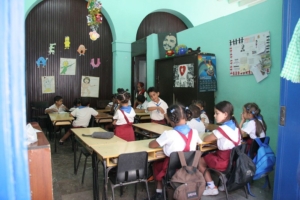
Cuba has one of the world’s most complex geographical and political dynamics. It is located just 90 miles from the U.S. coast and stands on the opposite end of the political spectrum. For much of its modern history, Cuba has remained in a time capsule, with citizens restricted from accessing much of the world’s technology and trade. While the country has attempted to engage with globalization, progress has been slow.
In 2011, Raúl Castro announced a series of economic reforms targeting agriculture, small businesses and foreign investment. Fidel Castro called such globalization reforms “concessions to the enemy,” but his brother Raul was more receptive. However, the 2011 reforms have been unsuccessful due to state-imposed restrictions. This paradox of attempted modernization and government scrutiny has created a series of issues for vocational education training centers in Cuba. Without the implementation of a progressive vision, vocational education training centers in Cuba will remain stagnant.
Cuba is a highly educated but struggling nation. Cuba’s literacy rates are “more comparable to developed countries,” yet according to The Cuban Observatory for Human Rights, 88% of people still live in extreme poverty. This can be attributed partially to the U.S. embargo, but mostly to a repressive regime that prioritizes creating model citizens for the regime instead of creating an adept workforce. Something within the Cuban system needs to change, but it is unlikely to be within formal education.
The State of Vocational Education Training Centers in Cuba
Vocational education is one of the most effective tools in combating poverty. Unlike traditional education, it provides the skill sets necessary for a singular career. When someone is fighting for life-saving resources, the time needed for advanced education is not always an option. Vocational education provides a clear path to upward mobility. According to the World Bank, each additional year of schooling increases a student’s future hourly income by 10%.
Currently, vocational education training centers in Cuba still follow Soviet-era ideology. In upper secondary education, the equivalent of high school in the U.S., students are placed on either a university or vocational track. After schooling, they complete internships at state-run companies and earn certification within four years. Recent trends show that more students are directed toward vocational training. In 2001/2002, two-thirds of students pursued this path.
Generally, private corporations have limited influence on vocational education and training centers in Cuba, with private employment often stemming from either the informal labor market or family connections. The lack of involvement from private corporations poses several issues. Students’ autonomy is limited, resulting in an adversarial relationship with their work. Additionally, with the state still exerting significant control, the populace remains unprepared for the global economy.
SFUVET and the PROFET Program
The Swiss Federal University for Vocational Education and Training (SFUVET) is dedicated to enhancing vocational education for international partners. Its mission is to create harmony between the education system and the labor market. It currently has programs in Cuba and more than five countries.
In October of 2022, the organization launched the PROFET program in Cuba. Its initial aim was to educate 10,000 students across 29 universities in agriculture, construction and hospitality. Initially supposed to run through 2023, the project has been renewed for a second phase that will last till the end of 2025.
PROFET focuses on improving employment access and modernizing Cuba’s education system to prepare students for the global economy. Funded by the Swiss Agency for Development and Cooperation and the United Nations Development Programme (UNDP), the program aims to train vocational educators within four years.
Conclusion
Despite Cuba’s challenges, its commitment to vocational education remains clear. Organizations like SFUVET provide funding and instruction vital to the success of young people in Cuba. While the PROFET project comes to a close soon, the knowledge it offered to students will be invaluable to vocational education training centers in Cuba.
– Patrick Feeney
Patrick is based in Los Angeles, CA, USA and focuses on Business and Global Health for The Borgen Project.
Photo: Flickr
