Transforming Education in Zimbabwe
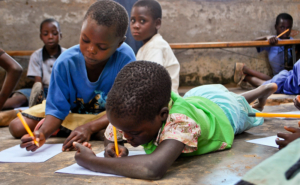 “Not all superheroes wear capes; some carry school bags, walk 10km to class and still dream of changing the world,” says Jacqueline Nyakunu, founder of a small rural education nonprofit in Zimbabwe. Financial support through scholarships, government aid programs like the Basic Education Assistance Module (BEAM), NGO initiatives and community-based efforts is vital in improving the education system for vulnerable children in Zimbabwe. These interventions transform their futures and empower communities through increased educational opportunity.
The Challenge of Accessing Education in Zimbabwe
Zimbabwe’s education system experiences some strenuous challenges from systemic underfunding, rural disparities compared to urban areas and holistic inequalities. The government allocated 14% of the national budget to education in 2023, an improvement from 13.4% the previous year. However, it still falls short of the “20% threshold on budgets when it comes to the education sector” recommended by the Dakar Framework.
This constant underfunding has led to poor infrastructure in rural areas, where some schools operate in makeshift garages or abandoned buildings. This leaves students in remote regions, with limited resources and inadequate infrastructure, at a severe disadvantage compared to their urban counterparts. In 2021, an estimated 30,000 students failed to register for national exams due to financial barriers.
High dropout rates compound the problem. UNICEF reports that nearly 50% of children are out of school, specifically in the pre-primary (68%) and adolescent (47%) age groups. Girls face additional hurdles, including period poverty, which affects around 60% of rural girls and contributes to a school attendance rate of 20%, as well as a 21.2% child marriage rate among girls aged 15 to 18 years of age.
Technological inequality further limits learning opportunities, with most rural schools lacking electricity, internet access and digital resources. Most of these schools “do not have the necessary equipment like computers and computer labs needed for ICT studies and virtual learning.” Overall, in the modern world, not having access to the internet or technology while also lacking tangible resources makes it extremely difficult for students to flourish. With 72% of Zimbabwe’s population aged below 18 living in rural areas, these challenges point to a severe education crisis that disproportionately affects the country’s most vulnerable communities.
Government and Institutional Support
Beginning in 2009, Zimbabwe revitalized its BEAM via a partnership between the government and UNICEF to provide tuition, examination fees and rally support to needy students. The initiative targets children in school who are struggling to pay the expenses, dropouts due to financial burdens, those who never enrolled and other socially marginalized groups, such as orphans or children with disabilities. In 2009, BEAM served approximately 527,330 students across 5,055 schools. It achieved approximately 94% of its initial goal of 560,000 beneficiaries, with a gender equity of 50% of beneficiaries for girls.
Despite this early impact, funding challenges quickly developed. In 2011, BEAM received $10 million from donors for primary and special needs schools and $13 million from the government for secondary schools. This fell $7 million short of the $30 million needed to meet the program’s goals. BEAM complements efforts like the Education Transition Fund (ETF). The ETF is designed to supply teaching and learning materials and broader social protection objectives coordinated through district and national Child Protection Committees.
Community-Based Initiatives
The Borgen Project spoke with Nyakunu, a rising senior at Davidson College, who shared her personal journey and the inspiration behind her nonprofit work. She spent her early years in rural Bocha, Zimbabwe, where she and her brother walked close to 15km to reach Chapeyama Primary School, often crossing a river along the way. “Although I enjoyed learning, the long journey and lack of resources made school physically and mentally draining,” she recalled.
Her circumstances changed dramatically when her family moved to an urban area and she transferred to Sakubva Primary School. With access to textbooks, a library and transportation, Nyakunu began to thrive. She eventually graduated top of her class and earned a fully funded place at Davidson College in the U.S.
During the interview, Nyakunu spoke about Start-Up Rural Gen (SURG): the youth-led nonprofit she founded in high school. What began as a capstone project has become an organization that now expands educational access for rural students in Zimbabwe and Kenya.
SURG focuses on addressing both financial and material barriers for Zimbabwe’s education system through four core initiatives:
- Scholarships: Covering school fees for students whose families are unable to pay.
- Material Support: Providing essentials like textbooks, stationery, school uniforms and sanitary wear.
- Mentorship and Career Guidance: Offering workshops and personal mentoring to help students prepare for higher education.
- Community Engagement and Partnerships: Collaborating with schools, volunteers and donors for sustained impact.
Since 2021, SURG has supported more than 1,000 rural students. Nyakunu highlighted the example of Mt. Matedzi Secondary School, where overcrowded classrooms and limited textbooks make learning difficult. In one case, she described an 11-year-old boy from Mukwada who now receives full support through SURG and consistently ranks at the top of his class. What began with a $600 grant has grown steadily, now receiving funding from sources like Davidson College, AFS Intercultural Programs and even Nyakunu’s income!
Moving Forward
Financial support through government programs like BEAM, scholarships or philanthropic efforts like SURG is more than just assistance; it is a lifeline changing the trajectory of thousands of children in Zimbabwe. These initiatives are closing critical access, resources and opportunity gaps, especially for rural and marginalized communities.
However, continued investments from institutions, local governments, donors and individuals alike are necessary and urgent. This ongoing commitment will ensure education is not a privilege for the few but a fundamental right for every child in Zimbabwe.
– LaRaymee Lee
LaRaymee is based in Missouri City, TX, USA and focuses on Global Health for The Borgen Project.
Photo: Flickr
