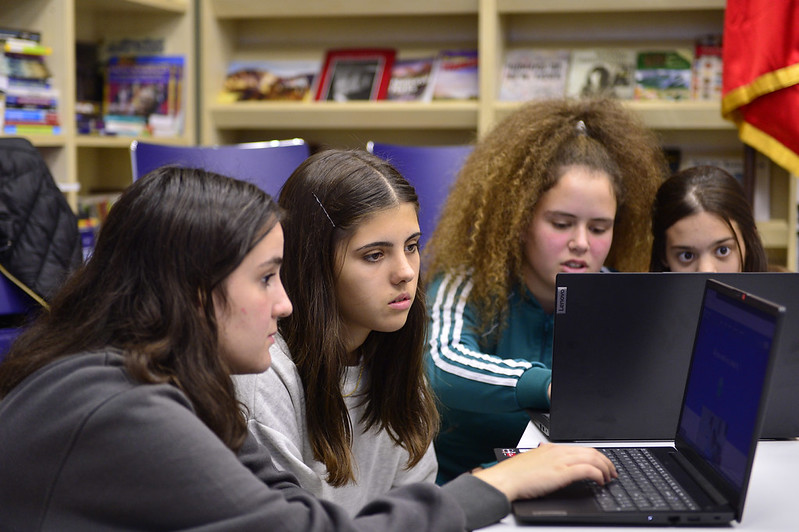
Montenegro, a small Balkan country that gained independence in 2006, has made steady progress in education over the past two decades. As the country moves closer to European Union (EU) standards, reforms have increasingly focused not just on access, but on learning outcomes, equity and workforce development. Below are six facts that highlight where education in Montenegro stands today.
6 Facts About Girls’ Education in Montenegro
- Montenegro has achieved near-universal participation in primary education, with enrollment rates consistently above 95%. This reflects long-standing reforms that made basic education free and compulsory. However, early childhood education remains a weaker point. According to UNICEF, preschool enrollment has improved significantly in recent years but still does not reach full coverage, particularly in rural areas and marginalized communities, such as Roma children. Expanding early childhood access is now seen as critical because it strongly influences later learning outcomes.
- Montenegro performs fairly well at the secondary level, with enrollment rates above regional averages. However, completion rates vary across groups. Students from low-income families and minority backgrounds are more likely to drop out before finishing upper secondary education. The European Commission has noted that while access is robust, Montenegro must improve “equity and inclusion in education” to ensure all students benefit equally.
- Despite strong enrollment, learning outcomes are mixed. In PISA 2022, Montenegro scored below the OECD average in reading, mathematics and science, with a sizable share of students failing to achieve baseline proficiency levels. This underscores a key issue: students are in school, but not all are acquiring the skills needed for higher education or employment. Thus, enhancing teaching quality and curriculum relevance has become a national priority.
- Education outcomes are tightly linked to Montenegro’s labor market challenges. According to the World Bank, youth unemployment remains high, especially among those without strong qualifications or practical skills. Employers often report a mismatch between what students learn and what the labor market demands. Consequently, policymakers are increasingly focusing on technical and vocational education and training to better align education with economic needs.
- Montenegro continues to maintain a high literacy rate, above 98% among adults, indicating solid foundational education. However, disparities remain. Roma and other marginalized groups face significantly lower educational attainment levels. UNICEF has emphasized that Roma children are still less likely to complete secondary school, pointing to persistent inequality despite national progress.
- International organizations and NGOs are playing an important role in bolstering results. UNICEF has been actively working with the Montenegrin government to improve early childhood education, inclusive schooling and data systems that track student progress. Meanwhile, the EU continues to support reforms through funding and policy as part of Montenegro’s EU accession process, notably in areas such as teacher training, curriculum modernization and digital education.
Montenegro has built an impressive education system in terms of access and literacy, with near-universal primary enrollment and high participation in secondary education. However, the country now faces a more complex obstacle: improving equity and the transition from school to work. As policymakers increasingly recognize, the future of education in Montenegro will depend not just on getting students into classrooms – but on ensuring they leave with the skills required to succeed in a modern, competitive economy.
– Jeff Zhou
Photo: Flickr
