Education Development in Tajikistan
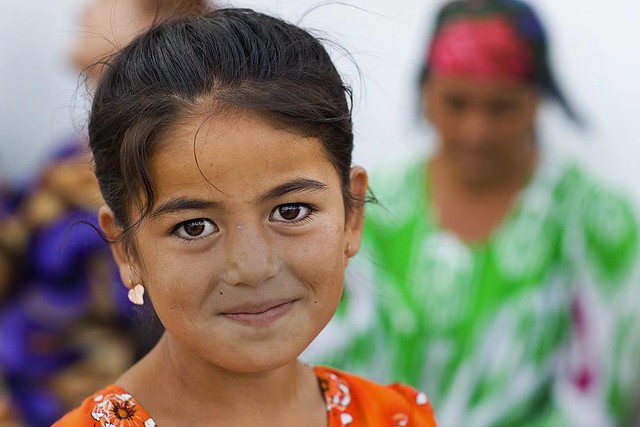
Education development in Tajikistan has increased in recent years through the assistance of UNICEF, the European Training Foundation (ETF) and other organizations. The Ministry of Education and Science of the Republic of Tajikistan (MoES) introduced key reforms, such as the National Strategy on Education Development 2020, to improve its lacking education system. The reasoning behind efforts in education development in Tajikistan is to attain useful skills so that citizens may gain employment and a steady income. As a result, the declining but high poverty rate of 31.5 percent in Tajikistan can be reduced.
Education in Regions of Rural Poverty
The European Training Foundation found that 600,000 Tajikistanis are labor workers that work in Russia. About 57 percent of these workers are unskilled, poorly paid and work in hazardous conditions.
Since 73 percent of the country lives in rural areas, the main focus of the ETF, UN agencies and nonprofit organizations are regions such as Khatlon and Soghd. Over 70 percent of the poor live in the Khatlon and Soghd Regions. Both regions are emphasized to reduce poverty in Tajikistan and improve the quality of education.
The government’s goal is to double its GDP and reduce poverty in Tajikistan to 20 percent by 2020. To achieve this, the European Union and the ETF have identified three priorities: Health and vocational education, training and rural development.
These priorities have a total cost of around $275 million. The ETF is providing support in the following areas: contributing to international donor cooperation active in professional training, providing thematic expertise to support EU projects, articulating policy dialogue methods and practices and involving key national stakeholders in initiatives.
The World Bank’s Progress
The World Bank financed the $16 million Fourth Global Partnership for Education Fund Grant. The grant was created to improve Tajikistan’s preschool and general education. Additionally, it was meant to strengthen the system’s ability to withstand continued reforms in the education sector.
Marsha Olive, World Bank Country Manager, signed the act in 2013 and said, “This comprehensive project aims to ensure that the children of Tajikistan, especially the most marginalized including girls, ethnic minorities, rural children, and children with disabilities, are afforded the opportunity to achieve their education goals for future development and success.” The fund built off of the success of previous projects that began in 2006 from the Global Partnership for Education Fund.
The grant ended in 2017. It resulted in 18,978 students benefiting from infrastructure improvements against a target of 7,900 students. The grant also trained 5,395 primary teachers. Furthermore, it provided supplementary books to all schools. About 160,000 primary students are enrolled in schools with upgraded learning conditions, against a target of 100,000.
Looking to The Future
With the help of organizations such as the World Bank, UNICEF and other nonprofit organizations, education development in Tajikistan will continue to progress. Consequently, the poverty rate will decline. Although the government’s goal to reduce poverty in Tajikistan is slow, progress is being made through coordinated efforts. Progress in the education sector shows that positive change is occurring in the country.
– Lucas Schmidt
Photo: Flickr
