Shedding Light on Disability in Tanzania
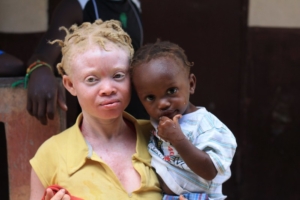 According to the World Bank, “In 2022, 2.6% of the population in Tanzania are persons with disabilities.” Additionally, about 8.4% of the population suffers from six forms of disadvantages: seeing, hearing, communication, cognition, walking and self-care.
Access to assistive technology (AT), a wide-ranging term for products or services beneficial to people with disabilities, has long been a challenge in Tanzania. However, efforts to improve availability are gradually increasing.
Disability in Tanzania
Approximately 1.6 million Tanzanians live with some form of disability. In Tanzania, people with disabilities are disproportionately affected by poverty. Expanding access to AT promotes inclusion and awareness while creating resources that help reduce poverty.
Key initiatives in Tanzania include the Persons with Disabilities Management Information System, the National Business and Disability Network and the National Action Plan for Persons with Albinism.
The Persons With Disabilities Management Information System
The Persons with Disabilities Management Information System (PD-MIS) was launched on December 2, 2023, with the help of the Prime Minister of Tanzania, Honourable Kassim Majaliwa. Originally, a rural special education teacher, Isaya Mlinyi, brought attention to a reliable database that would bring awareness to children with albinism and visual impairment.
With the support of the Prime Minister’s Office and the United Nations Population Fund (UNFPA), the PD-MIS was launched and now serves as an up-to-date information system for persons with disability (PWD). Before this successful resource, Tanzanians with disabilities were recorded through manual registrations within villages and a census record every 10 years.
This newly invented assistive technology serves as a tool that captures PWDs’ up-to-date personalized information in Tanzania Mainland. An example of this newly successful AT is providing records of households with PWD and granting families social protection, such as additional income, to compensate for the lack of accessibility in the labor field.
The National Business and Disability Network
Despite successful progress throughout the years, PWDs in Tanzania still face hindrances and discrimination when looking for work. In response, the National Business and Disability Network (NBDN) was successfully launched in March 2025, promoting visibility and equal job opportunities for PWD within the workplace. This International Labor
Organization(ILO)-supported program ensures that companies provide inclusion as part of their corporate policy, which lowers barriers against people with disabilities. In addition to the ILO, the NBDN is supported by the Association of Tanzania Employers (ATE) and Sightsavers, a charity founded to support developing countries with PWD.
National Action Plan for Persons With Albinism
This action plan unveils the violence and discrimination that Tanzanians with albinism face, ensuring the safety and inclusion of this group of people. This social inclusion plan for Tanzania was officially signed on December 3, 2024, which is also the nation’s International Day of PWDs. The National Action Plan ensures that the Tanzanian government provides lawful security and population data for people with albinism.
People with albinism not only face workplace discrimination, but also suffer from being excluded from family and community. The National Action Plan for Persons with Albinism not only sheds light on this marginalized group of people, but it also creates opportunities and provides inclusivity for all people with a form of disability.
Conclusion
People in Tanzania living with a disability are more likely to face discrimination in the workforce, inadequate education and higher poverty rates. The accessibility to AT can provide the Tanzania Mainland with up-to-date records of PWD, create inclusion within labor departments and ensure community safety nationwide. These key factors play a major role in shaping poverty and survival for this large yet often overlooked group in Tanzania’s population.
Since the passage of the Disabilities Act in 2010, the government has continued working to create opportunities for people with disabilities, supported by campaigns promoting the principle that no one should be left behind. Recent social safety nets launched on the mainland encourage leaders to uphold inclusive policies and expand resources that strengthen protections for PWDs.
– Nichole Morgan
Nichole is based in Shreveport, LA, USA and focuses on Good News for The Borgen Project.
Photo: Flickr
