Dengue Track: Mapping the Spread of Disease
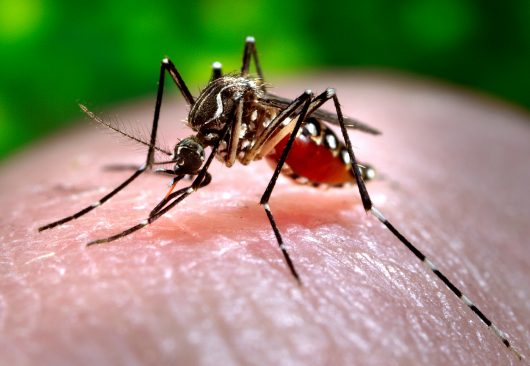
Dengue is a notoriously malicious mosquito-borne virus that has seen an uptick in recent decades with the expansion of urban environments. But a new tool called Dengue Track is trying to change that.
Dengue fever causes flu-like symptoms, minor bleeding and a characteristic full-body rash. The disease used to be confined primarily to tropical regions, but the World Health Organization estimates that about half the global population is now at risk. It is rarely fatal but nonetheless constitutes a leading cause of illness and death among children in some developing countries. Though a vaccine has been developed, its use has only been approved in three countries so far, and it is not yet widely available anywhere.
Dengue is a disease that is uncommonly hard to fight. Because it has an incubation period of four to 10 days, mosquitos can be spreading it in an area for weeks before officials start to realize that they have an epidemic on their hands. What’s more, as globalization intensifies and people and goods travel more broadly than ever, it’s nearly impossible to keep infections localized or to judge where they might develop next.
Illnesses that, like dengue, are transmitted by blood-sucking insects are called “vector-borne” diseases, and when vaccines are not available, the only way to protect human populations is through methods known collectively as “vector control.” These include strategies for reducing the insects’ breeding areas, creating tools like nets to keep them away from vulnerable people or killing them with pesticides.
Vector control, however, is most effective when the movement of the disease can be plotted on a map. The trouble is that dengue, which is most prevalent in developing countries around the equator, is dramatically underdiagnosed and underreported, and systems to share what little information there is are inefficient, unstandardized, or nonexistent.
Dengue Track, a crowdsourced tool that tries to map the epidemiology of the disease, is an initiative from an organization called Break Dengue. Drawing information from cell phone conversations, social media, and an online chat system, it plots cases of the illness across the globe to try to predict where it may surface next.
It is a low-cost method that relies on tools common in developing countries, where only one-third have access to the internet but over 95 percent own mobile phones. This means that it is particularly well-suited to places where the national health system does not have the ability to track outbreaks itself.
“Thousands of lives are lost every year in developing countries for failing to detect epidemics early because of the lack of real-time data on reported cases,” said Lakshminarayanan Subramanian, a professor at New York University who helped to develop Dengue Track. This app might prove a useful model for identifying such epidemics early in the game and taking the appropriate steps to head them off.
– Madeleine Read
Photo: Flickr
