Delving Deep: 10 Facts About Human Rights in Colombia
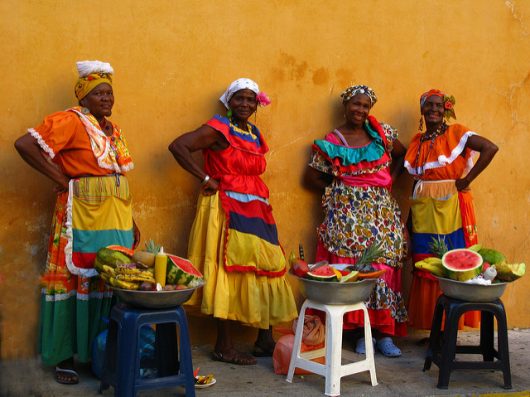
Colombia has various laws to prevent human rights violations; unfortunately, these laws often go ignored and are broken. Colombia is commonly referred to as the country with the ‘worst human rights record in the western hemisphere,’ but there’s always more to a story than popular taglines. Here are 10 facts about human rights in Columbia.
10 Facts about Human Rights in Columbia
- The Colombian government recently reached a peace deal with the Revolutionary Armed Forces of Colombia (FARC) rebel group to formally end the 52 years of conflict in their country. The civil war left 220,000 dead, 7 million displaced and led to numerous human rights violations — including the recruitment of child soldiers by rebel groups.
- There continues to be around 8,000 child soldiers in Colombia today. Colombia has a law that prohibits any person under 18 from engaging in military behavior, but children are still being recruited for guerrilla groups. Fortunately, FARC rebel groups in the past few years have promised to start releasing child soldiers and to stop recruiting under 17 year-olds.
- It is dangerous to be a trade union or social activist in Colombia. Many hoped violence would subside after the signing of the peace treaty, but attacks on union and social activists have actually skyrocketed since. In the past 20 years, over 3,000 unionists have been killed, making Colombia one of the most dangerous countries for trade union members.
- Even Colombia’s government military has committed human rights crimes against citizens. During the civil war, the Colombian army frequently executed citizens and reported them as enemy combatants in order to increase their body counts against the rebel groups. In 2017, the Attorney General’s office began investigating such atrocities and have convicted around 1,200 soldiers.
- Over 7.7 million Colombians have been displaced since the civil war began; in fact, around 48,000 people were displaced in 2017 alone. In 2011, a Victim’s Law was passed by which the Colombian government has been attempting to finish land restitution for millions of hectares of land. Although the program has made some progress, it is still moving slowly.
- Gender-based violence in Columbia is also common. The large amount — approximately 2 million — of displaced women are especially susceptible to high rates of rape and abuse. The government has attempted to reform laws addressing human rights in Colombia (such as gender violence), but the country lacks a proper system to enforce these laws.
- The U.S. is heavily involved as a foreign actor in Colombia. The country received almost $400 million in aid from the U.S. in 2017, a good chunk of which is allocated for human rights in Colombia. The money will also go towards anti-drug efforts, military education and anti-terrorism.
- FARC is the main rebel group known to commit numerous human rights violations in Columbia. Since the group’s inception in the 1960s, its members have committed atrocities such as child recruiting, sexual violence, murder and abductions. Thankfully, attacks from FARC have decreased since they declared a cease-fire in July 2015.
- Since the peace treaty, the U.N. has assisted Colombia in fighting for human rights in Colombia. The U.N. has urged the nation to create a regimented schedule that will enforce laws against human rights atrocities. They also recommended that Colombia start using an incentive system to prevent rebel groups from continuing violence.
- Indigenous peoples in Colombia are disadvantaged compared to other groups. Due to their lack of access to drinking water, child deaths are higher in indigenous groups in Colombia. They are more likely to live in low-income communities and have limited access to social resources.
A Brighter Future
Colombia has one of the worst human rights violations records in the western hemisphere. Despite such a reputation, the situation has improved since the end of the civil war, and the government is continuing to work towards a better future for the country.
– Amelia Merchant
Photo: Flickr
