Education Programs Cuts Child Labor in Peru
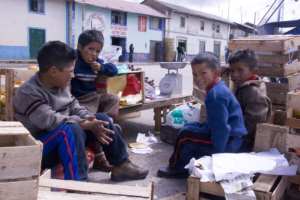 Peru has long grappled with child labor, especially in rural and indigenous communities where poverty is pervasive. Yet, recent educational investments, including bilingual schooling, conditional cash transfers and information-based programs, are helping reverse this troubling trend.
Persistent Poverty and Its Impact on Child Labor
Poverty remains a key driver of child labor in Peru. While the country has made significant progress in reducing poverty, dropping from 58.7% in 2004 to 20.5% in 2018, significant challenges remain. Millions were lifted out of poverty through economic growth and policy reform, yet recent setbacks highlight how fragile these gains are. In 2022, poverty rose amid the pandemic and the number of child laborers increased by roughly 210,000 compared to 2019, reaching 870,000 children and adolescents nationwide.
The issue has deep roots. In 2013, nearly 1.8 million children aged 5 to 17 were working, almost one in four nationwide. More than half of these working children in the 5–13 age bracket came from impoverished households, compared to just 27% of their nonworking peers. Child labor in Peru is concentrated in agriculture, fishing and mining, with rural children disproportionately affected. They are also far more likely to balance school with work than their urban counterparts (39.6% vs. 9.5%).
Bilingual Education’s Strong Effects
Peru’s bilingual education reform has had a notable impact on child labor, especially among indigenous children. A study using data from the Young Lives Study and a difference-in-difference analysis found that access to education delivered in indigenous languages reduced the likelihood of child labor by 12 to 18 percentage points for those children.
Conditional Cash Transfers Encourage Schooling
Peru’s conditional cash transfer program, JUNTOS, launched in 2005, provides families with regular financial support of about $30. The program requires children to attend school and receive basic health checkups. These transfers help alleviate the immediate economic pressures that push children into labor and support human capital development.
One evaluation found that such social protection mechanisms are among the most effective means to promote schooling and thus curb child labor over the long term.
Boosting Education Through Information Campaigns
The Ministry of Education, in collaboration with researchers from Innovations for Poverty Action (IPA) and the Abdul Latif Jameel Poverty Action Lab (J-PAL), piloted two low-cost interventions to inform families about the return to education. These included telenovela-style videos and an interactive tablet app used in schools.
The results were promising: the video series reduced two-year dropout rates by 1.8 percentage points (an 18.85% decrease) in urban areas and families updated long-term educational plans, becoming 10% more likely to aim for higher education. Effects on child labor were mixed: the video reduced child labor by 15% among urban girls, while the app reduced child labor by 7% among rural sixth graders.
Conclusion: Education as a Beacon of Hope
Peru’s concerted efforts, from bilingual schooling and cash transfers to informational campaigns, yield tangible progress in reducing child labor and expanding educational access. Especially in marginalized communities, these strategies are key to breaking the intergenerational cycle of poverty. Sustained investment and scaling up successful interventions offer a powerful path forward toward safeguarding children’s rights and building a more equitable future.
– Alexander Broermann
Alexander is based in Frankfurt, Germany and focuses on Good News and Global Health for The Borgen Project.
Photo: Flickr
