Seed Ball Technology Reforestation in the Sahel is Restoring Land
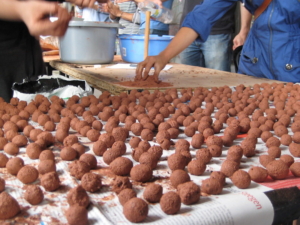 Communities across the Sahel face desertification, declining soil fertility and disappearing livelihoods. Seed ball technology in the Sahel offers a low-cost, scalable solution that combines local knowledge with nature-based restoration. This method delivers native seeds embedded in clay and compost directly to degraded terrain, encouraging plant growth and supporting communities in rebuilding land and livelihoods.
How Seed Ball Technology in the Sahel Works
Seed ball technology involves encasing seeds in clay, compost and sometimes natural fertilizers. These balls protect seeds from pests, birds and harsh environmental conditions until they germinate. When scattered on land, seed balls absorb rainwater, enabling seeds to sprout without intensive farming or irrigation.
Locals mix native seeds, such as pearl millet or sorghum, with clay and compost to form seed balls. They scatter these balls across barren land during the rainy season. The seed ball protects seeds and retains moisture long enough for germination. Researchers in Senegal reported more than 95% emergence rates in on-station trials for pearl millet seed balls.
Supporting Smallholder Farmers and Boosting Yields
Development projects in the Niger Republic use seed ball technology to help subsistence farmers. Programs reduce crop failure risk by improving seedling survival with minimal seed use. Trials revealed that mineral-enhanced seed balls boosted root growth by 227%. It also increased shoot biomass, laying the foundation for improved panicle yield in staple crops.
Partnerships Driving Adoption and Scaling
Organizations such as farmer federations, like the Gaskiya Federation of Maradi Farmers Unions in the Niger Republic, help disseminate seed ball technology, supported by research teams funded by groups like the McKnight Foundation. The approach relies on simple local inputs, making it affordable and appropriate for remote areas.
The Great Green Wall initiative aims to restore millions of hectares across the Sahara-Sahel. While large-scale tree planting faces logistical hurdles, seed ball methods offer a complementary and rapid restoration option. The technology helps deliver vegetation in tough terrain and reinforce ecosystem resilience.
Empowering Youth and Community Engagement
In Ethiopia, social enterprises led by young innovators apply seed ball dispersal methods to restore degraded lands and promote sustainable agriculture. These efforts engage local communities, boost vegetation cover and create green livelihoods in arid zones.
Seeding Hope Across the Sahel
The success of seed ball technology in the Sahel is not only about germinating plants but about shifting what’s possible for communities living on the edge of the desert. Turning degraded land into productive fields helps farmers secure food, preserve biodiversity and reduce migration pressures.
Its simplicity allows it to spread quickly without heavy machinery or expensive inputs, making it a practical tool in the fight against desertification. Governments, NGOs and research teams are investing in scaling this approach. Seed balls could become a cornerstone for ecological resilience and economic stability across the Sahel’s most vulnerable regions.
– Hayden Chedid
Hayden is based in Parker, CO, USA and focuses on Technology and Global Health for The Borgen Project.
Photo: Flickr
