The Church Works to Improve Education in Belize
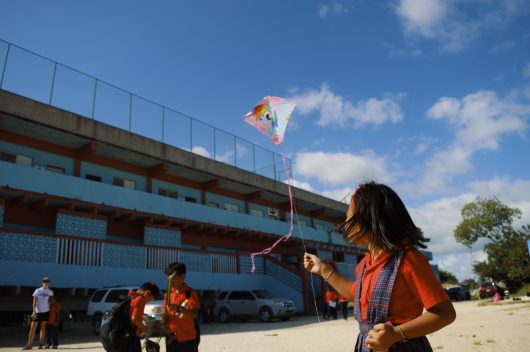 In developing countries, education is the most important sector for governments to direct resources to. In Belize, a Central American country south of Mexico, the education system has major ties to the British system. Belizeans lived under British rule until 1981, and as a result, the country often uses Britain as a model. Quality education in Belize is particularly important considering that almost two-thirds of Belizeans are under the age of 20, so the future of Belize rests on the shoulders of the young.
The education system in Belize can be divided into three parts: primary education, secondary education and tertiary education. Primary education is mandatory for children until they turn 14, and is free if the school is public. Parents face the possibility of fines if they do not send their child to primary school, but these fines are comparable to the fees associated with the “free” education. Some public schools are in bad neighborhoods and many parents cannot afford to buy their children uniforms or books, so a number of children still leave school to work before the age of 14. Secondary school takes about four years to complete on average and is similar to an American high school education. Universities comprise tertiary school.
While most young children are enrolled in primary school, many question the quality of education in Belize. Teachers are paid very little, and many of them are inadequately trained. In Belize, there is no official separation of church and state, so Christian churches have the largest influence on education in Belize. This results in uneven quality among educational facilities, as more money is poured into schools run by the Roman Catholic Church.
While the lack of a divide between church and state widens the gap between good schools and poor schools, the church has contributed a lot to improve education in Belize. A prime example of this trend can be observed at Unity Presbyterian School in Belize City.
This author had the opportunity to visit Belize City and converse with Pastor Ernest Betson, an ordained Creole minister. Betson founded a church in one of the poorest areas in Belize City in 2006, along with his wife Carolyn. They saw the lack of educational opportunities for children in the area and decided to build a school alongside the church in 2007. At first, the school only offered preschool programs, but today it accommodates children through grade six.
With the help of the organizations Help Another National Develop Schools and Mission to the World, the school has improved immensely, and each year it educates hundreds of children who would otherwise not be in school. Unity Presbyterian School has a large playground, a computer lab and music programs, as well as classes for basic subjects. In an area affected by human trafficking and gang violence, the school has brought a lot of hope to the young people in the area. Unity Presbyterian School is particularly inspiring in that it serves as an excellent example of Belizeans helping improve the lives of other Belizeans with the help of foreign aid but not dependent on foreign intervention.
While there are still many obstacles for impoverished children seeking education in Belize, there are many organizations, religious and non-religious, seeking to bridge the gap. With people like Pastor Betson spearheading the campaign for better education in Belize, the country can expect to see more improvements in future years.
– Julia McCartney
