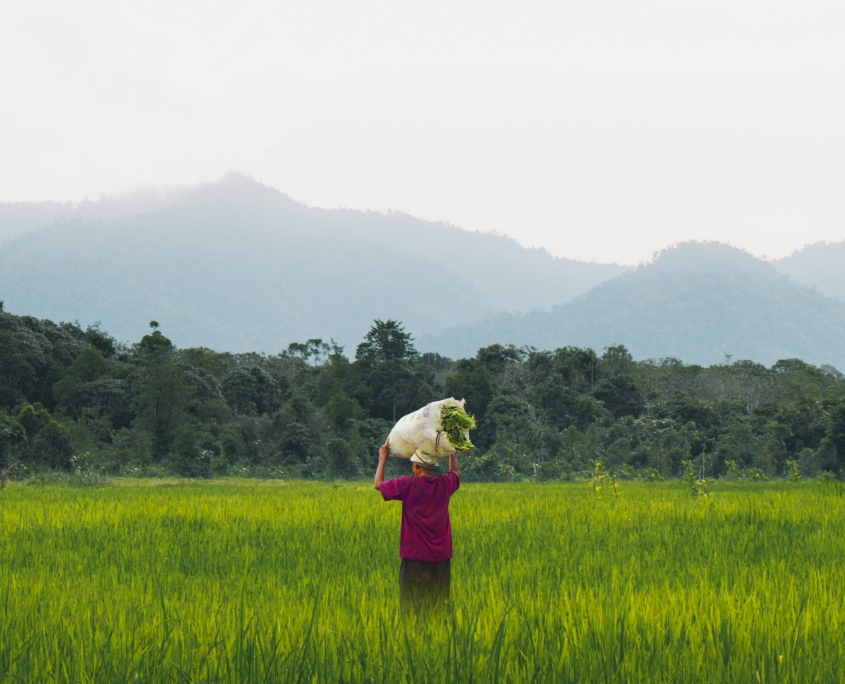
Feed the Future: Success Stories in Combatting Food InsecurityFeed the Future, an agency within the U.S. Agency for International Development (USAID) works to tackle food insecurity globally and invest in resilience allowing communities to bounce back from adversity. It prevents them from sliding back into poverty and works to alleviate the need for costly emergency relief when disaster strikes by adequately creating safeguards. Globally Feed the Future has accessed $4 billion in agricultural financing- which has spurned farmers generating $15.3 billion in revenue from their subsequent activities.

In partnering with governments and private entities, which globally have invested $2.2 billion, USAID has implemented policies and practices that have had real-world positive effects and 3 stories reflected from Kenya, Honduras and Nepal show just how these measures are unfolding on the ground. The following are some inspiring success stories in Feed the Future’s mission to tackle food insecurity that have empowered vulnerable individuals and through USAID measures, been able to create paths of their own on the journey of poverty alleviation.

Kenya: Veronica’s success

USAID is championing the development of entrepreneurship and leading to a culture of self-sufficiency. Feed the Future in conjunction with the Government of Kenya is working to make the market accessible, creating a safe, reliable and more equitable environment where hundreds of small traders can participate and create a self-sustaining livelihood. Veronica was a small business owner and is an example of the numerous success stories in Feed the Future’s mission to tackle food insecurity.

Furthermore, we see that the economic climate is not conducive to women’s success and the policy restricts women’s empowerment, we see that almost 100% of Kenya’s rural women work on farms but only 6% own titles to the land, restricting income capability and decision-making power.

Veronica, a proprietor in the Oldonyiro market previously expected to sell around one bag of flour every week. But after a $300 loan, to use in business activities, she was able to expand by buying valuable business assets such as a car, enabling her to bring more sellable produce to the market.

Furthermore, USAID installed roofing, to allow workers to work during heat and drought and incorporated drought detection systems to help sellers better manage produce.
Veronica has since been able to expand, selling maize, sugar and beans in addition to flour.
This has been crucial in helping her take care of her family, sending her children to school, feeding them and relieving the pains of poverty.

This is a key focus of the women entering the market. The hope is that women like this can expand their businesses and employ others in the community, thus creating a snowball effect in the mission to fight poverty.

Feed the Future: Nepal

In Nepal, 70% of its population generates income through agriculture, however, Nepal still struggles to produce an adequate, affordable supply of safe, nutritious food, with women and other disadvantaged groups being particularly afflicted. COVID-19’s movement restrictions severely disrupted food systems.

Amidst this unfortunate backdrop, there are indeed success stories in Feed the Future’s mission to tackle food insecurity. To protect progress and bolster food security, Feed the Future worked closely with Nepali farmers and business owners.

USAID has been working in Nepal to improve its resilience to external shocks and protect the population from exposure to food insecurity. USAID worked on facilitating livestock rearing, ultimately providing an income to rebuild homes. It also set up marketing chains, so that producers could have their foods delivered, this investment in the agriculture sector allowed for a rise in income whilst also maintaining an adequate food supply for the local population.

Honduras: Evelio’s success

Honduras, through a partnership with USAID, was able to establish market chains to establish demand for its small producers globally and worked also to connect them with processors in the next stage of work in the produce domestically. This is working to alleviate some of the challenges small agricultural producers face and to dampen external pressures from factors such as climate and is one of the success stories in Feed the Future’s mission to tackle food insecurity.

In Honduras, Evelio Miranda, who like other farmers is exposed to economic shocks, through the value of their produce, the price of coffee crashed domestically in 2018, which exposed Evelio and farmers alike to conditions of hardship. This forced individuals to look for work abroad, or a long commute from their home and made more acute the pains of food insecurity.

Through partnerships with the private sector orchestrated by USAID, farmers expanded their crop varieties to include those resilient to environmental shocks. One such collaboration involved EFI Solutions, a cosmetics firm, which supported the cultivation of cardamom by a farmer named Evelio. This initiative not only diversified Evelio’s farming activities but also enhanced the quality of his products and significantly increased his family’s income, showcasing the transformative power of targeted agricultural support.

Feed the Future: Advancing Global Food Security

Feed the Future, backed by USAID’s global efforts, continues to illuminate pathways out of poverty and food insecurity through innovative partnerships and investments in agricultural resilience. Success stories from Kenya, Honduras and Nepal exemplify the transformative impact of empowering local communities with the tools to build sustainable livelihoods. As these initiatives evolve, they hold the promise of fostering more equitable, productive and resilient food systems worldwide, ensuring a brighter future for vulnerable populations.

– Tevin Muendo
Photo: Flickr

The USAID Complete Project in PalestinePalestine is a region in the Eastern Mediterranean that encompasses parts of modern-day Israel, the West Bank and the Gaza Strip. It holds deep cultural, religious and historical significance for Jews, Christians and Muslims alike. Palestine, unfortunately, is in an economic tanking, with an estimated 45% increase in its poverty rate if things continue the way they have been. In 2000, the agricultural sector was the largest for the Palestinian economy, making up 22%. Today, it rests at 5-6% and slowly decreases as time goes on. However, with help from The United States Agency for International Development (USAID) and the Competitive Economy Program for Trade Enhancement (Compete) Project, Palestine has hope to turn things around.

Agriculture in Palestine

The agricultural sector in Palestine is facing significant challenges, with Israeli restrictions on land and water access exacerbating the situation. The agricultural sector in Palestine has been experiencing a decline in its contribution to the country’s GDP and a reduction in the number of people employed within the industry.

One of the main reasons for this trend is the absence of a clear government vision for the sector. Additionally, local farmers find it difficult to compete with Israeli products that are flooding the market. This competition often results in a lengthy inspection process, which can cause spoilage of produce and further losses for Palestinian farmers.

Additionally, fertile lands are being converted into industrial zones, displacing farmers and contributing to environmental degradation. As agriculture provides economic opportunities such as job and food security, income generation, land preservation and export potential, conserving its remaining effects on the country’s overall well-being and economic success is increasingly crucial.

The Complete Project

The USAID Complete project in Palestine aimed to strengthen the competitiveness of Palestinian enterprises and facilitate their access to domestic and international markets. It focused on various sectors, including agriculture, manufacturing and services, to promote economic growth and job creation in the Palestinian territories.

The project provided technical assistance to companies to enhance their product value. It facilitated connections between smaller businesses and larger producers/exporters for more efficient market access. By improving information flow, product quality and technology adoption, Compete empowered firms to seize opportunities. Ultimately, the project aided 1,797 firms, resulting in a $383 million sales increase and $254 million in exports, creating more than 6,900 jobs and leveraging $105 million in private investment.

The Strawberry King

Osama Abu-Al Rub is one of the 20 strawberry farmers left in the West Bank. He began receiving aid from USAID in 2013 and has grown his business exponentially since then by gaining the opportunity to invest in technological advances such as computerized irrigation and by experimenting with covered, hanging growth techniques.

Osama’s success in his strawberry farming has allowed him to send his daughter Hanin to university, where she studies agricultural engineering. Occasionally, her friends visit their farm to learn new tactics from her father, which they will carry into the future of Palestine to generate success for decades to come.

The Future of Palestine

USAID has targeted a main core issue for the Palestinian economy and has significantly invested in eradicating the problem at hand. Even with restriction and pushback from some of the American people and government, USAID has found ways to implement knowledge and a foundational base that can potentially send Palestine’s economy skyrocketing if built in the right ways. By implementing these strategies, the Compete Project can help transform the agricultural sector in Palestine into a vibrant and dynamic contributor to the economy, generating employment, increasing incomes and fostering sustainable economic development for years to come.

– Tristen Jerkins
Photo: Flickr

5 Organizations That Tackle Food Insecurity In Malaysia More than 333 million people worldwide faced food insecurity in 2023, according to estimates by the World Food Programme. When it comes to global poverty, food insecurity is one of the most pressing issues. It disproportionately affects women and children, particularly those from low-income nations. The burden of severe food insecurity in Malaysia is 16% and malnutrition is 20.9%.

The most vulnerable communities to the crisis are residents of Kelantan and Sabah, since agriculture is the main driving factor of their economies, the disruption of which exacerbates food insecurity and poverty among the regional population. The pandemic also thrust a lot of Malaysian residents already facing food insecurity even further into the crisis.

5 Organizations Fighting Food Insecurity in Malaysia

Fortunately, several regional and national programs tackle food insecurity in Malaysia. They aim to help alleviate the crisis among low-income families, marginalized communities and during natural disasters. Below is a list of five nonprofits and NGOs that are doing substantial work:

  1. Sincere Charity Association. Established in 2020 following the outbreak of the pandemic, the Sincere Charity Association provides financial, nutritional and welfare assistance to Malaysian families in need, single mothers, disabled people, orphans and students. In 2023, it held a New Year charity activity that monetarily helped 100 families. Participants also received free meals.
  2. Rizq-Ar-Rahman. This organization tackles food insecurity in Malaysia by providing weekly home-cooked meals to more than 300 families in need in Kuala Lumpur. It has implemented long-form solutions like installing water tanks in Malaysian villages to provide families with access to clean water.
  3. INSAN. Under its Food Security project, INSAN distributed food baskets to more than 500 people in 2016 and more than 1125 in 2018 in and near Kuala Lumpur and Selangor state. INSAN’s annual Qurbani program, which helps vulnerable Muslim communities in Malaysia by providing Qurbani meat, benefited 2025 people in 2019.
  4. Kechara Soup Kitchen. Since 2008, the Kechara Soup Kitchen has provided meals to 1,324,072 people in urban communities throughout the country. Its food bank program, which gathers surplus food and produce from markets, hotels and businesses and distributes it to those in need, has helped 21,698 families tackle food insecurity in Malaysia.
  5. Food For The Hungry International Malaysia. Launched in 2006, FHI Malaysia focuses on providing food to children in the rural areas of Sabah and conducting community development through agriculture. In September 2022, it converted a wetland along Sabah into a plot to implement a System of Rice Intensification, an ecological strategy meant to increase the productivity of rice and other crops.

Looking Ahead

In the face of mounting food insecurity challenges, Malaysia is witnessing the unwavering dedication of various organizations committed to making a difference. With innovative approaches and grassroots initiatives, these groups are providing essential support to those most vulnerable, from rural communities in Sabah and Kelantan to urban families in Kuala Lumpur.

As these organizations continue to expand their reach and impact, they embody collective resilience, demonstrating that through collaboration and compassion, overcoming food insecurity is within grasp. The road ahead, while challenging, is brightened by the promise of sustained support and community empowerment, guiding Malaysia toward greater food security and prosperity.

– Jay Kosumi
Photo: Unsplash

How the Coffee Trade is Reducing Poverty in HondurasAccording to the World Bank, Honduras is among the poorest countries globally. With an estimated 4.3 million people living below the national poverty line in 2018, which represents about 48.3% of the population. Rural areas experience particularly high poverty rates due to their dependence on agriculture. The coffee trade is reducing poverty in Honduras. The World Bank also suggests that the COVID-19 pandemic has exacerbated poverty and inequality levels in Honduras, indicating a worsening situation for those dependent on the agriculture sector.
Coffee and Honduras

Honduras provides excellent conditions for producing high-quality coffee beans. Honduras is the largest Central American coffee producer and the sixth-largest coffee producer globally which is predominantly exported to the United States (U.S.) and Europe. The Honduran geography and climate make it the perfect location for growing these award-winning coffee beans due to its rich volcanic soil, large amounts of sun, rain and high altitudes.

This lucrative trade is appealing to the people of Honduras, but due to the often-unstable climate, it can be a risky business. Hurricane Mitch had a colossal impact on the coffee trade in Honduras. It resulted in Honduran production of coffee plummeting from £15 million in 1997, to £4 million in 1999. Coupled with the widespread poverty and inequality, leaving many without financial safety nets, these factors significantly heighten the hurdles coffee farmers must overcome.

Fairtrade Addressing the Issue

The Fairtrade cooperative COMSA dedicates itself to offering farmers technical and scientific advice to mitigate the effects of the changing climate and optimize farm productivity. However, COMSA’s contributions extend beyond agricultural guidance. It also delivers essential services such as children’s education and waste management and recycling for the local community. Freak weather events like droughts and landslides challenge many coffee farmers’ stability within the trade. Nonetheless, Fairtrade offers essential support and advice, positioning farmers to better mitigate these occurrences. Fairtrade’s support equips farmers with the tools to navigate and overcome these challenges, contributing to a more resilient coffee trade and reduced poverty in Honduras.

Impact of Promoting Sustainable Coffee Farming

The aid and advice given to farmers in Honduras must be sustainable due to the changing nature of the planet. The promotion of the protection of natural resources and the resilience to the challenges of the changing climate is pivotal to this. Organizations like Hondu Café have teamed up with the United States Agency for International Development (USAID). They promote sustainable coffee production, showcasing promising developments in the industry:

  • 2000 households will be supported to access a fund of $3.03 million for credit through the project.
  • 3600 households have increased resilience and capacity to adapt to climate change.
  • 3600 farmers are engaged in soil and water conservation.
  • 2400 farming households have been trained to have better access to financial services.

Looking Forward

The coffee trade in Honduras is at the forefront of promoting sustainable growth. It is proving pivotal in educating farmers and enhancing their production techniques. This initiative not only aids in poverty alleviation but also highlights the importance of understanding and supporting local industries to tackle global poverty challenges. Through targeted support and education, Honduras is carving a path toward economic resilience and environmental sustainability within the coffee sector.

– Cordelia Moore
Photo: Unsplash

Plagues of Old: Locust Swarms Become a Global ConcernPlagues of locusts have devastated societies since the Pharaohs led ancient Egypt. From 2019 through 2020, Eastern Africa experienced its worst desert locust invasion in more than 40 years. In 2019, hundreds of millions of desert locusts began swarming in the Horn of Africa, the Middle East and South Asia, ravaging large areas of pastures and crops. By spring 2019, swarms spread north to Iran, Pakistan and India and south to East Africa, particularly the Horn of Africa (e.g., Ethiopia, Kenya and Somalia). The Desert Locust Control Organization for Eastern Africa (DLCO-EA), has taken preventative steps to offset desert locust swarms.

A swarm can consume the same amount of food in one day as 35,000 people. This directly threatens food security and induces a ripple effect, causing a profound loss of livelihood income and adversely affecting human capital. The repercussions are stark, with three million households compelled to forgo essential food, nutrition and education investments. The brunt of the impact is most acutely felt by households dependent on livestock and cropping.

Desert Locusts

Desert locusts usually form swarms under heavy rains, creating a mass of hungry insects that can cross continents and seas for food. The adults are pink (immature) and yellow (mature). They grow three inches in length. Their three to five-month life cycle has three stages: egg, hopper (nymph) and adult. Female locusts lay their eggs in warm, wet, sandy-clay soils at a depth of four to six inches. After hatching, the locusts mature and develop wings in two to four months. At this stage, they become difficult to eradicate. Since gregarious locusts can change their ecological and food habits, they can settle and breed in various habitats.

Locust Swarms Become a Global Concern

The National Aeronautics and Space Administration (NASA)-funded researchers worked to more accurately forecast when and where the swarms would appear. The team showed that examining soil moisture and composition could aid in predicting optimal breeding sites 85% of the time. In addition, researchers found the most effective time to eradicate desert locusts would be when the insects are in egg and hopper phases before wings develop.

In addition, scientists at Arizona State University created the Global Locust Initiative to “get people the information they need before a plague occurs,” stated Arianne Cease, director of the initiative. Cease became aware of the devastation locusts bring while in the Peace Corps in West Africa. Lastly, the Desert Locust Control Committee (DLCC) is the primary forum that supports locust-affected countries and agencies under the Food and Agricultural Organization (FAO) umbrella. The DLCC was established (1955) during a 12-year-long Desert locust plague in Madagascar.

Accordingly, the Desert Locust Control Organization for Eastern Africa (DLCO-EA), a regional pest and vector management organization, has taken several preventative steps to offset the onslaught of desert locust swarms. These include enhancing surveillance and control operations to facilitate early warning, optimizing control strategies and insecticides based on the situation and the environment, establishing and strengthening a Locust Control Unit (LCU) within the Plant Protection Services Division (PPSD) and more.

– Pamela Fenton
Photo: Flickr