The Years-Long Struggle of Cancer Patients in Gaza
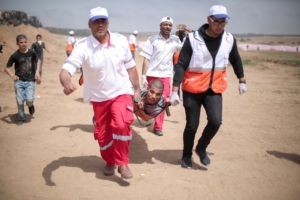 In 2021, cancer was one of the leading causes of death in Palestine. Its mortality rate was higher in the Gaza Strip than in the West Bank, whose population exceeds that of the Strip by a million people. The Gaza Strip is flanked by the Rafah crossing at the far south, bordering Egypt and the Beit-Hanoun crossing up north, bordering Israel across 365km². After the Israeli blockade in 2007, the economy and health care took a severe blow and the movement of people, medicine and food shipments in and out of the Gaza Strip has been severely restricted.
Patients seeking treatment in the West Bank or East Jerusalem have been vulnerable to the continuous shutting of both crossings as well as arbitrary travel permit approvals. A weak health care system coupled with strict travel guidelines has made life impossible for cancer patients in Gaza far before the current conflict.
Incidence of Cancer in the Gaza Strip
Cancer is a widespread disease among Gazan civilians. Between 2014 and 2018, 8,326 cases were recorded. The most common types were breast cancer (18%), colon cancer (10.7%), lung cancer (11.4%), leukemia (9.1%), lymphoma (7.9%), prostate cancer (7.7%), bladder cancer (6.3%), brain cancer (5.3%), stomach cancer (3.2%), pancreatic cancer (2.5%) and kidney cancer (2.2%).
Women accounted for 10% more cases than men. For women, the most common type was breast cancer; for men, it was colon cancer. Among the 620 child cases reported, Leukemia was the most prevalent.
Health Care Access Restrictions
Many patients with various illnesses are referred outside Gaza to the West Bank, East Jerusalem and Jordan for specialized treatment. In 2019, the Palestinian Center for Human Rights (PCHR) statewide reported that the number of medical cases referred for specialized treatment was 26,855 cases, with 6,352 children. Gaza City recorded the highest referral rate, accounting for 46% of all cases across the Strip. However, exiting Gaza, even for medical care, is extremely difficult.
Due to the 18-year blockade, civilians must apply for a permit to cross through the Beit Hanoun (Erez) checkpoint far north of the Strip. Israel completely dictates the approval of the permits and the decisions are arbitrary, with some licenses approved after being rejected and others delayed or even dismissed without proper explanation. The delays can be life-threatening, especially for urgent cases; 8.8% of patients succumbed to their illness six months after they applied for their permit. Israel has also been inconsistent throughout the years; in 2012, the acceptance rate was 94%; in 2017, it dropped to 54%; from 2019 to 2021, it reached 65%, regardless of the urgency of the medical case.
The approval of the permits could depend on gender, age and condition; men aged 40 and below and patients with urological conditions have the lowest approval rates, respectively 47% and 44%. Children are the most vulnerable as they require a legal guardian to accompany them, which requires extra approval. From 2019 to 2021, 54% of parents who applied for a permit did not receive the approval in time for their child’s hospital appointment and neither parent didn’t accompany 32% of children. This is due to the rejection of the parent’s permit and the non-application of the parent to be a companion.
Post-War Circumstances
Before the ongoing crisis, the health care system in Gaza was already lacking proper supplies for cancer patients, hence the need for referral. The constant bombing, lack of fuel, medical supply shortages, insufficient staff and the targeting of hospitals and health care workers have shot the struggle of cancer patients in Gaza to unfathomable heights. The Turkish Palestinian Friendship Hospital was the only hospital in the strip specializing in oncology. However, it was forced to close within the first month of the Israeli attacks on Gaza; 12 cancer patients died within 10 days of its closure.
By May 2025, 94% of Gaza’s hospitals were damaged or destroyed, leaving only 19 operating for more than two million people. Seven of them only offer basic emergency care. Northern Gaza struggles the most as the civilians residing there have practically no access to health care. Leaving the strip is more impossible than ever. On top of the rejection of referral permits, Gazan citizens have to pay the Egyptian travel agency (Hala) $2,500 for a child and $5,000 for an adult to cross the Rafah border leading to Egypt, which is equivalent to more than fourfold the average Gazan’s yearly income.
The situation worsened after the border closed on March 2, blocking life-saving medicine, food shipments and fuel from entering the Strip for over four months. With a surge in critically wounded patients and the total collapse of the health system, hospital occupancy has soared beyond 200%. Meanwhile, 2,000 cancer patients in Gaza are being overlooked, as their conditions are deemed non-urgent.
Conclusion
Cancer patients in Gaza have suffered from more than their illness. Due to the 18-year-long siege on the Strip, many have lost their lives before accessing proper care. The current war has only accentuated their struggle as the collapsing health care system, influx of casualties and incessant bombings and evacuation orders on hospitals have deprived them of life-saving medical attention.
– Yasmine Belabed
Yasmine is based in Algeria and focuses on Technology and Global Health for The Borgen Project.
Photo: Pixabay
