New Boreholes: Hope for Women in the Central African Republic
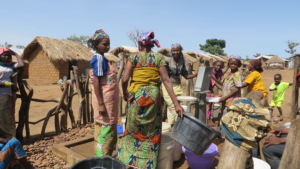 Rosalie, a 17-year-old girl, is now free to go to school and pursue her dream of becoming a midwife. She no longer has to collect unsafe water from the river to use for drinking and washing. Rosalie and her community have access to clean water for the very first time because NGOs, along with the government of the Central African Republic (CAR), completed a new borehole in her village in 2020. “It’s like a miracle to see drinking water in this village,” she said.
Far Reaching Impacts
Access to clean water in the CAR has a far-reaching impact, particularly for women and children. In fact, World Vision donors in Canada funded this project with the intention of improving community health, increasing incomes and reducing gender-based violence in the CAR. Reports show that 97% of women experienced gender-based violence.
Other impacts of access to clean water in the CAR include a drastic reduction in typhoid fever and diarrhea, the leading causes of child and infant mortality in the western part of the CAR. For context, only 36% of people in the area had access to clean water and just 14% had access to sanitation before these projects began. Madeleine, a 56-year-old mother of eight, lost two of her children due to waterborne illnesses.
Before these new boreholes, they used river water contaminated with farm waste and soil runoff. “Dirty water has been the cause of too many of our children’s deaths and miscarriages in many pregnant women,” she said.
Government and Agency Collaboration
The World Vision project, now in its sixth year, has built or renovated 15 boreholes near Bozoum. It also marked the first time any NGO or governmental organization made improvements in the local villages. Residents are grateful that their long wait for safe water is over.
With more than one million people served by these boreholes, Jean-Marc Dewerpe, head of Cooperation and Trust Fund Manager of the Bêkou Fund at the European Union Delegation, referred to this partnership as “an alliance serving the people.” Because only 37% of the CAR’s total population has access to clean water, the European Union funded a UNICEF project. The project aims to increase the operational capacity of the National Agency for Water and Sanitation, a government agency in the CAR, to enable the creation of new sources of clean drinking water.
Not Just Equipment
To this end, a donor provided the agency with a high-capacity drilling rig, which will significantly increase its ability to drill boreholes and develop other clean water sources. Felix Ackebo, UNICEF’s representative to the CAR, commented on the rig’s importance and impact: “It’s not just a piece of technical equipment. It is a beacon of hope for rural communities, a tool for dignity, health and lasting peace for every child and every family,” he said.
The task of water collection no longer governs the lives of women like Rosalie and Madeline. Access to clean, safe drinking water increases village autonomy and empowers women and young people. The current projects are expected to continue and expand to other villages.
– Caleb Dueck
Caleb is based in Winnipeg, Manitoba, Canada and focuses on Good News and Technology for The Borgen Project.
Photo: Flickr
