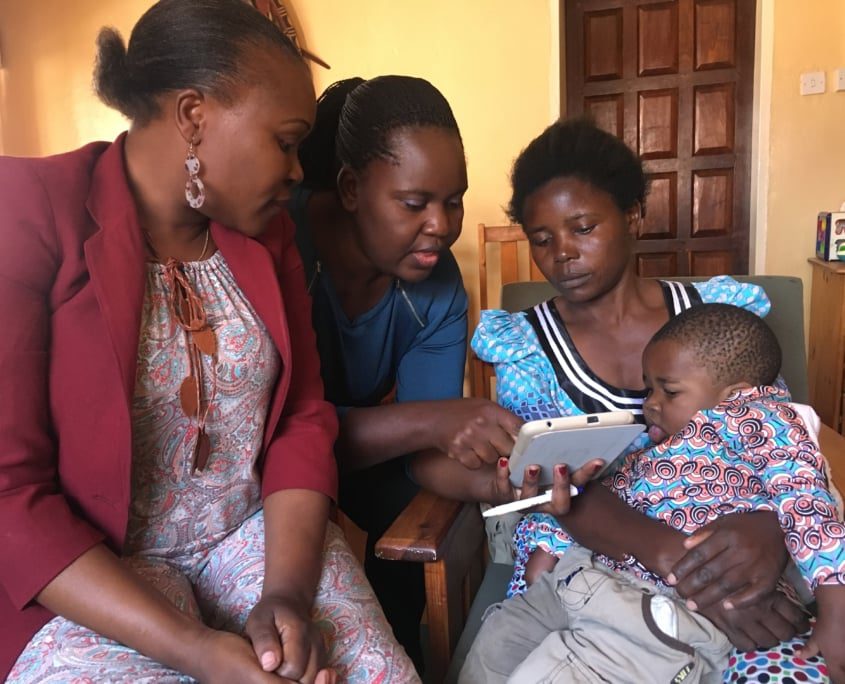
 Approximately 93 million children worldwide have been diagnosed with a disability. A total of 80% of these children have problems with feeding processes. Children with disabilities often suffer from medical conditions like anemia and, along with children who do not receive nutrition through a caregiver, are among the groups that are most likely to be malnourished. However, two women from Portland, Oregon, founded the nonprofit organization SPOON to address children’s malnutrition.
Providing Nutritional Assistance for Children Worldwide
SPOON was founded in 2007 when Cindy Kaplan and Mishelle Rudzinski adopted two children from Kazakhstan who were diagnosed with severe malnutrition. They created SPOON to ensure that all children across the globe receive nourishment. SPOON aims to provide help for caregivers through nutrition programs and assessing the needs of children with feeding difficulties. As the most important part of their mission, the organization puts a special focus on nutrition support for children who do not have a family to care for them or those with a disability.
Helping Children With Feeding Difficulties
Children diagnosed with a disability are three times as likely to suffer from undernourishment than those without any disabilities. Furthermore, one of SPOON’s studies showed that approximately 91% of children in institutions and without family care do not receive the nutrition they need.
Carolyn Moore, the Policy and Advocacy Advisor for SPOON, told The Borgen Project that the two groups often overlap since “institutionalization and separation are more common for children with disabilities.” Moore further explained that the lack of training regarding children with special needs is a significant contributor to feeding difficulties and nutritional health conditions.
The population of children in need of the help SPOON has to offer is immense. Approximately 250 million children who live in developing countries are at immediate risk of stunting. Additionally, 53 million under the age of 5 received diagnoses with cognitive delays, reduced motor skills and other disabilities.
According to Moore, there are additional tens of millions of children who live “in institutions or … on the streets.” One of the main challenges in making sure that all children receive the nutrition they need is that caregivers often do not understand the importance of finding the right feeding process. This is especially important since nutrition is the main contributor to ensure a child’s health. It also affects the development of their brain and body.
Teaching People Important Feeding Skills
SPOON operates with several different methods. The first step of its work includes helping local partners and caregivers of children with disabilities. This is “to build their skills in the specific nutrition eating needs and techniques.” The initial training period covers many different aspects, including learning how to improve feeding techniques, correctly assessing the specific problems a child is facing and adapting diets and nutrition accordingly to individual needs.
Another part of SPOON’s work is the organization’s mobile app called Count Me In. The tool assesses the growth and problems of children with feeding difficulties, especially those with disabilities and in institutions. The app is then able to offer appropriate solutions to caregivers. Moore explained that Count Me In “can recommend improvements around positioning and texture” of the food. It is also a very efficient way for the organization to collect valuable data. By 2019, many orphanages in countries such as Uganda, Vietnam and Zambia have used Count Me In.
Advocacy and the Global Child Thrive Act
The third important component of SPOON’s work is advocacy. Moore explains the need for children with disabilities worldwide to have access to nutrition and support with their feeding difficulties. She emphasizes the need for nonprofit organizations to look at how to “change policies and change systems” permanently. For example, SPOON was part of the Thrive Coalition, a group of nonprofit organizations that advocated for the Global Child Thrive Act, which was passed into law in January of 2021.
The coalition continuously met with congress and the media. This resulted in more than 100 Republican and Democratic members of the House and Senate co-sponsoring the bill. The Global Child Thrive Act assures that the United States government will contribute to strengthening early childhood development. This is for 250 million children under 5 in low-to-middle-income countries. According to Moore, the act was especially important to SPOON, since it specifically included support for “children with disabilities or without family care.”
Helping Children All Across the Globe
In addition to helping with the passage of the Thrive Act, SPOON has seen many successes throughout the years. After working in countries like Vietnam, China and India for two years, the rate of stunting in the children decreased from 55% to 23% and the percentage of children with anemia went down from 41% to 13%. Furthermore, SPOON’s advocacy efforts significantly contributed to a policy change in Kazakhstan that resulted in better nutrition for children without family care.
Also, data collected through Count Me In in 2020 showed a 35% improvement in the growth of kids and found that 82% of caregivers had adjusted feeding positions according to the children’s needs. Another 2020 success was the development of the SPOON chair. The chair will help children with disabilities by allowing them to sit upright during the feeding process.
Partnering With Other Organizations to Help Children
SPOON has also seen much success through collaborations with local partners. In Zambia, SPOON worked together with CMMB, a nonprofit organization that aims to help children with diseases by improving their nutrition. Together, the two organizations were in charge of the Improving Nutrition and Safe Feeding Practices project. This project specifically focused on children with disabilities and without family care.
Moore explained that SPOON and CMMB provided “specialized training in the nutrition and feeding issues” that are common for the two groups of children. The project worked with nutritionists and clinicians who had no prior experience in this specific field. Data pulled from Count Me In in Zambia from 225 surveyed children shows that between the years 2017 and 2020, the feeding positions improved in more than half of all cases for children with disabilities. There was a reduction in malnutrition for every child that was evaluated more than once through the application.
SPOON’s work has significantly contributed to improving the health and lives of many children with feeding difficulties. SPOON has displayed solutions for helping disadvantaged children and has revealed the need for further organizations to join their cause. Moore noted with the “big shift in food insecurity,” due to COVID-19, SPOON’s work is incredibly vital.
– Bianca Adelman
Photo: With permission from Carolyn Moore

How International Telehealth Collaborations Help
Collaboration During COVID-19
Presently, international telehealth collaboration is underway between British and Indian physicians. On May 6, 2021, India reported the highest daily average of COVID-19 cases in the world. As the country’s doctors work tirelessly to care for patients, the British Association of Physicians of Indian Origin (BAPIO) has sought to lend a helping hand. Yet, instead of traveling to the afflicted country, the BAPIO has reached out to Indian peers via the internet.
More than 250 physicians partnered with BAPIO are providing assistance to junior doctors in India by way of video calls. BAPIO’s physicians tackled a surge of cases earlier on in the pandemic and are using the experience to advise Indian doctors during this time of increased strain. Virtual conferencing tools provide a quick way to share information in the chaotic environment of India’s ongoing health crisis. Indian physicians have also been taking advantage of BAPIO’s resources by sending digital medical documents for medical professionals in Britain to review. In this case, telehealth is used to facilitate on-the-spot medical assistance during immediate health crises, but examples of international telehealth collaboration between high- and low-income nations can be found well before the COVID-19 pandemic started.
Collaboration Before the Pandemic
By creating links between medical professionals in high- and low-income nations, telehealth has proven an invaluable tool for strengthening healthcare institutions lacking access to adequate resources. One of the early successes in fully digitized cooperation between high- and low-income healthcare institutions is that of the Swinfen Charitable Trust. In 1998, the United Kingdom-based trust was established in order to fund a communications network that would link healthcare professionals across the globe.
The network, which is still in operation, allows medical professionals in resource-scarce healthcare systems to email questions to affiliated physicians in better-equipped healthcare systems. The physician best qualified to respond will then do so within 48 hours. Though not particularly high-tech, this rudimentary telehealth network has nevertheless been a valuable resource for medical professionals in low-income parts of the world. Since the establishment of the Swinfen Charitable Trust, the scope and quality of such international collaboration programs have only increased.
The University of Virginia (UVA) maintains numerous collaborative telehealth programs with healthcare systems in low-income countries across the globe. One program connects medical experts at UVA with teams at both the National University of Rwanda and Ethiopia’s Jimma University Hospital. As part of the program, participants discuss surgical and anesthesiological cases over the internet. The programs do far more than answer a few questions though. For underdeveloped healthcare systems, connections with resource-rich nations can improve the overall quality of care.
The Value of Collaboration
Healthcare quality suffers in low-income countries, such as those in sub-Saharan Africa, where per-person spending on healthcare is only a fraction of that in higher-income nations. Polling in the region shows that sub-Saharan Africa’s population has the lowest rate of satisfaction with healthcare out of any global region. Only 43% of those surveyed were satisfied with the healthcare in their area. Furthermore, the region suffers from numerous health crises including maternal mortality and the HIV/AIDS epidemic.
In areas where financial limitations clearly impact healthcare resources, international telehealth collaborations can provide a low-cost solution to some of the deficiencies of underfunded healthcare systems. In many cases, international telehealth collaborations have facilitated technical training for healthcare professionals, provided logistical support for the expansion of healthcare infrastructure and created research opportunities.
University Collaboration
International telehealth collaboration programs such as that undertaken by the UVA in Tanzania have successfully changed the way that healthcare is administered to low-income communities. The UVA connected a gyne-oncological expert with teams at Tanzania’s Kilimanjaro Christian Medical Center in an effort that educated local medical personnel on women’s health and led to the development of breast cancer testing infrastructure. The UVA is not the only university working on collaborative telehealth projects. A survey of four African universities identified a total of 129 inter-institutional healthcare programs in the universities alone. The sheer number of these programs suggests the value to both the participating medical professionals and the supported communities.
With the increased availability of advanced communication technologies, the ability to establish and maintain international telehealth collaboration is more possible now than ever before. Virtual spaces have provided medical professionals with platforms that can be used for immediate consultation or long-term development. No matter how the technology is used, it is undoubtedly creating connections that are beneficial to communities around the globe.
– Joseph Cavanagh
Photo: Flickr
7 Facts About Period Poverty in Zimbabwe
Poverty stretches beyond lack of food and water, as period poverty is one of the biggest challenges Zimbabwean women face. With more than 3 million girls in Zimbabwe menstruating, there is high demand for feminine products. Those most likely to experience period poverty in Zimbabwe are underprivileged girls whose parents or guardians cannot afford to buy tampons, pads or menstrual cups. A lack of access to feminine products results in the unhygienic use of rags and cow dung. This not only affects the girls’ health but also strips them of confidence and dignity.
Many girls in Zimbabwe are at risk of developing infections and suffering the embarrassment of leakages and discomfort. Sanitary products are overpriced, so families have to choose between purchasing feminine products or buying food, with most settling on the latter. As a result, period poverty in Zimbabwe has risen to unimaginable heights and incited the government and many nonprofit organizations to work tirelessly to mitigate this problem.
7 Facts About Period Poverty in Zimbabwe
A conducive environment is a requirement for young girls and women. An environment where period stigmatization is low to nonexistent gives girls a better chance to be confident and driven. Moving forward, it is essential that more organizations make reducing period poverty in Zimbabwe a priority.
– Pamela Patsanza
Photo: Flickr
The Ethiopian Civil War Has Caused Famine Crisis
Ethiopia has been in political turmoil for decades. The citizens have been facing the brunt of the sacrifice as the Ethiopian Civil War has caused a famine crisis. In response to political suppression by a militia group known as the Derg, rebel military officials created a guerrilla warfare army dubbed the Tigray People’s Liberation Front (TPLF). Starting in 1991, the TPLF began to overpower the federal military government. Moreover, it began dominating its ruling alliance with the Ethiopian People’s Revolutionary Democratic Front (EPRDF). This caused Ethiopia to transform into a one-party country. On April 2, 2018, the newly elected Prime Minister Abiy Ahmed announced the creation of The Prosperity Party. The party proposed to end ethnic separatism by including other Ethiopian regions in politics.
On November 4, 2020, TPLF attached the Ethiopian National Defense Force Base. Two weeks after the bombing, the fighting between government forces and fugitive factions of TPLF quickly escalated. Tensions between TPLF and Abiy Ahmed have been going on since 2019 because of Ahmed’s actions toward disbanding the country’s ethnically ruled federal system and postponing the 2020 election because of COVID-19 lockdowns. As the fighting continues, ethnic tensions are rising as Ethiopians flee to neighboring countries to live in refugee camps with little to no access to food.
Ethnic Tensions
Ethiopians housed in refugee camps have acquired a distaste for Abiy’s political reign. They have reported that the federal army is just as brutal as TPLF. The Prime Minister proclaimed that Federal officers have not killed a single Ethiopian, but Bahti Adal has a different report. The current Tigrayan refugee revealed to Vice that military forces are persecuting all Tigrayians as a possible threat.
In March 2021, Ethiopian general Yohannes Gebremeskel Tesfamariam confirmed major civilian casualties during warfare, and how the situation in Tigray is resulting in a “dirty war,” where most victims are defenseless civilians. Refugees are wary of leaving their home regions in Tigray, fearing that ethnic cleansing will result from the ongoing massacres.
The Ethiopian Civil War Has Caused a Famine Crisis
More than 63,000 Ethiopian refugees have fled Tigray to Sudan, which has opened its borders to escapees. Since May 13, 2021, the Medical Corps have reached 670 people in the Tunaydbah camps, assisted rapid medical and counseling assessments in major towns around Tigray borders and mainly focused on helping 4.5 million people in Tigray who are facing food insecurity. Militants are fighting people by cutting down the food supply.
Organizations Provide Assistance
On May 6, 2021, the U.N. issued $65 million in aid to Ethiopia. U.N. ambassadors stress using the money to help women and girls who armed militias have brutalized and abused. In addition, USAID has provided Ethiopia with $152 million for military purposes, trying to address humanitarian needs and investigate cases of ethnic cleansing within the country. While government forces are scrambling to find funding, help from Ethiopians in the diaspora is strong.
The Eri Yakl Foundation is a nonprofit organization working on the ground in Sudan to help refugees and distribute emergency grants and support. Dr. Habteab Fesesha began the organization in April 2020. Fesesha is an Eritrean-American physician who created this organization to help Eritrean refugees in Libya, Ethiopia and Sudan with COVID-19. The organization provides education, PPE, sanitation products and clinical health training. When the fighting broke out in November 2020, the foundation quickly concentrated its efforts on the Sudan border.
Fesesha now has two goals. The first is to minimize COVID-19 outbreaks. The second is to provide primary care with a team of medics working at the Tenedba camp in Mafaza, Sudan. Since February 2021, the Eri Yaikl Foundation has received $300,000 from Direct Relief. It has also paired up with the United Peace Organization.
Even though people like Fesesha have commitments to their own tribe, people from each cultural faction of Ethiopia are fighting for survival. The Ethiopian Civil War has caused a famine crisis and it is more important than ever that organizations like the U.N., USAID and the Eri Yakl Foundation continue to provide aid to curb this crisis.
– Matthew Martinez
Photo: Flickr
The IDPoor Card and Poverty in Cambodia
Poverty could double in Cambodia as a result of the COVID-19 pandemic, pulling an estimated 17.6% of the population below the poverty line. Faced with a shrinking economy, Cambodia teamed up with the United Nations Development Programme (UNDP) and UNICEF to issue IDPoor cards, which give struggling families 176,000 riels, or about $43 per month. With an IDPoor card, a family can buy dry food ingredients and products with long shelf lives to ration throughout the month.
The IDPoor card is part of the “Cash Transfer Programme for Poor and Vulnerable Households,” a government initiative designed to help strengthen social protection in Cambodia in the face of COVID-19. Based on the country-wide poverty identification system launched in 2007, the cash transfer programme is a game-changer for Cambodians across the region.
Inside the Cash Transfer Programme for Poor and Vulnerable Households
Each household has an entitlement to $20 or $30 monthly. Families with members of vulnerable groups–such as individuals living with disabilities or HIV–are eligible for additional monetary support.
A partnership between the UNDP, Australia and the Cambodian Ministry of Planning made the cash transfer programme possible. With 1,700 tablets and the necessary software supplied by the Australian government and the UNDP, local officials interviewed and registered families who had fallen into poverty during the pandemic. In total, nearly 700,000 people in the database received funds in a cashless form, either through their phone or a card.
The Groundwork and The Future
The U.N. worked swiftly alongside the Cambodian government, developing the IDPoor cards just three months after the COVID-19 pandemic hit the country. The groundwork for such an agile response took the form of a 2015 pilot program that supported vulnerable mothers and children before the pandemic. The onset of COVID-19 expanded the program to include low-income families across the region. UNICEF Chief of Social Policy, Erna Ribar, noted that the expansion of the 2015 pilot occurred in hopes of “[laying] the foundations for Cambodia to develop greater resilience to future economic shocks, ultimately paving the way towards a more equal society.” As the program came to fruition, the money transfer service extended its reach to even more remote populations, some of whom were handling money electronically for the first time.
In addition to the IDPoor Card, the U.N. continues to support the Cambodian government by providing medical equipment and technical support. The U.N. has also helped the country battle the pandemic by raising awareness about COVID-19.
The COVID-19 pandemic is among the greatest challenges in the modern world, and Cambodia believes that it should deal with it swiftly. Thus far, the country’s success in its money transferring service mirrors its success in controlling community spread. As Cambodians across the region continue to weather the economic consequences of COVID-19, the IDPoor card scheme remains a signal of hope.
– Jai Phillips
Photo: Flickr
China’s Distribution of COVID-19 Vaccinations in Africa
COVID-19 vaccinations in Africa account for only 2% of vaccinations the world administers. Meanwhile, other countries are close to vaccinating the majority of their populations. This is a glaring example of the dangerous vaccine inequity burdening developing countries. The United Nations Security Council recently called for accelerated availability of COVID-19 vaccinations in Africa. A statement that all 15 members endorsed emphasized the need for “equitable access” to quality, affordable COVID-19 tests, treatments and vaccines. With wealthy nations buying a disproportionately large amount of the world’s vaccine supply, it is imperative that developing African countries receive the proper aid and resources to implement proper vaccination programs across the continent. That is where China comes in.
China’s Efforts
China has thus far set the precedent in the global response towards increasing COVID-19 vaccinations in Africa, pledging to provide vaccines to over 40 African countries. China has described its actions as purely altruistic. To back this up, China has either been donating or selling the vaccines at favorable prices. Foreign Ministry official Wu Peng told reporters that “We believe that it is, of course, necessary to ensure that the Chinese people get vaccinated as soon as possible, but for other countries in need, we also try our best to provide vaccine help.” So far, the Chinese efforts to counter vaccine inequity have been quite successful. China has already committed half a billion doses of vaccines to African countries. By engaging in “vaccine diplomacy,” China has been able to expand its influence in Africa through tactful, yet charitable actions.
However, Wu makes the important distinction that “Aid alone cannot solve Africa’s vaccine issues. We must support local manufacturing of vaccines in Africa, even though this is difficult due to (low) levels of industrialization.” While difficult, initiating the local manufacturing of vaccines will have monumentally positive effects in curbing the disease. Starting in June 2021, Egypt will be able to start locally producing China’s Sinovac vaccine. Sinovac has not only provided Egypt with advanced technical guidance in producing the vaccine, but also the rights to manufacture and pack the vaccine domestically. China hopes to replicate this in other African countries.
US-China Rivalry
Boasting claims of being able to produce at least 2.6 billion doses by the end of 2021, China will likely continue to lead the way in vaccinating a large portion of the world’s population. In light of China’s generous distribution of COVID-19 vaccines, many have criticized the U.S. for hoarding vaccines. In response to this, President Joe Biden has now pledged to donate an additional 20 million vaccine doses. Certainly, the continued proliferation of aid from wealthy nations will help to increase the rate of COVID-19 vaccinations in Africa. Developed nations cannot hoard vaccines or vaccine technology and expect the pandemic to end. The pandemic will not end until the current state of vaccine inequity disappears.
– Conor Green
Photo: Flickr
10 Facts About COVID-19 Vaccinations in Indonesia
10 Facts About the Indonesian COVID-19 Vaccine Rollout
The Road Ahead
The COVID-19 vaccination rollout in Indonesia is the first step to COVID-19 recovery for both the people and the economy. With immunity, the strain on Indonesia’s healthcare system and resources will hopefully be alleviated. With economic recovery, the pandemic-induced unemployment rate will go down and businesses will strengthen, contributing to overall poverty reduction in Indonesia.
– Mary McLean
Photo: Flickr
Books From the Front Lines of Honor-Based Killings
On March 4, 2021, outrage flooded the streets of India after the news of a new honor killing. Honor killings happen when a girl or a woman becomes a victim of murder for shaming her family. Often these women are victims of physical abuse, verbal abuse or sexual assault. Bringing attention to the topic of honor-based killings and violence against women and girls are authors that have either experienced these inhumane acts first hand or reported them. Authors from across the globe are giving women a voice against the violence, honor killings and crimes they may suffer at the hands of family members. Below are four books from the front lines that exemplify the courage it takes to speak against honor-based killings.
“Murder in the Name of Honor” by Rara Husseini
In this book, author Rara Husseini provides real-life accounts of honor killings. One focus of the book is the tragic story of Kifaya. Her brother took her life after he sexually assaulted her. Husseini detailed the family’s indifference to her investigation to garner justice for the girl. In an interview with Kifaya’s uncles, Husseini dove deeper into the mistreatment of the young woman even after her death. “They spoke of her as if they were speaking about a sheep, these men were part of the conspiracy, her body not yet cold yet they were here smoking and drinking like nothing happened.”
As a journalist who commits to the truth at every turn, Husseini does not turn away from a confrontation. She has been fighting the articles and laws that protect murderers like Kifaya’s brother and has turned the story of Kifaya into one of recognition in face of adversity.
“Unbroken Spirit” by Ferzanna Riley
Ferzanna Riley, the author of “Unbroken Spirit,” was born to Muslim parents in Pakistan. She experienced a hard upbringing. The deception and betrayal that she and her sister experienced from their parents led them to return to Pakistan from their new home in London. Trapped in a home that permitted violence, Ferzanna questioned her faith daily. In this astonishing true story about faith, loss and violence, readers can learn about Riley’s strength and her unbroken spirit, despite living in an abusive home.
“Daughters of Shame” by Jasvinder Sanghera
In a family where honor matters more than anything, freedom often means risking it all for a way out. This was the case for Jasvinder Sanghera, who was born in England to seven sisters and one brother. All of her sisters married before the age of 16. When she was 14, her family showed her a photograph of a man they told her she was to marry. This began a series of repeated attempts to get Jasvinder to marry. “Daughters of Shame” recounted Jasvinder’s estranged family relationship after she ran away from home at the age of 16.
“Beyond Honour” by Tahira S. Khan
These books from the front lines are a view into the injustices of honor-based killings. The author Tahira S. Khan takes these insights a step further to examine the causes, motives and political aspects of honor-based killings. Tahira S. Khan is a distinguished professor whose work receives inspiration from experience and academic study. She obtained a Ph.D. from the University of Colorado in International studies. “Beyond Honour” goes in-depth to examine honor killings as crimes of historical importance.
Honor killings are crimes against humanity. The repercussions of such horrendous actions are something no family should bear witness to. The group Honour-Based Violence Network brings awareness and action to ending honor killings. Its library includes books from the front lines by authors like Rara Husseini, Ferzanna Riley, Jasvinder Sanghera and Tahira S. Khan. One can access these works of great achievement here to obtain awareness about honor-based killings.
– Nancy Taguiam
Photo: Flickr
SPOON: Helping Children With Feeding Difficulties
Providing Nutritional Assistance for Children Worldwide
SPOON was founded in 2007 when Cindy Kaplan and Mishelle Rudzinski adopted two children from Kazakhstan who were diagnosed with severe malnutrition. They created SPOON to ensure that all children across the globe receive nourishment. SPOON aims to provide help for caregivers through nutrition programs and assessing the needs of children with feeding difficulties. As the most important part of their mission, the organization puts a special focus on nutrition support for children who do not have a family to care for them or those with a disability.
Helping Children With Feeding Difficulties
Children diagnosed with a disability are three times as likely to suffer from undernourishment than those without any disabilities. Furthermore, one of SPOON’s studies showed that approximately 91% of children in institutions and without family care do not receive the nutrition they need.
Carolyn Moore, the Policy and Advocacy Advisor for SPOON, told The Borgen Project that the two groups often overlap since “institutionalization and separation are more common for children with disabilities.” Moore further explained that the lack of training regarding children with special needs is a significant contributor to feeding difficulties and nutritional health conditions.
The population of children in need of the help SPOON has to offer is immense. Approximately 250 million children who live in developing countries are at immediate risk of stunting. Additionally, 53 million under the age of 5 received diagnoses with cognitive delays, reduced motor skills and other disabilities.
According to Moore, there are additional tens of millions of children who live “in institutions or … on the streets.” One of the main challenges in making sure that all children receive the nutrition they need is that caregivers often do not understand the importance of finding the right feeding process. This is especially important since nutrition is the main contributor to ensure a child’s health. It also affects the development of their brain and body.
Teaching People Important Feeding Skills
SPOON operates with several different methods. The first step of its work includes helping local partners and caregivers of children with disabilities. This is “to build their skills in the specific nutrition eating needs and techniques.” The initial training period covers many different aspects, including learning how to improve feeding techniques, correctly assessing the specific problems a child is facing and adapting diets and nutrition accordingly to individual needs.
Another part of SPOON’s work is the organization’s mobile app called Count Me In. The tool assesses the growth and problems of children with feeding difficulties, especially those with disabilities and in institutions. The app is then able to offer appropriate solutions to caregivers. Moore explained that Count Me In “can recommend improvements around positioning and texture” of the food. It is also a very efficient way for the organization to collect valuable data. By 2019, many orphanages in countries such as Uganda, Vietnam and Zambia have used Count Me In.
Advocacy and the Global Child Thrive Act
The third important component of SPOON’s work is advocacy. Moore explains the need for children with disabilities worldwide to have access to nutrition and support with their feeding difficulties. She emphasizes the need for nonprofit organizations to look at how to “change policies and change systems” permanently. For example, SPOON was part of the Thrive Coalition, a group of nonprofit organizations that advocated for the Global Child Thrive Act, which was passed into law in January of 2021.
The coalition continuously met with congress and the media. This resulted in more than 100 Republican and Democratic members of the House and Senate co-sponsoring the bill. The Global Child Thrive Act assures that the United States government will contribute to strengthening early childhood development. This is for 250 million children under 5 in low-to-middle-income countries. According to Moore, the act was especially important to SPOON, since it specifically included support for “children with disabilities or without family care.”
Helping Children All Across the Globe
In addition to helping with the passage of the Thrive Act, SPOON has seen many successes throughout the years. After working in countries like Vietnam, China and India for two years, the rate of stunting in the children decreased from 55% to 23% and the percentage of children with anemia went down from 41% to 13%. Furthermore, SPOON’s advocacy efforts significantly contributed to a policy change in Kazakhstan that resulted in better nutrition for children without family care.
Also, data collected through Count Me In in 2020 showed a 35% improvement in the growth of kids and found that 82% of caregivers had adjusted feeding positions according to the children’s needs. Another 2020 success was the development of the SPOON chair. The chair will help children with disabilities by allowing them to sit upright during the feeding process.
Partnering With Other Organizations to Help Children
SPOON has also seen much success through collaborations with local partners. In Zambia, SPOON worked together with CMMB, a nonprofit organization that aims to help children with diseases by improving their nutrition. Together, the two organizations were in charge of the Improving Nutrition and Safe Feeding Practices project. This project specifically focused on children with disabilities and without family care.
Moore explained that SPOON and CMMB provided “specialized training in the nutrition and feeding issues” that are common for the two groups of children. The project worked with nutritionists and clinicians who had no prior experience in this specific field. Data pulled from Count Me In in Zambia from 225 surveyed children shows that between the years 2017 and 2020, the feeding positions improved in more than half of all cases for children with disabilities. There was a reduction in malnutrition for every child that was evaluated more than once through the application.
SPOON’s work has significantly contributed to improving the health and lives of many children with feeding difficulties. SPOON has displayed solutions for helping disadvantaged children and has revealed the need for further organizations to join their cause. Moore noted with the “big shift in food insecurity,” due to COVID-19, SPOON’s work is incredibly vital.
– Bianca Adelman
Photo: With permission from Carolyn Moore
Examining COVID-19 in South Korea
COVID-19 in South Korea
South Korea has made it a priority to establish a system for the country and its citizens in order to keep everyone safe. In the early stages of COVID-19, South Korea made it a priority to mitigate the situation by distributing tests to as many people as possible. The results of the test, positive or negative, would gauge the severity of the outbreak. The goal was to have everyone quarantine so that the transmission of the virus, regardless of the positive or negative test result, would be slowed. The procedure that the South Korean officials followed was: test, trace and isolate. Within weeks of the first COVID-19 case, South Korea was the leading country in distributing tests. In perspective, by the end of April 2020, the United States had more than one million positive cases. South Korea had fewer than 11,000 cases. In the early stages of COVID-19, South Korea had 3,700 cases whereas the United States had 32. Managing the quick outbreak, and dealing with its repercussions was not easy for any country. However, South Korea was able to quickly formulate a system of test, trace and isolate. This helped lessen the number of lost lives.
Vaccine Efforts in South Korea
The creation and distribution of vaccines have been a large factor in the success that South Korea has seen in combatting COVID-19. South Korea has signed a contract with Pfizer to purchase another 40 million doses of its vaccine. Collectively, South Korea has 192 million doses of vaccines from Moderna, AstraZeneca PLC, Johnson & Johnson and Novavax. The goal that South Korea had set was to have 70% of its citizens vaccinated with the first dose by November.
In order to obtain aid and assistance to receive these large quantities of vaccines, South Korea looks to the United States for help. South Korea provided assistance to the United States in the early stages of the pandemic with COVID-19 testing kits and face masks. Therefore, South Koreans hope for help from the United States in return. The U.S. State Department has made a statement regarding this vaccine alliance. The Department sees a possibility to help other countries increase their vaccine supplies but the citizens of the United States will be the priority.
Looking Ahead
South Korea was extremely successful in combating the virus at the beginning of the pandemic by acting quickly in response to testing and isolation. When no one knew how to handle the pandemic, South Korea stood as a strong example of how to minimize the effects of a global pandemic.
– Nicole Sung
Photo: Flickr
Kahre Org is Providing Meal Kits and PPE in Ecuador
After Ecuador rounded its first full year in the coronavirus pandemic, citizens found themselves struggling to survive. Since the pandemic started in March 2020, the Ecuadorian government has repeatedly failed to protect and care for its citizens. It has been neglecting the sick and dead, spreading rampant misinformation, severely underreporting coronavirus cases, and most recently, allowing corruption to occur in the vaccine rollout. As a result, reports have determined the existence of more than 320,000 coronavirus cases along with nearly 17,000 deaths. Health care facilities have become overrun with desperate families and patients seeking care. As a response, the organization Kahre Org is providing meal kits and personal protective equipment (PPE) in Ecuador to help alleviate the suffering of its citizens.
COVID-19 in Ecuador
The pandemic and the blunt of the Ecuadorian government’s lack of responsibility has fallen upon its citizens, most notably, those living in rural areas. The pandemic has upended rural society and displaced many citizens. Communities lack basic necessities such as meal kits, PPE and education. The government has failed to provide citizens with information about the virus. Moreover, rural Ecuadorians, who are typically farmers, have faced an economic crash. This is because their typical markets and routes have closed to prevent the spread of the virus. Many rural Ecuadorians have had to face a harsh economic situation as they are no longer able to sustain their livelihood.
Kahre Org is providing Meal Kits and PPE in Ecuador
When the initiatives of Kahre Org, a nonprofit organization located in Ecuador, came to a halt at the beginning of the pandemic, they had to readjust their scope of work to suit the new needs that arose. Before the pandemic, Kahre Org offered community outreach. This included providing communities with access to legal services, shelters, education and provisions. The organization has adapted and refocused its efforts to now provide meal kits and PPE during the COVID-19 pandemic.
The organization started with those in rural Ecuador and continued its efforts to frontline workers and the medical community. Consequently, the Kahre Org minimized food insecurity while also creating additional jobs for impoverished and unemployed individuals.
How it Works
By partnering with the Ecuadorian armed forces, Kahre Org was able to deliver more than 100,000 meal kits across Ecuador. These meal kits offer stability to vulnerable individuals. It meant they could focus on finding employment, recovering from the pandemic or taking care of their families rather than worrying about where their next meals would come from. Along with these meal kits came important medical supplies. This included sanitization products and PPE to further help Ecuadorians stay fed and healthy. As many of these rural communities are far from hospitals and medical care, such protective equipment is extremely important.
Moreover, the Kahre Org saw an opportunity with the pandemic to expand their preexisting Child Food Programme. This initiative provides more than 100 Ecuadorian children with two meals a day. It was able to travel to small, local communities and offer children food to minimize their food insecurity. This simultaneously creates more job opportunities for Ecuadorians who wish to work with the organization.
To further the hard work of the Kahre Org in Ecuadorian communities, the local organization extended its helping hand past rural communities to the frontline workers. The organization managed to provide hundreds of Red Cross workers, government corps, doctors and other health care providers with meal kits.
Looking Ahead
By amassing donations and formulating a thorough response plan, the Kahre Org mobilized and inspired Ecuadorians to give back to their communities. In the process, the organization was able to educate rural Ecuadorians of the dangers of the virus and how to minimize the spread and stay healthy. Through providing meal kits and PPE, thousands of Ecuadorians are receiving the resources they need to fight the pandemic.
– Caroline Largoza
Photo: Flickr