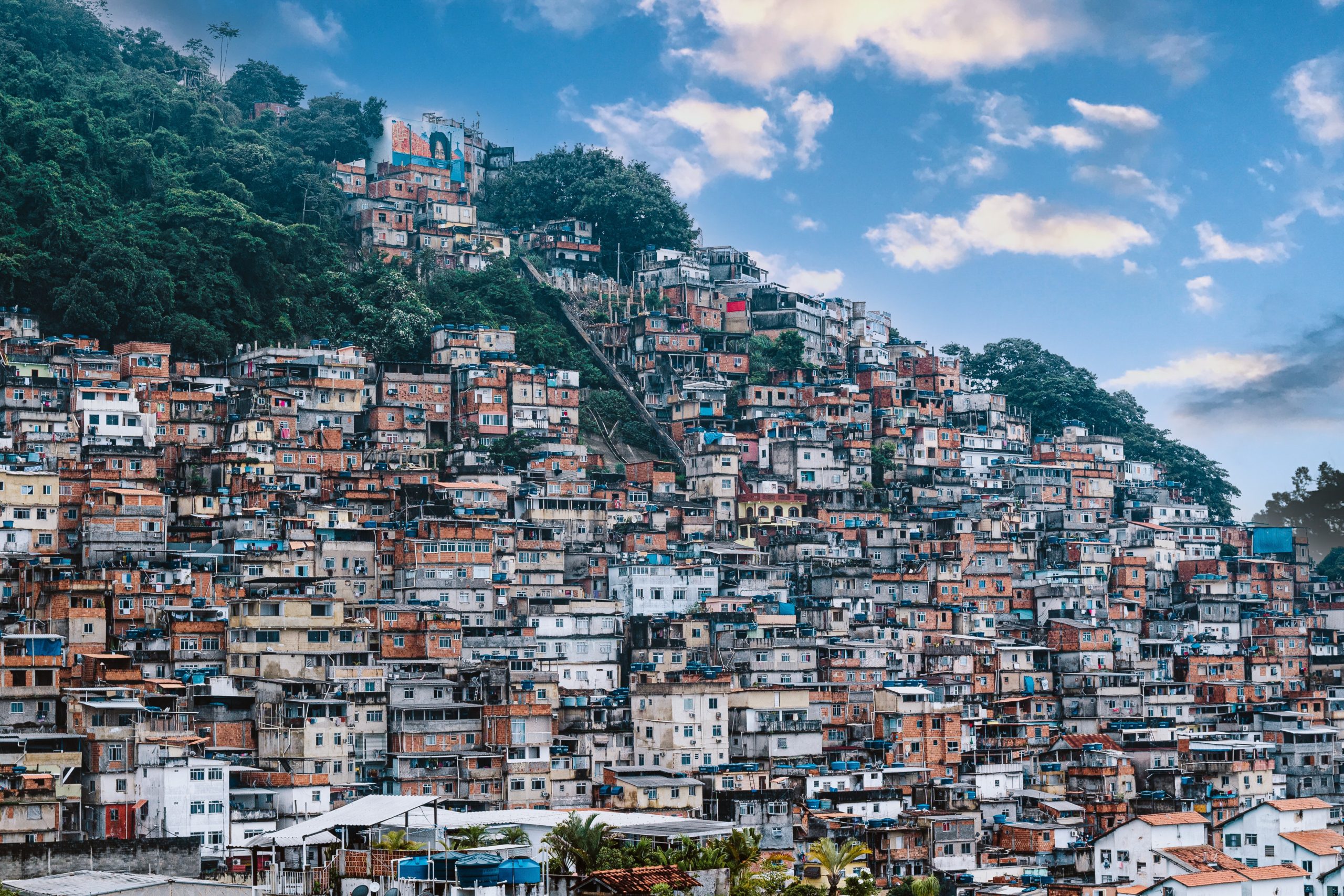
 In Rio De Janeiro’s favelas, there is a well-documented issue of police violence. The number of deaths continues to rise, with a disproportionately high impact on Black Brazilians who are nearly three times more likely to die due to police violence than their lighter-skinned counterparts. In 2022, Ms. E. Tendayi Achiume, a Special Reporter on contemporary forms of racism, expressed her concerns about the excessive and lethal use of force by Brazilian law enforcement. Unfortunately, reports suggest that these human rights violations persist unchecked.
In cases where institutions and states fall short in protecting vulnerable populations, grassroots initiatives have emerged to fill the gap. Organizations like DefeZap, Casa Amarela and others are actively striving to break the cycle of poverty and violence that plagues the lives of thousands of innocent favela residents in Brazil.
The Favela
Rocinha is the largest favela in Rio De Janeiro. It is home to between 150 and 300 thousand people, all crowded into a space of .8 square miles. Rocinha is a steep, sprawling maze of houses built on top of each other, sometimes up to 10 stories high. The streets are dense with people, pavements are wide enough only for motorcycles. Heavy bootlegged electric wires hang just above the hairline of the sprawl. There are no safety regulations. Sanitation runs in a channel between houses. Disease is frequent, and with only two health centers for the whole population, many do not receive the help they need. Compared to other favelas, however, Rocinha has “relatively good infrastructure.” Houses are built out of concrete, and businesses like banks and pharmacies operate freely. Rocinha even has electricity, running water and appropriated cable TV. It is a home, but it is unsafe.
Rocinha is the largest favela in Rio de Janeiro, home to between 150,000 and 300,000 people, all crowded into a compact area of 0.8 square miles. The community is built on steep slopes, with houses stacked on top of one another, sometimes reaching up to 10 stories high. The narrow streets are often bustling with people, and the sidewalks are just wide enough for motorcycles. Informal, unauthorized electrical wires dangle dangerously above the streets, lacking proper safety regulations.
Sanitation facilities in Rocinha consist of open channels running between the houses, leading to frequent health issues. With only two health centers serving the entire population, many residents struggle to access the medical care they need. While compared to some other favelas, Rocinha boasts relatively better infrastructure, with concrete housing and the presence of businesses like banks and pharmacies. Basic utilities such as electricity, running water and even cable TV are available. It is considered a home to many, but it remains an unsafe and challenging environment.
Cocaine
In the 1970s, the introduction of cocaine laid the groundwork for the current situation in contemporary favelas. This led to the emergence of armed drug trafficking factions engaged in violent territorial disputes. Over time, these groups have become deeply entrenched in the local community. They buy land, provide infrastructure like electricity and cable TV and offer employment opportunities, especially to young men. With few other job prospects available, many residents feel compelled to accept these opportunities. Unfortunately, this situation has led to the unintentional criminalization of all favela residents by association.
A central element of this criminalization is the stigmatized image of the ‘Bandido’—a portrayal of young, impoverished, Black individuals as inherently dangerous. This stereotype perpetuates the perception of favelas as impenetrable crime centers in the public’s imagination, which, in turn, can encourage law enforcement to employ aggressive raid tactics.
Violence
Violence in Rio de Janeiro’s favelas has been a part of life since the 1980s. A public conversation around “Bandidos” shows how separate the favela is from normative Brazillian space. Nilton Cerqueira, Secretary of Public Security from 1995 to 1998, said in 1996 that the “Bandido is not a civilian.” These comments came to light during a time of “Wild West Bonuses.” In fact, the police received a salary bonus of 50-150% for demonstrating “fearless courage.” Even after its abolishment in the early 2000s, the number of deaths remains shockingly high. In 2020, 1,245 people died due to incidents with the police in Rio de Janeiro. In 2021, the number was 1,356, and this rose to 1,330 in 2022.
Resistance
In the favelas, where the state often falls short in serving its citizens, various community organizations and NGOs have emerged to bridge the gap. One such noteworthy example is DefeZap. Established in 2016, DefeZap enables individuals to report instances of violence involving state agents anonymously and securely through WhatsApp. After documentation, these reports go to a Collaborative Investigation and Documentation Network, which, in turn, forwards them to the appropriate authorities. From 2016 to 2019, DefeZap received more than 300 video sources, contributing to more than 200 investigations. The organization’s effectiveness and the positive outcomes it has achieved for favela residents have driven its expansion. In 2019, DefeZap and its technologies found application in the Human Rights Commission of the ALERJ (Legislative Assembly of Rio de Janeiro).
Casa Amarela is another involved organization. Casa Amarela operates out of the favela Morro da Providência, delivering “human and territorial development through art and culture.” The group seeks to “reduce the social impact caused and maintained by the state’s lack of assistance in the favela.” Educational, artistic and cultural activities and classes are led by educators, residents and activists from the local area. Casa Amarela welcomes around 120 families and enjoys around 150 participants. Classes for ages 3–7, 8–13 and 14–21 help keep young people away from the militias and in education. Classes include skateboarding, boxing and music. Afro-dance lessons are also offered as a way to reinforce the “positiveness of the children[‘s] black skin” despite the demonization they face in Brazillian society. These young people can expect to be nurtured and inspired to dream of a better life for themselves and their families.
Looking Ahead
Despite the challenging circumstances in Rio De Janeiro’s favelas, residents persist in creating comfortable, beautiful and communal living spaces. Rather than solely depending on NGOs for support, they are taking action to ensure their voices are heard. For instance, on May 21, 2020, residents organized a protest to address the issue of violence against the black community. Their collective efforts resulted in a temporary reduction in police violence, and they remain committed to these actions until they achieve the freedom they seek.
– James Durbin
Photo: Unsplash

Violence, Poverty and Resistance in Rio de Janeiro’s Favelas
In cases where institutions and states fall short in protecting vulnerable populations, grassroots initiatives have emerged to fill the gap. Organizations like DefeZap, Casa Amarela and others are actively striving to break the cycle of poverty and violence that plagues the lives of thousands of innocent favela residents in Brazil.
The Favela
Rocinha is the largest favela in Rio De Janeiro. It is home to between 150 and 300 thousand people, all crowded into a space of .8 square miles. Rocinha is a steep, sprawling maze of houses built on top of each other, sometimes up to 10 stories high. The streets are dense with people, pavements are wide enough only for motorcycles. Heavy bootlegged electric wires hang just above the hairline of the sprawl. There are no safety regulations. Sanitation runs in a channel between houses. Disease is frequent, and with only two health centers for the whole population, many do not receive the help they need. Compared to other favelas, however, Rocinha has “relatively good infrastructure.” Houses are built out of concrete, and businesses like banks and pharmacies operate freely. Rocinha even has electricity, running water and appropriated cable TV. It is a home, but it is unsafe.
Rocinha is the largest favela in Rio de Janeiro, home to between 150,000 and 300,000 people, all crowded into a compact area of 0.8 square miles. The community is built on steep slopes, with houses stacked on top of one another, sometimes reaching up to 10 stories high. The narrow streets are often bustling with people, and the sidewalks are just wide enough for motorcycles. Informal, unauthorized electrical wires dangle dangerously above the streets, lacking proper safety regulations.
Sanitation facilities in Rocinha consist of open channels running between the houses, leading to frequent health issues. With only two health centers serving the entire population, many residents struggle to access the medical care they need. While compared to some other favelas, Rocinha boasts relatively better infrastructure, with concrete housing and the presence of businesses like banks and pharmacies. Basic utilities such as electricity, running water and even cable TV are available. It is considered a home to many, but it remains an unsafe and challenging environment.
Cocaine
In the 1970s, the introduction of cocaine laid the groundwork for the current situation in contemporary favelas. This led to the emergence of armed drug trafficking factions engaged in violent territorial disputes. Over time, these groups have become deeply entrenched in the local community. They buy land, provide infrastructure like electricity and cable TV and offer employment opportunities, especially to young men. With few other job prospects available, many residents feel compelled to accept these opportunities. Unfortunately, this situation has led to the unintentional criminalization of all favela residents by association.
A central element of this criminalization is the stigmatized image of the ‘Bandido’—a portrayal of young, impoverished, Black individuals as inherently dangerous. This stereotype perpetuates the perception of favelas as impenetrable crime centers in the public’s imagination, which, in turn, can encourage law enforcement to employ aggressive raid tactics.
Violence
Violence in Rio de Janeiro’s favelas has been a part of life since the 1980s. A public conversation around “Bandidos” shows how separate the favela is from normative Brazillian space. Nilton Cerqueira, Secretary of Public Security from 1995 to 1998, said in 1996 that the “Bandido is not a civilian.” These comments came to light during a time of “Wild West Bonuses.” In fact, the police received a salary bonus of 50-150% for demonstrating “fearless courage.” Even after its abolishment in the early 2000s, the number of deaths remains shockingly high. In 2020, 1,245 people died due to incidents with the police in Rio de Janeiro. In 2021, the number was 1,356, and this rose to 1,330 in 2022.
Resistance
In the favelas, where the state often falls short in serving its citizens, various community organizations and NGOs have emerged to bridge the gap. One such noteworthy example is DefeZap. Established in 2016, DefeZap enables individuals to report instances of violence involving state agents anonymously and securely through WhatsApp. After documentation, these reports go to a Collaborative Investigation and Documentation Network, which, in turn, forwards them to the appropriate authorities. From 2016 to 2019, DefeZap received more than 300 video sources, contributing to more than 200 investigations. The organization’s effectiveness and the positive outcomes it has achieved for favela residents have driven its expansion. In 2019, DefeZap and its technologies found application in the Human Rights Commission of the ALERJ (Legislative Assembly of Rio de Janeiro).
Casa Amarela is another involved organization. Casa Amarela operates out of the favela Morro da Providência, delivering “human and territorial development through art and culture.” The group seeks to “reduce the social impact caused and maintained by the state’s lack of assistance in the favela.” Educational, artistic and cultural activities and classes are led by educators, residents and activists from the local area. Casa Amarela welcomes around 120 families and enjoys around 150 participants. Classes for ages 3–7, 8–13 and 14–21 help keep young people away from the militias and in education. Classes include skateboarding, boxing and music. Afro-dance lessons are also offered as a way to reinforce the “positiveness of the children[‘s] black skin” despite the demonization they face in Brazillian society. These young people can expect to be nurtured and inspired to dream of a better life for themselves and their families.
Looking Ahead
Despite the challenging circumstances in Rio De Janeiro’s favelas, residents persist in creating comfortable, beautiful and communal living spaces. Rather than solely depending on NGOs for support, they are taking action to ensure their voices are heard. For instance, on May 21, 2020, residents organized a protest to address the issue of violence against the black community. Their collective efforts resulted in a temporary reduction in police violence, and they remain committed to these actions until they achieve the freedom they seek.
– James Durbin
Photo: Unsplash
Foreign Aid to Haiti: How the US and Ecuador Are Helping
In 2021, Haitian President Jovenel Moise was killed in his own home in an attack planned by individuals from Columbia all the way to the U.S. The current situation in Haiti remains hostile as a result, with street gangs perpetrating intense acts of violence — violence that is only possible with consistent political instability, insecurity and poverty in Haiti.
Those factors have massive effects on its people, many of whom are living in severe poverty on top of being under constant threat. It starts from the top down; nearly 66% of the capital city of Port-au-Prince is under that threat. With no stability in the capital, the outer regions of the country can not gain a foothold themselves, and the unemployment rate rises as businesses are forced to close, driving poverty rates.
Because of the violence taking place, more than 160,000 people are internally displaced which has hindered NGO aid efforts including CARE and the International Organization for Migration, the latter being boots on the ground providing access to clean water and health services in the most dangerous regions. Change is needed at the source and both the U.S. and Ecuador are stepping up efforts to fight poverty in Haiti. Here is some information about foreign aid to Haiti.
Foreign Aid to Haiti to Help With Stability
Ecuador played a role in discovering who took part in the plot against the country’s president, offering a chance to hold those involved accountable while closing the door on a solemn time in Haitian history. It shed light on Columbia due to the perpetrators residing there but also because of an Ecuadorian presidential candidate who suffered the same fate as other armed men based in Colombia. Venezuela voiced its support for Ecuador’s claims by saying a “gang of Colombian hitmen” committed political violence outside Colombian borders.
The United States backed support with action by signing the December 21 Accord, along with a host of other political actors and civil society groups, that aims to establish a new transitional and representative government that will lead to free and fair elections by the end of 2023. United States Ambassador Robert Wood stated the accord is “an opportunity for Hattians” to work towards bringing stability to the country by “improving governance.” Ecuador was crucial to the negotiations and drafting of the resolution that relied heavily on international support.
Foreign Intervention
In late 2022, Prime Minister Ariel Henry made a plea for armed, multinational support. Kenya stepped forward volunteering to lead such a force, with UN Secretary-General Antonio Guterres supporting the deployment, believing it needs to be both “robust” and “rapid.” The U.S. previously said it would provide foreign aid to Haiti, and with Ecuador, introduced a resolution to the United Nations that would authorize the deployment; an action that long-term, is designed to bring stability to and fight poverty in Haiti by the U.S. and Ecuador.
The Haitian people back the force because it is a way for the country to push out street gangs, which are the root cause of much of insecurity and poverty in Haiti. Reuters reports that around 70% of people would support it in coordination with the national police.
Both countries reiterated their support for Haiti at the United Nations Security Council meeting in early 2023, with the U.S. saying it is encouraged by the outpouring of support and Ecuador acknowledging the efforts of the national police under the conditions. Haiti lacks the resources to “resolve this crisis alone,” said Victor Généus, Haiti’s Foreign Affairs Minister and the security risk that Haiti is facing, is a security threat to the whole region. Stopping it at the source is mutually beneficial for many near the small Caribbean nation.
– Benett Crim
Photo: Flickr
NGOs Help Women in Syria Tackle Period Poverty
The Crux
Period poverty, according to Medical News Today, is the lack of access to menstrual products, education, hygiene facilities, waste management or a combination of these. It impacts approximately 500 million people worldwide. With part of the country still under siege and other parts submerged by an earthquake, women in Syria are facing period poverty and at an alarming rate.
Amid the ongoing war, prices of food and other necessities in Syria have skyrocketed leading to a high cost of living. Pads that were sold for between 15 and 25 Syrian pounds now cost 2,500 to 4,000 pounds.
Relief items sent by donors, rarely however, contain products for menstruation. These gender-blind responses discriminate against women as other items including food, clothing and shelter are deemed more important than menstrual products. These and other factors have led to period poverty in Syria.
A Helping Hand
Utopia, an NGO made up of women started making hand-sewn pads to cater for the gap in the market as a result of the war. Within the one hour of constant electricity supplied by the government as a result of the country’s war-ravaged power plants followed by a five hour power cut, the small team makes a little over 20 reusable, economical and eco-friendly pads. The organization has been able to sell/donate around 370 pads and 900 diapers for the aged and babies.
To combat period poverty in Syria, Utopia sells the pads at the manufacturing cost of 1,000 pounds per pad. The NGO used to provide food, drugs and financial assistance to needy students but had to include pad production as a result of the changing times and its impact on Syrian women.
Local NGO, Arab Women’s Society, has partnered with the Syrian Arab Red Crescent and the Syria Trust for Development to provide hygiene kits, including menstrual pads, to families in the vicinity. The society and its partners distribute period products and hygiene kits to 1,200 women in rural parts of Deir Ezzor, three times a month.
Founded by Evelina Llewelly, the period poverty-fighting organization, Jeyetna, based in Lebanon collects donations in cash and in-kind and gives them out to individuals on the ground.
The organization, which makes combatting period poverty in Syria and eliminating the stigma around periods their aim said in an interview with Alarabiya News, “In the case of natural disasters, period poverty worsens due to the gender-blind prioritization of other needs perceived as more essential like shelter, food, and water.”
A Look Ahead
Periods do not stop during war or earthquakes. It is commendable that these local NGOs are doing all within their power to help eliminate period poverty in Syria with scanty resources during these trying times. In the words of Martin Luther King Jr, “Somewhere along the way, we must learn that there is nothing greater than to do something for others.
Yet, it goes without saying that more could be done to alleviate this situation bedeviling Syrian women.
– Angela A. Darkwah
Photo: Flickr
Navigating Gender Equality in Turkmenistan
Historical Overview: Understanding the Journey of Gender Equality in Turkmenistan
Like many countries in Central Asia, Turkmenistan has a traditional society influenced by deeply rooted cultural norms and patriarchal values. Especially under the Soviet Union in 1920, women had limited opportunities for education, employment and political participation until the country gained independence. After 1991, the government began to address gender inequality. This included “aligning Turkmenistan’s legal framework, policies and practices for children and women with international standards and best practices.”
Education Equality: Breaking Barriers to Provide Equal Access to Education
Turkmenistan has made significant progress in providing equal access to education for women. Women and men in Turkmenistan have equal rights to pursue education at all levels. According to data from UNESCO, the number of girls enrolled in primary education was approximately 275,071 in 2022 compared to the number of boys enrolled, which was 289,941. As well as education being accessible at primary levels for girls, women in Turkmenistan have the opportunity to pursue higher education. Universities and institutions of higher learning admit both male and female students with no gender-based restrictions on education choices. According to figures from UNESCO, the number of female students enrolled in higher education institutions was 237,454 in 2022 compared to the number of male students enrolled, which was 248,425.
Political Participation: Women’s Role in Shaping Turkmenistan’s Future
Turkmenistan has made efforts to increase women’s political participation, with women occupying seats in the national parliament and local government bodies. In the March 2023 elections, 25.6% of the parliament seats were held by women. This represents substantial progress compared to previous years; in 2013, women made up 16.8% of parliament. The presence of women in parliament works in hand with the legislation aimed at protecting women’s rights, which includes measures against domestic violence and gender-based discrimination. These include:
Women as Agents of Change: Gender Equality in Turkmenistan
Turkmen women have increasingly joined the workforce, making vital contributions to the nation’s economy. As established businesses and start-ups become more frequently present throughout the country, entrepreneurship is on the rise among Turkmen women. One woman in particular has put this into practice. Bahar Shihkulieva founded and directs The Business Women’s Center. It supports the “development of women’s entrepreneurship in Turkmenistan” and their creative initiatives by organizing events that strengthen and expand the cooperation of Turkmen women. With empowered women like Bahar founding organizations that actively support women in the workforce, this actively inspires and promotes education among children and future generations.
To further advance women’s rights in Turkmenistan, it is crucial for the government and civil society organizations to work together to continue the efforts made to promote education among women and children. Promoting gender equality requires not only legal reforms but also changes in societal attitudes and behaviors. Turkmenistan has come a long way in promoting women’s rights. However, there is still work to be done to ensure that women can fully participate in all aspects of society without discrimination.
– Mia Deniz Duru
Photo: Flickr
Organic Underwear Company Tackles Period Poverty in Austria
Targeting Period Poverty in the EU
The humanitarian organization Plan International says period poverty occurs when monthly expenses for period products pose a “financial burden,” leading to a lack of products and adequate hygiene. Over the past few years, studies in EU countries like France, the Netherlands and Germany revealed period poverty and barriers to accessing hygiene products for certain groups in these countries.
In 2007, the European Commission allowed EU countries to lower the tax on feminine hygiene products to as little as 5%. Although some EU countries still tax menstrual products over 20%, the same amount as wine and cigarettes, other countries like Austria opted to lower the tax in response to protests. On Jan. 1, 2021, Austria reduced the tax on menstrual products from 20% to 10%. Before Austria’s policy change, menstrual products were taxed 10% more than unprocessed tobacco and caviar.
The progress in fighting period poverty in Austria is thanks to the combined efforts of activists and independent businesses. One of these businesses is Strawberry Week, which sells organic underwear and period products. Strawberry Week started campaigning in 2016 with an open letter to the Austrian Finance Minister. The group also protested in front of the Ministry of Finance with other activist organizations in late 2019. These activists are part of a growing movement to end period poverty in the EU. It is finding success with signature campaigns, referendums and demonstrations.
Period Poverty Continues in Austria
According to the OECD Better Life Index, Austria is relatively prosperous and ranks high in living standards. Despite this, Strawberry Week says the costs of monthly period care pose difficulties for Austrians living in poverty. Seventeen percent of the Austrian population is at risk for poverty.
Strawberry Week calculates the average menstruating person in Austria spends 7,000 EUR (over $7,400 USD) on period products and contraception in their lifetime. Although menstrual products are necessary for hygiene, people struggling financially must spend money on food and other essentials before period care.
3 Recent Solutions to Combatting Period Poverty In Austria
Since the tax decrease at the beginning of 2021, humanitarian organizations and activists have implemented several initiatives to reduce period poverty in Austria further.
Austria is just one example of how people face barriers to accessing basic hygiene products, even in countries that enjoy high living standards. Despite progress in tax policy, organizations like Strawberry Week keep advocating for greater accessibility of menstrual products to eliminate period poverty in Austria.
– Lia Freeman
Photo: Flickr
Murhaf Hamid: A Story of Grace
Murhaf Hamid of Southern Sweden has captured the public’s attention and everyone’s affection. Hamid worked for a local campaign that fights poverty by selling “majblomman,” which are “little pins sold by children aged 9–12 to collect money for charity.” By simply selling flower pins, the young boy has raised more than $230,000 for charity and went viral on social media for his gracious acts.
Who is Murhaf Hamid?
Although born in Sweden, Murhaf Hamid, 11 years old, was born to Ethiopian parents. In Sweden, many young children between the ages of 9–12 participate in a campaign that sells flower pins for charity. These children also get to keep 10% of the profits that they raise.
Originally, Murhaf was just hoping to raise enough money to buy food to split with his friends. He went in with no intention of raising a significant amount of money. When Murhaf began to sell his flower pins, many told him to leave the streets and received minimal support from the public. A family friend realized his hard work was not getting the attention it deserved, so then took to social media to help spread the word.
Praised by Many
Once Murhaf’s efforts were posted on Facebook, the 11-year-old quickly went viral. He made multiple headlines across the globe, including receiving almost an additional $11,000 in tips to continue his campaigning from donors all over.
Not only did his recognition spread across social media, but the prime minister also recognized Murhaf and he even received an invite to The Swedish Parliament and the Town Hall in Malmo. Murhaf was even able to sell one of his pins to the prime minister once he met with him. On top of Murhaf raising this money, it also allowed the charity to gain more publicity, leading to more participants and donors toward poverty in Sweden.
Poverty in Sweden: How Has It Changed?
Sweden, a socialist state, has received recognition across the world for having a low poverty rate. In fact, Sweden has one of the lowest poverty rates in Europe. It prides itself on having a stable government and an effective welfare system and can provide jobs. Despite this, Sweden has recently struggled with a recession and has a low-performing economy, leaving poverty to skyrocket. Currently, poverty in Sweden is growing “in a way that we have not seen before.”
Many citizens who were not struggling prior to the recession now find themselves with nowhere to turn and have to rely on Red Cross Shops for their food. Many experts say this recession will last into 2024, and it will take time and effort for Sweden to bounce back from this setback. That is why efforts from individuals like Murhaf Hamid and his dedication hold such significance.
– Ryan Balberman
Photo: Flickr
How Poverty in the DRC Impacts Epidemics
Disease, Vaccination and the DRC
For the African continent, the DRC has a history of being “ground zero for infectious diseases,” according to Foreign Policy. It is plagued with annual epidemics such as malaria, Ebola, polio and cholera. Insufficient financial resources and the country’s territorial size stifle efforts to contain the outbreaks. Still, there have been mass vaccination initiatives from both governments and NGOs to alleviate the impact of epidemics.
This produced a steady increase in immunization rates, both in the DRC and globally. But COVID-19 temporarily reversed this trend. The World Health Organization (WHO) and UNICEF collected data in 2019–2021 that showed the percentage of infants who received DTP3 (three doses of diphtheria, tetanus and pertussis vaccines) had fallen to 81%. That was five percentage points down from pre-pandemic levels.
In the DRC, the decline in vaccination rates was even greater. UNICEF reported that “the coverage of vaccination against all the recommended early childhood diseases…had decreased between 8 to 10 percent,” and, “coverage of other vaccines against chickenpox, measles, yellow fever…has decreased between 4.5 and 1.5%.”
The Impact of Poverty in the DRC
In these conditions, the many facets of poverty (lack of accessible water, low sanitation levels and food insecurity) in the DRC only exacerbate the disease epidemics. According to Global Waters, in the DRC, “52% of the population…has access to basic water and 29% has access to sanitation.” These two factors have detrimental consequences. First, low sanitation levels mean less preventive protection against disease and more areas where it can thrive. The lack of accessible water forces people to travel longer distances to attain necessary resources, raising the likelihood of interacting with infected persons. Such consequences are not contained in the DRC. Migrating persons and cross-border travelers carry the disease to the populations in other countries.
Another indirect facet of poverty is access to education. Persons who spend their waking hours hungry, laboring or searching for food and water, have less time and fewer resources to allot to other activities. They do not have the luxury of free time or disposable income for education.
In the context of pandemics this lack of education, specifically the lack of access to correct information, increases the susceptibility of persons to be misinformed on vaccines. Videos likely produced outside of Africa containing lies about the vaccine — that it caused death and infertility — fueled a greater distrust in vaccines, according to PBS. This, in turn, discouraged persons from vaccinations, furthering the disease spread in the population.
Recent International Developments
Fortunately, the plight of the Congolese people did not go unnoticed. In 2020, The DRC government invested twice as much in purchasing vaccines, and a range of international organizations and financial partners (UNICEF, WHO, World Bank, Rotary, USAID and the Bill and Melinda Gates Foundation) offered assistance in the immunization efforts.
The decline in child vaccinations has been mostly overturned. The WHO reported that “the number of children missing out on any vaccination…improved from 18.1 million in 2021 to 14.3 million in 2022, nearly back to pre-pandemic 2019 levels.”
The DRC still remains a likely epicenter for potential disease outbreaks. But with the assistance of international organizations, the country’s government could play a significant role in containing the next outbreak.
– Nicholas Jaramillo
Photo: Flickr
Empowering Women Through Vocational Training Centers in Pakistan
Farida courageously advocated for economic development through the education of local women. Her tragic murder serves as a reminder of the challenges faced by women’s rights activists in the FATA (Federally Administrative Tribal Areas) regions of Pakistan. In these parts of the country, women are often expected to strictly follow pardah. This enforces their seclusion and perpetuates their vulnerability. Through providing vocational training to women and girls, Farida’s NGO challenges norms and traditions that threaten both women’s rights and Pakistan’s development.
The Benefits of Vocational Training Centers in Pakistan
Creating a skilled workforce is vital for fighting poverty in any nation. Globally, the work landscape is rapidly evolving with emerging technologies and digital advances. The TVET (Technical and Vocational Education and Training) mission, as defined by Pakistan’s Ministry of Education, is to provide skilled manpower to the labor market, enacting a shift from curriculum-based education to competency-based training.
In a landscape where a historical caste system has stigmatized many valuable occupations, the government’s support for vocational training centers in Pakistan is much needed. Higher education is often considered the more reputable option, but this prejudice may contribute to stunted economic development. Small-scale vocational institutions can provide quality training with fewer costs than universities. This would make them accessible in smaller towns across Pakistan, enabling more people to increase their human capital and prospects.
Women, who invest 90% of their income back into their communities (as compared to 35% for men), should not be overlooked in this endeavor. In developing countries like Pakistan, leveraging the power of women, who make up half the population, should be high on the agenda. As UN Women states, “When more women work, economies grow.” Estimates suggest that if women’s participation in the labor force equaled that of men, Pakistan’s GDP could increase by 60% by 2025. Yet women make up only 20% of the workforce in Pakistan, lower than the global average of 38.8%. Social norms are a strong contributing factor to this. Expectations for women to perform extensive unpaid household labor and patriarchal mindsets limit their mobility and choice of work.
Vocational Training for Marginalized Women: SAWERA and the Empyrean Foundation
Farida Afridi’s legacy lives on through the organization she co-founded, SAWERA. This women-led grassroots NGO empowers girls and women in FATA through projects that promote literacy, employment opportunities and vocational training. Additionally, it also combats domestic violence. In the FATA region, the dominance of local male elites and the scarcity of local community organizations have left the abuse of women unchallenged in many households. The presence of militant elements has disrupted pro-women reform processes, hindering progress. Despite these challenges, SAWERA has equipped 30 community-based women’s organizations with management skills. This enables them to engage in local business ventures. Even women in acute poverty have received grants to start businesses, offering them a chance to create a brighter future.
Meanwhile, other vocational training centers in Pakistan offer hope for marginalized women who would otherwise encounter limited opportunities for education. In Pakistan, women bear the burden of poverty disproportionately. The Pakistani Poverty Alleviation Fund reported that for every four Pakistanis in poverty, three are women or girls. The Empyrean Foundation provides skills training to emancipate women bound by conditions of poverty from marginalized communities. Its motto is “Empower a Girl, Empower a Nation.”
The Empyrean Foundation’s artisan programs and projects provide life skills and mentoring alongside formal training in fashion design technology and textile and handicraft skills. Furthermore, the organization offers short educational courses in everyday finance, entrepreneurship, job search, counseling and promotion skills, complementing core education diplomas. Empyrean envisions launching a leadership and mentorship program, which would train girls for regional and international development roles.
Breaking the Cycle of Poverty in Pakistan
Clearly, there is a strong impetus for the development of women’s skills. This will help to break the cycle of poverty and challenge deeply rooted stigmas. Farida Afridi’s legacy and the work of organizations like SAWERA and the Empyrean Foundation exemplify the resilience and determination of women striving for economic empowerment for themselves and their nation. While there is much work to be done, these initiatives offer hope for a more equitable and prosperous future for Pakistan.
– Anum Mahmood
Photo: Flickr
Addressing HIV/AIDS in Lebanon
To address this issue, the Ministry of Public Health (MOPH) established the National AIDS Control Program (NAP) in 1989. NAP is actively working to develop solutions for individuals living with AIDS. Additionally, the program is collecting data on reported cases to help prevent further spread and provide treatment across Lebanon. This proactive approach is crucial to managing the HIV/AIDS situation in the country.
Voluntary Counseling and Testing
To combat HIV/AIDS in Lebanon, the National AIDS Control Program (NAP) has implemented a strategy called Voluntary Counseling and Testing (VCT). These centers are responsible for testing and monitoring HIV/AIDS throughout Lebanon. VCT has earned recognition as an effective method for enhancing surveillance due to the assurance of confidentiality it offers. This approach has also contributed to reducing the stigma associated with AIDS among affected individuals. Presently, there are more than 60 VCT centers located across the country, providing access to the entire Lebanese population.
Antiretroviral Therapy
Another method currently being used to fight HIV/AIDS is Antiretroviral Therapy (ART). ART is a treatment designed to block the replication of HIV. This prevents further immune damage and other HIV-related illnesses. The Ministry of Public Health (MOPH) provides this treatment free of charge to Lebanese citizens and Palestinian refugees. From March 2020, almost 1,600 Lebanese Nationals were on ART treatment, and among those on treatment, 92% are virally suppressed.
Participation in International and Regional Workshops
The National AIDS Program (NAP) also engages in international and regional workshops as a key step. The National AIDS Program (NAP) represented Lebanon in the Global Human Rights on HIV/AIDS forum in Geneva and also presented a poster on the most at-risk population. Along with advocating for treatment for patients and raising awareness, they are developing a National Strategic Plan (NSP) designed to fight HIV/AIDS for the coming five years. This includes prevention, treatment and care for the most at-risk populations. Through advocacy, Lebanon can benefit its population currently suffering from AIDS.
Looking Ahead
While Lebanon is beginning to tackle HIV/AIDS through various methods, more work is necessary. Voluntary Control Testing (VCT) is a notable effort in monitoring cases throughout the country. Also, there is a need for initiatives that aim to decrease the stigma that affects those with AIDS. Antiretroviral Therapy (ART) appears to also be a step in the right direction to end HIV/AIDS in Lebanon.
ART provides those residing in Lebanon with free treatment to prevent the spread of AIDS as well as any related illness that may come with it. Participation in widespread advocacy and enacting new plans, like the National Strategic Plan (NSP), could also benefit those struggling with HIV/AIDS in Lebanon.
– Sara Agosto
Photo: Flickr
How Women are Supported Through HIV/AIDS in Angola
The Current Situation
Angola has a relatively low HIV/AIDS prevalence of 1.6% compared to neighboring Namibia and Zambia, with HIV/AIDS prevalence of 11.8% and 10.8% respectively. Even though there is a low prevalence of HIV/AIDS in Angola, there are still 16,000 yearly related deaths and 20 new diagnoses in 15-24 year olds daily.
Verangola
These numbers disproportionately affect women (who account for 66% of Angolan HIV/AIDS cases) with teenage girls being three times as likely to become infected with HIV/AIDS as boys. In 2022, 7,900 Angolan women were diagnosed with HIV/AIDS compared to 3,800 men. These figures highlight the additional risk women face due to HIV/AIDS in Angola. Angola’s struggle to combat HIV/AIDS in women is linked to its high rates of poverty. Rural areas especially suffer from high rates of poverty, with 57% of rural Angolans living in poverty compared to a national average of 41%.
Many women living in poverty will turn to prostitution for economic reasons which risks exposing them to the virus. Lack of access to hospitals in rural areas also means women are often left to care for HIV/AIDS patients, increasing the risk of transmission.
International Aid
The international community is providing support to Angolan women living with HIV/AIDS. UNICEF’s funding in Angola has earmarked nearly $5 million (15% of the total package) for HIV/AIDS support and a goal to provide antiretroviral treatment (ART) to 3,000 women. Improving access to treatment is especially important as less than half of HIV/AIDS-positive pregnant women are accessing ART and risk transmitting the virus to their babies.
The U.N. Development Program (UNDP) has also allocated $103.2 million to improve health care in Angola. The grant will primarily focus on HIV/AIDS in Angola by providing testing, treatment and “reducing infections in children of HIV-positive mothers”. The funding has an additional $30 million compared to previous years, allowing Angola to increase its efforts to tackle HIV/AIDS.
Local Initiatives
Many Angolans are also getting involved with the fight against HIV/AIDS. Angolan singer Yola Semedo is the UNAIDS Goodwill Ambassador for Angola. She expressed her commitment to spreading the message about curtailing HIV/AIDS in Angola.
The organization Mothers2Mothers has been supporting women since 2019. Women living with HIV/AIDS in Angola are able to access treatment through the service to prevent mother-to-child transmission. Mothers2Mothers also offers contact tracing for sexual partners to prevent further spread of the virus. In 2021, more than 10,000 women benefited from these services across 28 locations.
Locally run groups, such as Bancanas Femininas (Women’s Band) give women living with HIV/AIDS a space to discuss their feelings and provide resources to access support. This organization also educates women about protecting themselves from HIV/AIDS and promotes awareness of treatment. Community counselors also provide essential services by encouraging testing and improving access to ART. These efforts contribute to keeping the prevalence of HIV/AIDS in Angola relatively low.
Angola has struggled in past years to tackle the HIV/AIDS crisis partly due to high poverty rates. With support from local and international organizations though, there is hope that the situation is improving.
– Jamie Paterson
Photo: Flickr