Empowering Women Through Vocational Training Centers in Pakistan
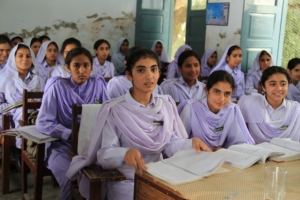 In July 2012, Farida Afridi, 25, died after being shot on her way to work in the Taliban bastion of Peshawar, Pakistan. Eleven years later, the organization she co-founded, Society for Appraisal & Women Empowerment in Rural Areas (SAWERA), continues to provide skills-based training for women and girls in her honor.
Farida courageously advocated for economic development through the education of local women. Her tragic murder serves as a reminder of the challenges faced by women’s rights activists in the FATA (Federally Administrative Tribal Areas) regions of Pakistan. In these parts of the country, women are often expected to strictly follow pardah. This enforces their seclusion and perpetuates their vulnerability. Through providing vocational training to women and girls, Farida’s NGO challenges norms and traditions that threaten both women’s rights and Pakistan’s development.
The Benefits of Vocational Training Centers in Pakistan
Creating a skilled workforce is vital for fighting poverty in any nation. Globally, the work landscape is rapidly evolving with emerging technologies and digital advances. The TVET (Technical and Vocational Education and Training) mission, as defined by Pakistan’s Ministry of Education, is to provide skilled manpower to the labor market, enacting a shift from curriculum-based education to competency-based training.
In a landscape where a historical caste system has stigmatized many valuable occupations, the government’s support for vocational training centers in Pakistan is much needed. Higher education is often considered the more reputable option, but this prejudice may contribute to stunted economic development. Small-scale vocational institutions can provide quality training with fewer costs than universities. This would make them accessible in smaller towns across Pakistan, enabling more people to increase their human capital and prospects.
Women, who invest 90% of their income back into their communities (as compared to 35% for men), should not be overlooked in this endeavor. In developing countries like Pakistan, leveraging the power of women, who make up half the population, should be high on the agenda. As UN Women states, “When more women work, economies grow.” Estimates suggest that if women’s participation in the labor force equaled that of men, Pakistan’s GDP could increase by 60% by 2025. Yet women make up only 20% of the workforce in Pakistan, lower than the global average of 38.8%. Social norms are a strong contributing factor to this. Expectations for women to perform extensive unpaid household labor and patriarchal mindsets limit their mobility and choice of work.
Vocational Training for Marginalized Women: SAWERA and the Empyrean Foundation
Farida Afridi’s legacy lives on through the organization she co-founded, SAWERA. This women-led grassroots NGO empowers girls and women in FATA through projects that promote literacy, employment opportunities and vocational training. Additionally, it also combats domestic violence. In the FATA region, the dominance of local male elites and the scarcity of local community organizations have left the abuse of women unchallenged in many households. The presence of militant elements has disrupted pro-women reform processes, hindering progress. Despite these challenges, SAWERA has equipped 30 community-based women’s organizations with management skills. This enables them to engage in local business ventures. Even women in acute poverty have received grants to start businesses, offering them a chance to create a brighter future.
Meanwhile, other vocational training centers in Pakistan offer hope for marginalized women who would otherwise encounter limited opportunities for education. In Pakistan, women bear the burden of poverty disproportionately. The Pakistani Poverty Alleviation Fund reported that for every four Pakistanis in poverty, three are women or girls. The Empyrean Foundation provides skills training to emancipate women bound by conditions of poverty from marginalized communities. Its motto is “Empower a Girl, Empower a Nation.”
The Empyrean Foundation’s artisan programs and projects provide life skills and mentoring alongside formal training in fashion design technology and textile and handicraft skills. Furthermore, the organization offers short educational courses in everyday finance, entrepreneurship, job search, counseling and promotion skills, complementing core education diplomas. Empyrean envisions launching a leadership and mentorship program, which would train girls for regional and international development roles.
Breaking the Cycle of Poverty in Pakistan
Clearly, there is a strong impetus for the development of women’s skills. This will help to break the cycle of poverty and challenge deeply rooted stigmas. Farida Afridi’s legacy and the work of organizations like SAWERA and the Empyrean Foundation exemplify the resilience and determination of women striving for economic empowerment for themselves and their nation. While there is much work to be done, these initiatives offer hope for a more equitable and prosperous future for Pakistan.
– Anum Mahmood
Photo: Flickr
