Everything To Know About Poverty in the Maldives
 The Republic of the Maldives is an archipelago located in South Asia in the northern Indian Ocean. While its population is only approximately 530,000, the Maldives receives almost 2 million tourists per year. Since its first resort opening in the 1970s, the Maldivian economy has grown significantly thanks to its popularity amongst international tourists. However, poverty in the Maldives is an ongoing issue that requires attention.
Recent Progress
Over the last decade, there has been a significant decline in poverty in the Maldives. From a 65% poverty rate in 2009 to an 11.7% poverty rate in 2016, improving quality of life due to flourishing tourism characterized the pre-pandemic Maldivian economy. Its ‘enclave economy’ means that each island has a specific use, for example, some islands are restricted to resorts, while others are strictly for certain industrial activities.
Alongside this, policies like mandating that at least 51% of a resort’s workforce must be Maldivian have resulted in a growth of the tertiary sector and an increase in wage employment. Not only have these developments significantly grown government revenue, but they have also improved the quality of life of most Maldivians. This is due to a greater number of households experiencing a stable source of income and growing welfare policies from the government. In fact, the government has strived to redistribute this wealth through infrastructure investment, like airports and public housing.
Despite great economic progress in recent years, the COVID-19 pandemic revealed how fragile the Maldivian economy is; travel bans as a result of the pandemic caused a fall in real GDP by 33.6% in 2020, showing how the country’s economy was reliant on international tourism. In fact, resort-based tourism contributes to approximately 23% of GDP, meaning that it is at the mercy of factors beyond its control.
Environmental Threats
Tourism is not the only external factor threatening the economic stability of the Maldives; due to the islands’ low elevation above sea level, the country is extremely vulnerable to changing weather patterns. For example, a tsunami in 2004 caused damages worth 62% of GDP alongside unquantifiable damages like soil erosion and damage to fisheries, which had long-term effects on the recovery of the economy.
The unpredictable and inescapable nature of such events poses a constant threat to the Maldivian population. As a result, the Maldivian government has adapted its policies to strive for long-term security against these issues. An example of this, which the 2005 tsunami reinforced, is the construction of Hulhumalé, an artificial island currently being built 8 km from the capital city. With this, the government hopes to not only reduce overcrowding in Male, but also protect residents from the threat of coastal erosion – a dilemma that many smaller atolls are currently facing. With the Housing Development Corporation capping house prices and the coastline set 2 meters above sea level, its residents are protected from both economic and geological dangers.
On top of government policies, many NGOs have also contributed to assisting those living in poverty in the Maldives. For example, the Maldivian Red Crescent, founded in 2009, is the largest humanitarian organization in the Maldives, striving to protect the population from the socioeconomic challenges that arise from natural disasters. In 2024, it took significant steps in enhancing its emergency response resources, like organizing Anticipator Action workshops and signing a grant contract with the Japanese Embassy for the provision of emergency support vehicles. In fact, one can see the extent of its success in the Maldives through its recognition as an official member of the International Federation of Red Cross and Red Crescent Societies in 2011.
Geographical Inequality
The greatest factor that seems to be limiting the reduction of poverty in the Maldives is the socio-economic disparity between the capital Male’ and the atolls. Although all Maldivians have access to basic health care and education, the more advanced facilities are located in the capital, creating inequalities that translate to poorer job prospects and thus income disparity. In fact, approximately 10% of Maldivians in atolls are living under the international poverty line compared to only 1% in Male’.
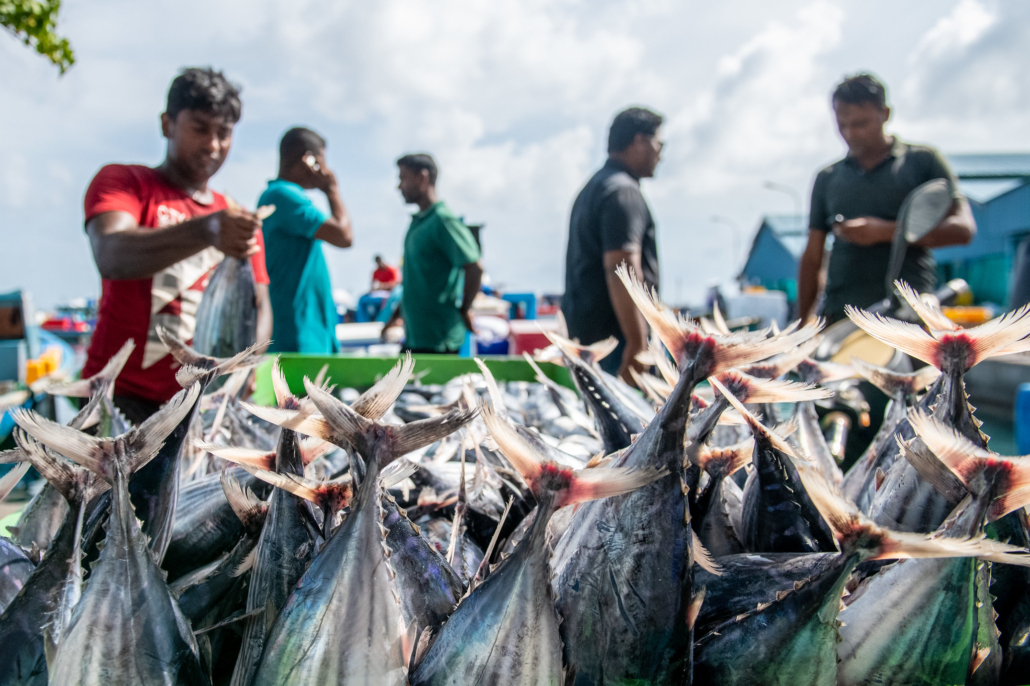
Not only is there inequality between Male’ and the atolls, but even between the atolls themselves, some clusters experience much higher levels of poverty than others. For example, some atolls rely on fisheries as their main source of income, yet their profitability is limited by their poor infrastructure, such as a lack of storage and processing facilities. Even when considering non-monetary metrics, there is a clear disparity between the islands; Maldivians living in the atolls experience fewer years of schooling and lack access to basic resources like safe drinking water and sewer systems.
Therefore, despite the responsiveness of the Maldivian government to the challenges faced, it continues to be an economy at the mercy of geographic and environmental factors. Furthermore, inequality between Male’ and the atolls is the main factor limiting the government’s ability to eliminate poverty in the Maldives.
– Vittoria Cortese
Vittoria is based in Washington, DC, USA and focuses on Technology and Global Health for The Borgen Project.
Photo: Flickr
