What Nepal Flooding Reveals About Global Aid Importance
Following the melting glacier that caused floods and destruction across the Rasuwa, Nuwakot and Dhading regions in Nepal in late August, the country now faces the monumental task of recovery: managing a high death toll, continuing search-and-rescue efforts for those still missing, and tackling massive infrastructure damage, while supporting a population facing homelessness, hunger and urgent medical needs. Tragedies such as Nepal flooding demonstrate why international assistance and aid are vital for global development and support.
Nepal’s Floods
As of Sept. 11, authorities had recovered 1,385 bodies and approximately 5,130 people remained missing following the Nepal flooding. Search-and-rescue efforts continue, but relief now focuses on the 93,000 Nepalis affected in its aftermath. Those most severely affected lived in the low-lying Rasuwa district, along the banks of the Trishuli River, a community already impacted by an earthquake in 2015. The flood damaged roads, schools, power districts and water systems across the northern districts, including Rasuwa. Flash floods swept away 32 bridges and 25 roads, leaving many communities stranded. Those in Nepal who faced poverty prior to the flooding now endure significantly worse conditions.
As Stephane Hallegatte and Marianne Fay write in “Natural Disaster, Poverty, and Inequality,” “…many of these impacts of natural disasters accrue disproportionately to poor households…[and] poor households take longer to recover from disasters, and are more likely to face long-term consequences.”
Following a natural disaster of this magnitude, international aid is crucial, especially to help those already in poverty, who now face food and job insecurity, housing insecurity and health risks.
What International Aid Has Provided
Financial Supplies: Monetary support is essential following a disaster, allowing the government to rebuild, lead relief efforts, and provide support for citizens with essential supplies. The Red Cross and the World Bank are among the organizations that provided financial support to Nepal, along with aid from China and the United States, among others.
Personnel: More manpower, from search-and-rescuers to medical staff, is essential after a disaster. The United Nations and Doctors Without Borders, along with South Korea, the United Kingdom and the United States, have all provided human support.
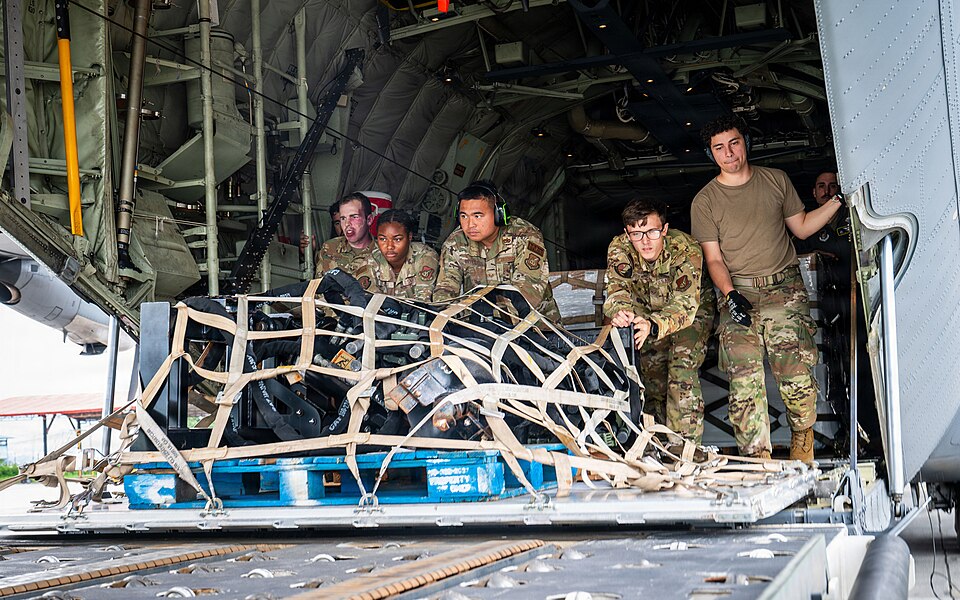
Supplies: Following a disaster like the Nepal flooding, medical supplies, hygiene kits and other essentials are often distributed to citizens. The World Health Organization (WHO) sent medical supplies and tents for emergency shelter. The World Food Program (WFP) used drones to send food to communities cut off from services, and UNICEF sent emergency kits with hygiene items, medical supplies and other essentials.
Why Is International Aid Important?
As of Sept. 11, rescuers had saved 13,676 people following the Nepal flooding. This highlights the impact of international aid—countries and international organizations providing financial support, technical expertise, medical and other essential supplies, and infrastructural reconstruction. Nepal flooding exemplifies international cooperation.
– Madalyn Youngbauer
Madalyn is based in Worcester, Massachusetts, United States and focuses on Good News, Global Health for The Borgen Project.
Photo: Wikimedia Commons
