Addressing Common Bean Disease in Sub-Saharan Africa
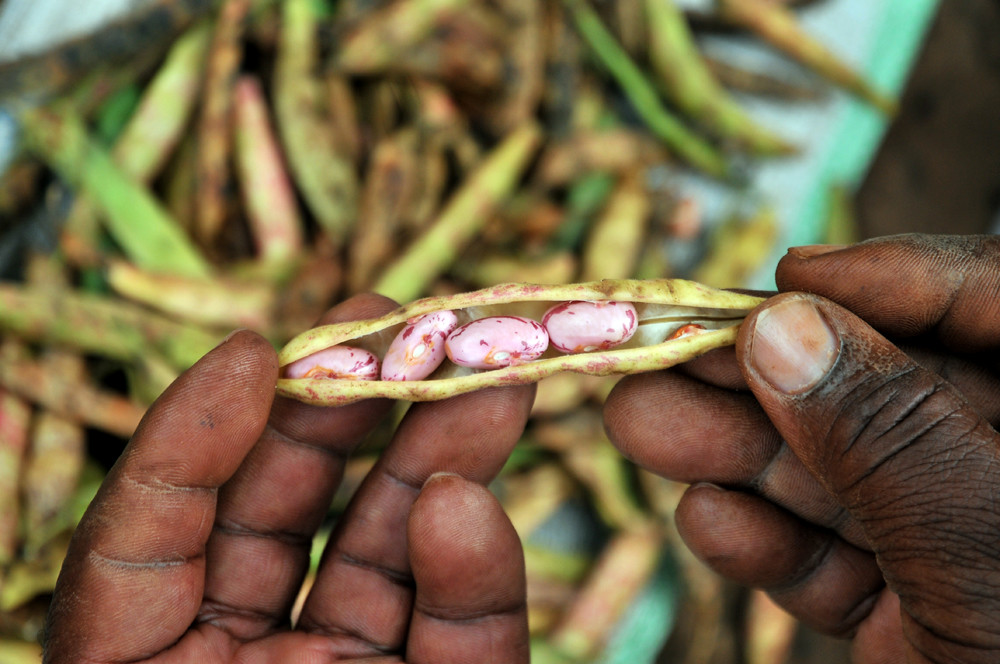
The common bean is an integral part of Sub-Saharan Africa’s financial and nutritional security. With the continent accounting for 25% of global output, the cash crop provides employment, income and a healthy diet to both urban and rural populations. Devastating viral diseases threatening the crop, however, are increasing in frequency, putting the livelihoods of smallholder farmers in peril. Here is how the TumainiBeans app is address common bean disease in Sub-Saharan Africa.
Common Beans in Sub-Saharan Africa
The common bean crop in Sub-Saharan Africa is a vital cash crop for the region. With Africa being the second-largest producer of the crop in the world, it brings in an average $3.84 billion to Sub-Saharan Africa per year. Through cultivation, processing and domestic trade, common beans provide income and employment to rural populations, especially to women involved in the trade. The very production of the crop benefits smallholder farmers, naturally enhancing soil fertility and aligning with crop rotations.
Common beans bring not only economic benefits to Sub-Saharan Africa but also nutritional advantages. The beans provide nutritional security for 420 million people in the region. They are high in protein and nutrients like iron and zinc, and are universally consumed in both rural and urban areas.
Crop Loss
Common beans in Sub-Saharan Africa are highly susceptible to a number of crop diseases that devastate yields and pose serious threats to the income and nutritional security of rural populations reliant on the crop.
A 2025 study published by the scientific review, Viruses, demonstrates a continent-wide upsurge in viral threats to the common bean crop. The two major viruses posing a threat are Bean Common Mosaic Virus and Bean Common Mosaic Necrosis Virus. These two viruses are transmitted by aphids or infected seeds and can reduce crop yields by a devastating 80%. Smallholder farmers find it difficult to prevent viral outbreaks, especially in remote areas, where access to disease identification and outbreak prevention resources is often out of reach due to distance and financial constraints.
The TumainiBeans App
The new TumainiBeans App offers an encouraging solution to common bean disease in Sub-Saharan Africa. In a region where traditional expert methods of disease identification are often geographically and economically inaccessible, the Tumaini app allows farmers to upload an image of any part of an infected bean plant and receive a real-time diagnosis. Independent validation saw the app achieve 90% disease classification accuracy. Downloaded onto a smartphone, the AI app is easy to use and can detect diseases even using poor-quality images. Its AI technology renders disease diagnosis accessible and timely, a crucial element in preventing the spread of viruses.
The TumainiBeans app also provides immediate, context-relevant solutions to a diagnosis, such as assistance on treatment options, advice on healthy farming practices like crop rotations and field sanitation, as well as counsel on the selection of disease-resistant crop varieties.
The technology is still new. While adoption rates, connectivity barriers and the question of whether diagnoses lead to improved yields and increased income at scale remain unknown, the Tumaini App shows potential as a useful decision-support tool for smallholder farmers whose disease-management options may be limited. With the capability to identify the problem and the solution, smallholder farmers could use this tool to protect their crops, income and livelihoods.
– Amelia Krone
Amelia is based in London, UK and focuses on Business and New Markets, Technology and Solutions for The Borgen Project.
Photo: Flickr
