The Taliban and the Afghan People: Oppression and Poverty
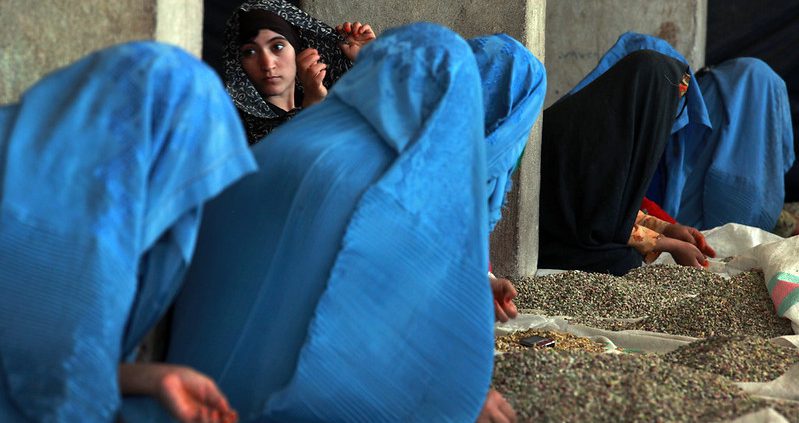 Five years ago, the Taliban seized power in Afghanistan, dismantling two decades of legal reform and setting aside the country’s constitution in favor of the group’s own interpretation of Islamic law. For the Afghan people, and especially for women and girls, the impact of the Taliban has been severe and, according to a recent report from Georgetown University’s Institute for Women, Peace and Security, unprecedented in the modern era.
A Government Built on Decree
Before 2021, Afghanistan operated under a constitution that balanced Islamic identity with human rights protections rooted in international treaties: no law could contradict Islamic principles, but the legal system was still expected to align with the Universal Declaration of Human Rights. That framework collapsed after the Taliban takeover. The current government rules primarily through verbal and written decrees interpreting sharia law rather than through codified law, and discrimination based on gender, religious belief and social status has become part of the system itself.
The Taliban’s de facto authorities, referred to internationally as the DFA, have issued more than 100 decrees affecting the rights of women and girls since 2021. UN Women describes the scale of this transformation as without precedent, noting that no other country in modern history has dismantled the rights of half its population so systematically.
The Toll on Women and Girls
The numbers illustrate just how far-reaching the changes of the Taliban have been for the Afghan people. Under current decrees, husbands hold legal authority over their wives, and their disciplinary actions are only criminalized if they cause severe injury. Child marriage remains widespread: in 2023, 28.7% of Afghan women aged 20-24 had been married or in a union before age 18, including 9.6% who had been married or in a union before age 15.
Access to justice has narrowed sharply along gender lines, with only one woman able to reach legal recourse for every four men. Health care has suffered as well. Afghanistan’s maternal mortality ratio was estimated at 638 deaths per 100,000 live births in 2024, among the highest rates in the world. The psychological toll is just as stark: seven in 10 Afghan women now describe their mental health as bad or very bad.
Education and employment have been hit hardest of all. An estimated 78% of young Afghan women are not in education, employment or training, a level of exclusion that threatens to erase two decades of progress in a single generation.
These figures have fueled criticism of governments and institutions that condemned Taliban policy without meaningfully changing conditions on the ground, a critique that casts doubt on the effectiveness of purely diplomatic responses.
Support for the Afghan People Continues, Quietly
Despite the bleak headlines, international support for the Afghan people has not disappeared. It has largely moved out of the spotlight. The Afghanistan Humanitarian Fund, managed by the UN Office for the Coordination of Humanitarian Affairs and supported by international donors, continues to fund humanitarian projects addressing basic needs, health care and nutrition. In 2025, for example, an AHF grant of $1.39 million supported six sub-health centers and 13 inpatient therapeutic feeding centers in four of the country’s most vulnerable provinces.
Civil society has stepped in where governments have pulled back, especially in education. Afghan girls barred from classrooms are increasingly turning to virtual and underground schooling run by small, often volunteer-driven organizations:
- AESOP (Afghan Education Student Outreach Project) began in June 2022 with a single class of 19 girls. It has since grown into a program of nearly 600 students taught by close to 100 volunteer instructors, selected from more than 4,500 applicants, offering English, math, STEM and leadership courses. Several graduates have gone on to win scholarships at universities abroad.
- Afghanistan Education Action, founded by educator Angela Ghayour, grew from the Herat Online School, which she started in 2021. AEA is now a UK-registered charity running three online schools, including one that helps students work toward internationally recognized qualifications. Some of its students have also received scholarships to study at schools and universities abroad.
- LEARN Afghanistan, founded by activist Pashtana Durrani in 2018, built the country’s first digital school network. Before 2021, it already reached more than 10,000 students through 18 digital schools and trained hundreds of teachers; after the Taliban takeover, it resumed operations covertly within a month rather than shutting down.
Economic empowerment programs are showing effective results. In 2025 alone, UN Women directly supported more than 5,000 Afghan women entrepreneurs, including 940 women-led enterprises and 4,130 women who established income-generating livelihoods, in part through community-based and formal microloan mechanisms.
A Fragile Lifeline
These efforts remain small relative to what could be achieved with sustained government-level backing, and that backing is now at risk. More than half of the women-led organizations providing life-saving services in Afghanistan expect to suspend operations or close entirely within the next year because of aid cuts. That makes continued attention to the Afghan people’s situation more urgent, not less. The organizations working discreetly inside and outside the country have shown that meaningful change is still possible even under one of the most repressive governments. What they lack is not proof of the impact of the Taliban on the Afghan people, but the sustained support needed to scale it.
– Juan Guillermo Rueda Castrillón
Juan is based in Barcelona, Spain and focuses on Politics for The Borgen Project.
Photo: Flickr
