Building a Better Future: Girls in Accra
 In Ghana, poverty is increasingly concentrated in rural communities, where many families depend on agriculture to survive. According to Opportunity International, 43% of Ghana’s population lives in rural areas, while 29% of the country’s workforce is employed in agriculture. Cocoa, the country’s largest export crop, supports millions of livelihoods and has the potential to help families build more secure futures. But for households living close to the poverty line, that future can be fragile. A bad harvest, unexpected medical bill or lack of access to education can quickly turn a difficult year into a crisis.
Poverty Pushes Girls to Accra
Some young women and girls leave their communities as a way to cope with limited opportunities. Many adolescent girls migrate from northern Ghana to Accra, the capital, to find work, hoping to earn money to support themselves and their families.
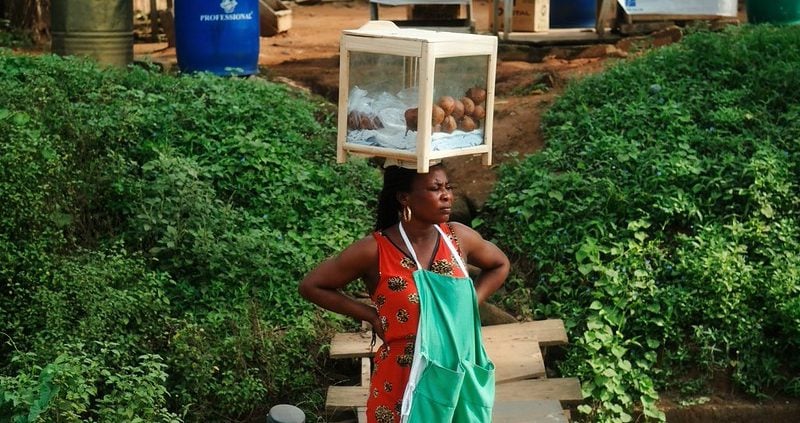
Once in Accra, children work to support themselves and their families as street vendors, head porters, cart pushers, restaurant workers and in other jobs. Some also face violence and exploitation. A 2012 census found that more than 61,000 children were living or working on Accra’s streets. Girls made up 57% of that number, compared with 43% boys. Many girls work as head porters, also known as kayayei.
Life in Agbogbloshie
Agbogbloshie is in central Accra. The area covers about 146 hectares and is home to nearly 40,000 people. Many of the homes and businesses are small structures built by residents themselves.
The community began in the late 1970s when people who could not afford housing in the city built small shelters near the Korle Lagoon using whatever materials they could find. The area sits on land traditionally belonging to the Ga people, the Indigenous people of the Greater Accra Region.
Today, the area is crowded, and many residents live in small wooden kiosks or shacks without enough access to clean water and bathrooms. Some people pay to share a kiosk, with payments made weekly or even daily instead of paying rent months in advance. Residents also have to pay to use public toilets, showers and water.
Support for Girls in Accra
Girls in Accra can find support from organizations such as Street Girls Aid (S. Aid), a nonprofit established in February 1994 to help children and young people living and working on the streets. S. Aid focuses mainly on girls and young women after seeing the specific challenges they faced while living and working on the streets. The organization is non-religious and non-political and is run by Ghanaian staff.
Its early work focused on helping girls in difficult situations, including pregnant girls living on the streets. Today, S. Aid provides services to about 1,500 children and young people each year.
What Street Girls Aid Does
- Street Outreach Program: Outreach workers go into markets, lorry parks and other busy areas of Accra every day to find and speak with young people who may need help. Instead of simply giving people information, the workers spend time building relationships and listening to their problems and needs. They also speak with families when possible to better understand why children are living or working on the streets.
- Young Mothers Support Program: S. Aid runs a support center for vulnerable girls in Accra. The center provides a safe place for girls and young mothers to stay while they work toward becoming more independent. Girls in Accra who enter this program receive basic necessities, including food, clothing and shelter. The program teaches parenting and nutrition skills so young mothers can better care for themselves and their children.
- Vocational and Life Skills Training: Skills training includes cooking, sewing, hairdressing, beauty care, laundry and soap making. Girls can choose from different types of training depending on what interests them and what could help them earn money. The program goes beyond teaching a trade. Participants also learn literacy, life skills and basic business management. Business lessons can help girls understand how to manage money and potentially run a small business. The goal is to give girls practical skills that can help them find paid work or create their own source of income rather than depending on street work.
- Early Childhood Development Program: This program offers early education and family support.
Conclusion
Through its work, Street Girls Aid is helping girls in Accra gain the skills and support they need to become more independent and provide for their children. While poverty remains a challenge, programs like these can give young women more options to earn an income and create a more secure future.
– Daniela Escobar
Daniela is based in Huntington, NY, USA. and focuses on Good News for The Borgen Project.
Photo: Flickr
