All That Glitters is Gold: Child Labor in the DRC
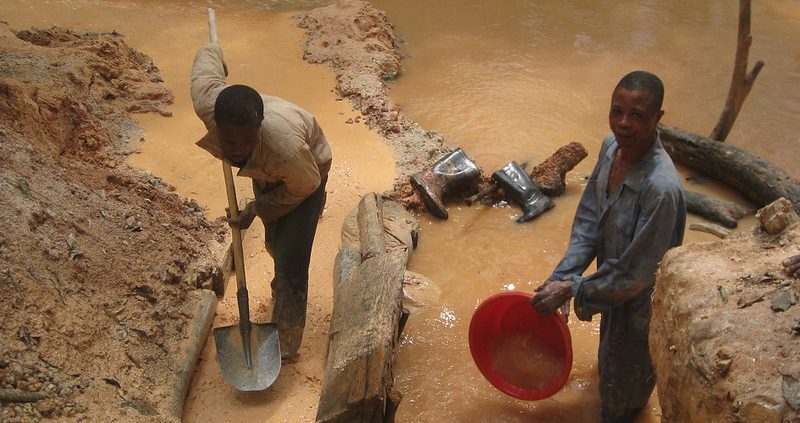 Conflict has persisted in the Democratic Republic of the Congo (DRC) since 1996, internally displacing more people than at any other time in recorded history.
United Nations (U.N.) data from 2022 records 5.6 million internally displaced persons affected by violence that has evolved from warfare involving neighboring countries to a stagnant, fragmented stalemate among more than 100 militia groups in eastern Congo.
The conflict remains peripheral, confined to the eastern provinces of Ituri, North Kivu and South Kivu. Meanwhile, a thousand miles away, the capital Kinshasa remains unaffected, intensifying the normalization of this decades-long hostility.
Mining and Congo’s Bloodstained War Economy
Mining communities in the DRC are the heart of the eastern conflict. Seventy-five percent of the world’s cobalt is sourced in the DRC, alongside zinc, copper and gold. Despite mining being the economic backbone of the DRC, these communities remain among the poorest in the country; $24 trillion worth of resources lie untapped, yet those who tirelessly work to uncover them reap little reward.
As global demand for technologies rises, the demand for cobalt grows exponentially. Jason Stearns, an expert in the conflict in the DRC, cites the disturbing symbiosis between the conflict and the creation of a military bourgeoisie: “Belligerents on all sides of the battlefield have an interest in continuing the conflict.”
Prolonging violence favors the material interests of this military bourgeoisie, who profit from roadblocks, illegal taxation, controlling artisanal and small-scale mines, smuggling, trafficking, racketeering, along with legal and extra-legal payments linked to military operations.
Mining and the extraction of raw materials, from gold to cobalt, are central to this profitable war economy, but such benefits only reach a handful of individuals and political elites.
Particularly in small-scale and artisanal mining, child labor persists as one of the most pernicious issues of this war economy. High poverty rates lead families to send children into the hazardous conditions of the mines, where they are paid meager wages of $2 a day.
A 2023-24 survey suggests that one in 10 children ages 5 to 17 are subjected to work in dangerous conditions.
One militia commander is recorded, with a problematically normalizing sentiment, saying children make good combatants because they “learn easily” and “obey.”
Child labor in the DRC presents an even darker issue, reaching beyond the informal and dangerous conditions of the mine onto the battlefield.
Failed Peace Brokering
Peacekeeping missions have often focused on a top-down approach. Ostensibly, the investment in peace in the Congo has been immense.
However, an operational review by Congolese and international consultants, funded with a grant from the U.K.’s government aid agency, the Department for International Development (DFID), noted how aid efforts are often infiltrated by fraudsters and corruption inside the DRC. This internal corruption disrupts the impact of vital aid efforts, which hold the promise of alleviating poverty in the DRC’s poorest and most vulnerable communities.
Aid, funds from foreign donors and supplies are siphoned off, leaving recipients at a loss. Corruption is often treated as inconsequential, with perpetrators left without sanctions and bribes used to hide corruption. The problem of how to implement foreign aid and donations in a system so rife with corruption remains.
A New Wave of Aid
In 2026, KSQF and UNICEF announced their strategic alliance to prevent child labor in the DRC.
The initiative builds on UNICEF’s TPS+ model, which has had a significant impact, helping to remove 1,015 children from mines in 2024. Five hundred ninety-nine of these children have now been re-enrolled in school. The initiative will remain vigilant, monitoring progress to produce a replicable model of child protection that can be reproduced elsewhere in the DRC and further afield.
Bottom-up approaches have also been implemented through the continued work of the Conflict Resolution Centre (CRC), which focuses on children from rebel groups in mining communities.
The school reintegration program concentrates on child soldiers under 14 and, since commencing work, more than 1,000 children have left armed groups.
The CRC, like UNICEF’s model, seeks to not only offer situational change but to build capacity within these vulnerable mining communities. Vocational training in skills such as carpentry, mechanics, livestock rearing and electronics helps to build alternative income-generating activities.
UNICEF and KSQF are equally generating advocacy and understanding about the conditions children are subjected to as soldiers and in artisanal small-scale mines. This builds upon the efforts of the International Labour Organization (ILO) SCREAM program (Supporting Children’s Rights through Education, the Arts and the Media). Through SCREAM, teachers, children and the local community have been mobilized, actively protesting the end of child labor in mines. More than 1,800 individuals have been reached by this socio-cultural activity, raising awareness about child labor issues and the intervention needed to prevent it.
Such approaches, directed straight to local mining communities, demonstrate that even amid conflict and corruption, preventing child labor in the DRC is actively being worked toward by creative and targeted aid initiatives.
– Millie Lavington-Owen
Millie is based in London, UK and focuses on Technology and Solutions for The Borgen Project.
Photo: Flickr
